By Founder and President Kurt Lieber
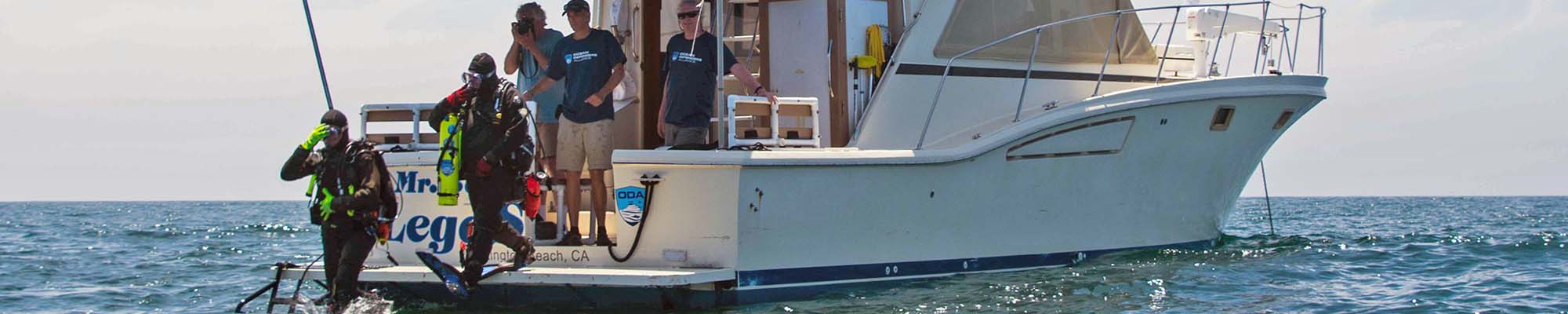
It’s been a good long while since we’ve been able to get out on our flagship Mr. Barker’s LegaSea and remove abandoned lobster traps. Seven months to be exact. But on Saturday, March 28th, our volunteer crew set out for a site off Anacapa Island to dive in and see what we could find.
Before I tell you about our successful first expedition our debris-removal season, I’ll tell you what we do during the other months of the year.
How We Remove Traps All Year Long
You see, we can’t remove traps when the commercial fishing season is open, which runs from October to the last week of March. So, during those months, we ask people to let us know if and when they spot traps that wash up on the beaches and report that to us, as those can be removed.
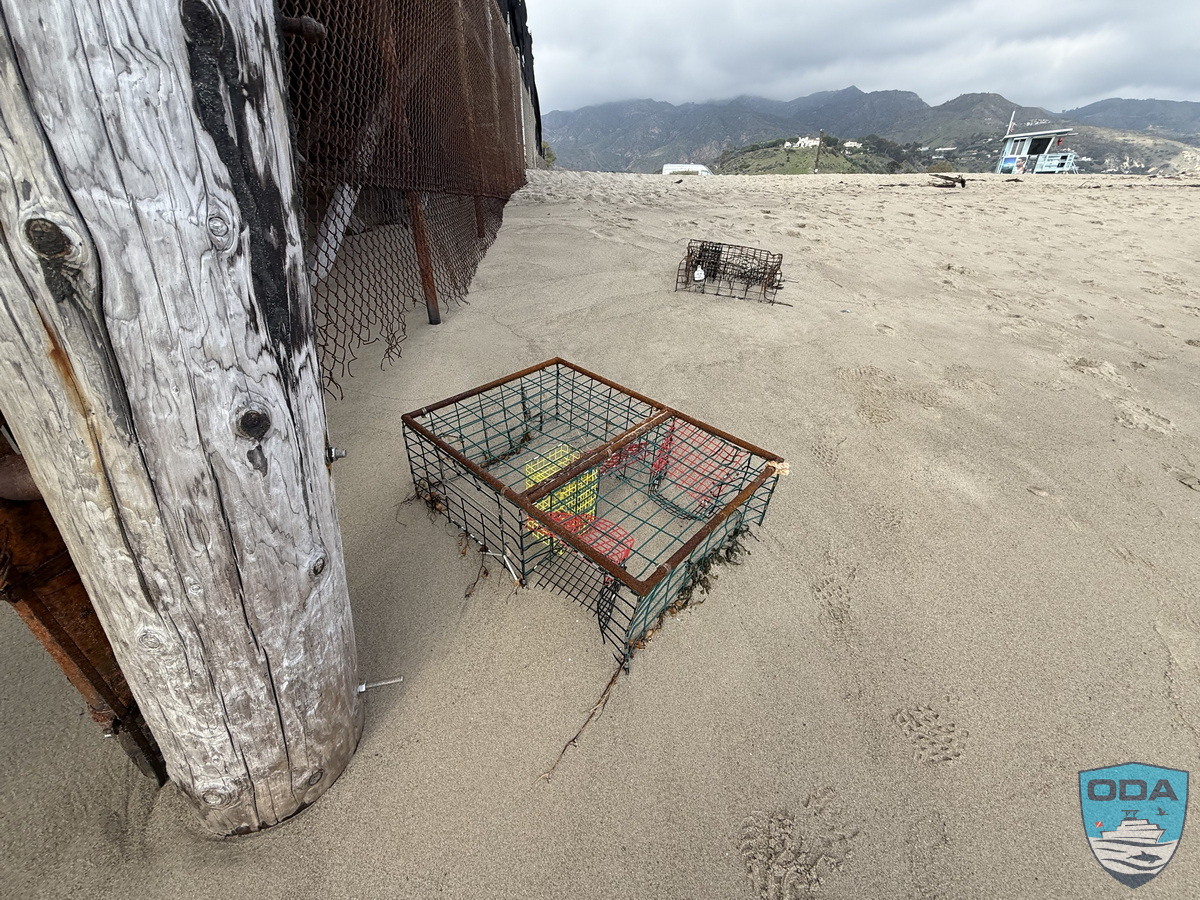
The winter storms create big waves that can cause those traps to move significantly, and they can become like battering rams and pulverize any living thing that can’t move out of its way.
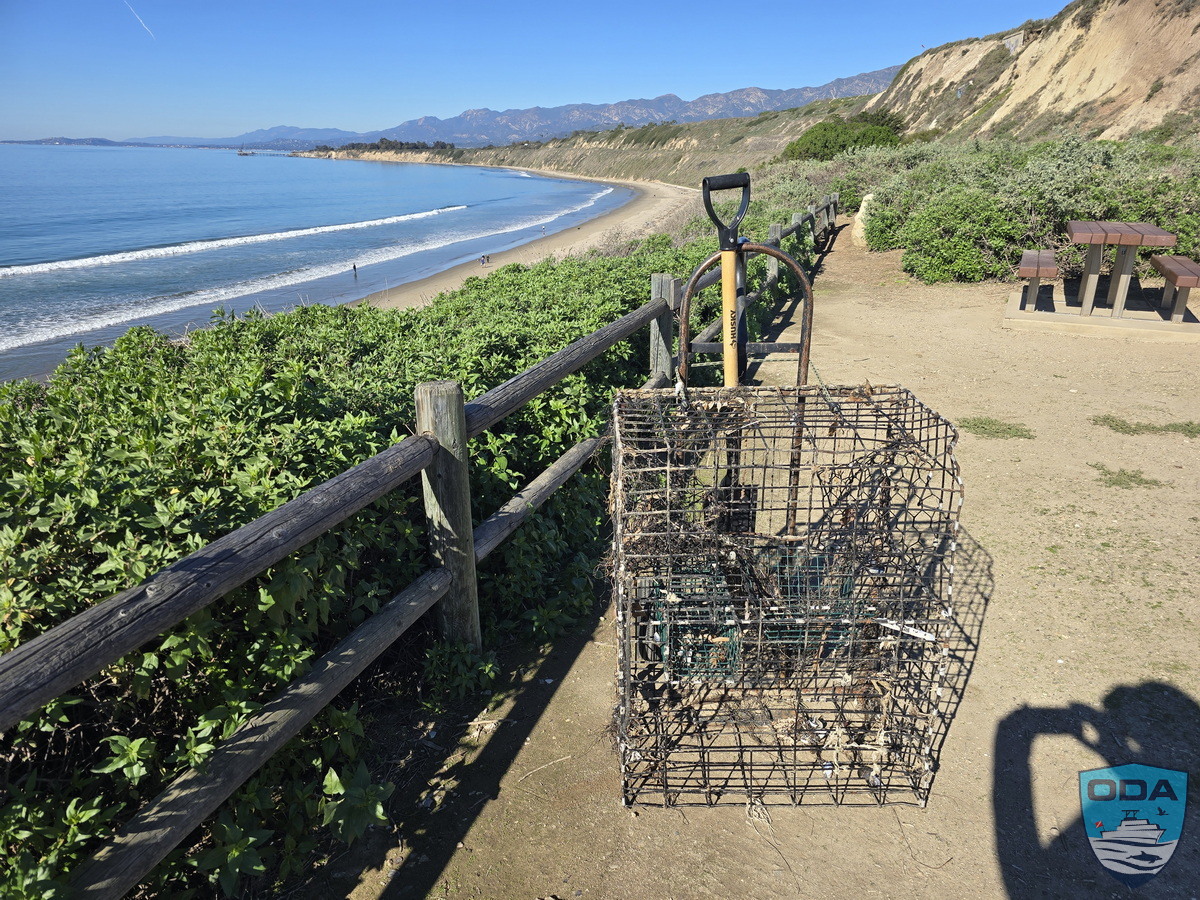
We reported 11 lost traps to the Department of Fish and Wildlife (DF&W) during the winter. We give the department the identification number that’s on the trap and let them know where it’s located (using a GPS location). They then contact the fisherman who owns the trap, and they’re required to remove it within 3 days. If they don’t do that, they get fined for polluting.
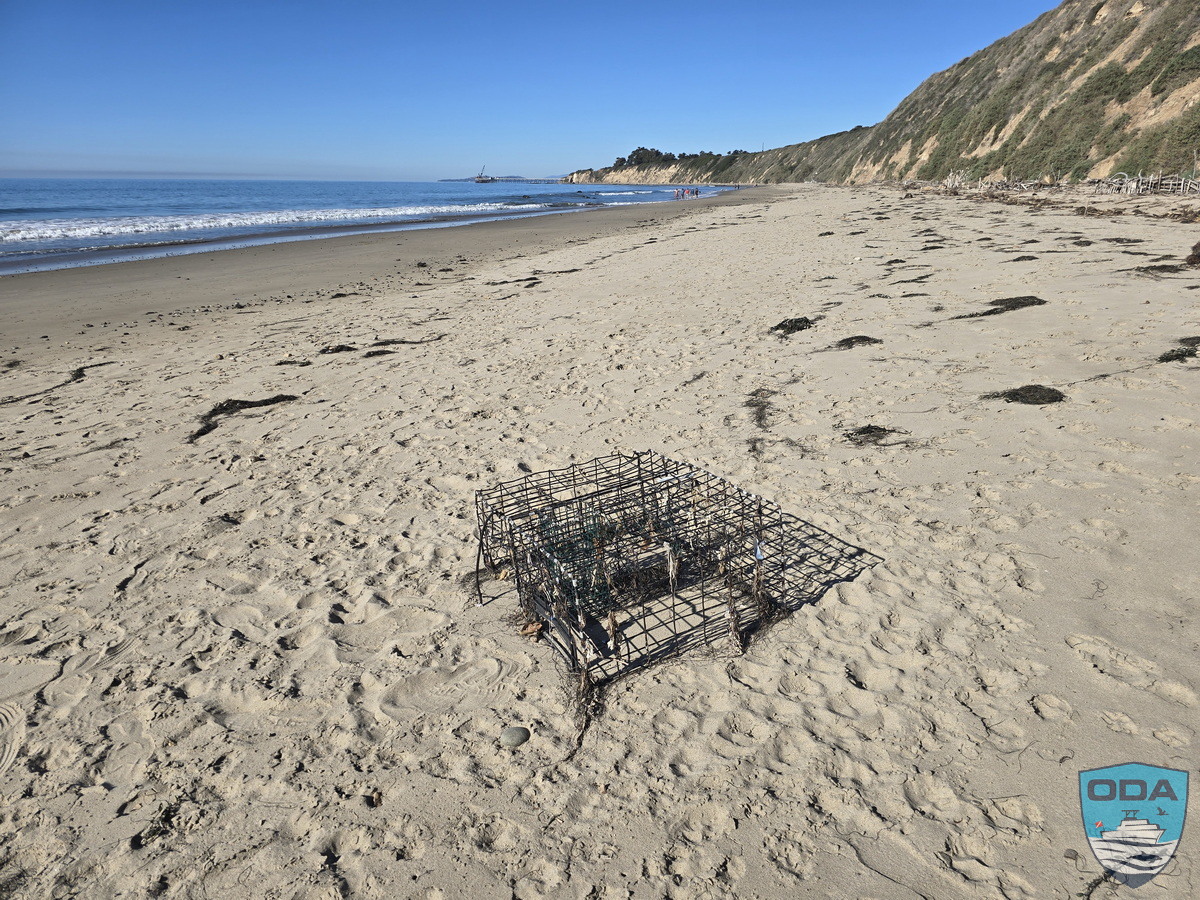
During this down time for our dive volunteers most of them keep diving and sometimes come across abandoned traps. This was the case with Kevin Augarten and Kim Cardenas. They took a trip out to Anacapa Island in January and saw 4 abandoned traps at the site called Cat Rock.
Exciting Launch of Our 2026 Debris-Removal Season
When they told me about it, I sent out an email to our volunteers saying that we’d be going there for our first outing of 2026.
We pulled out of our slip in Channel Islands Harbor around 9am, stopped to fill up the tanks (yikes that stuff is expensive!), and were on our way by 9:30.
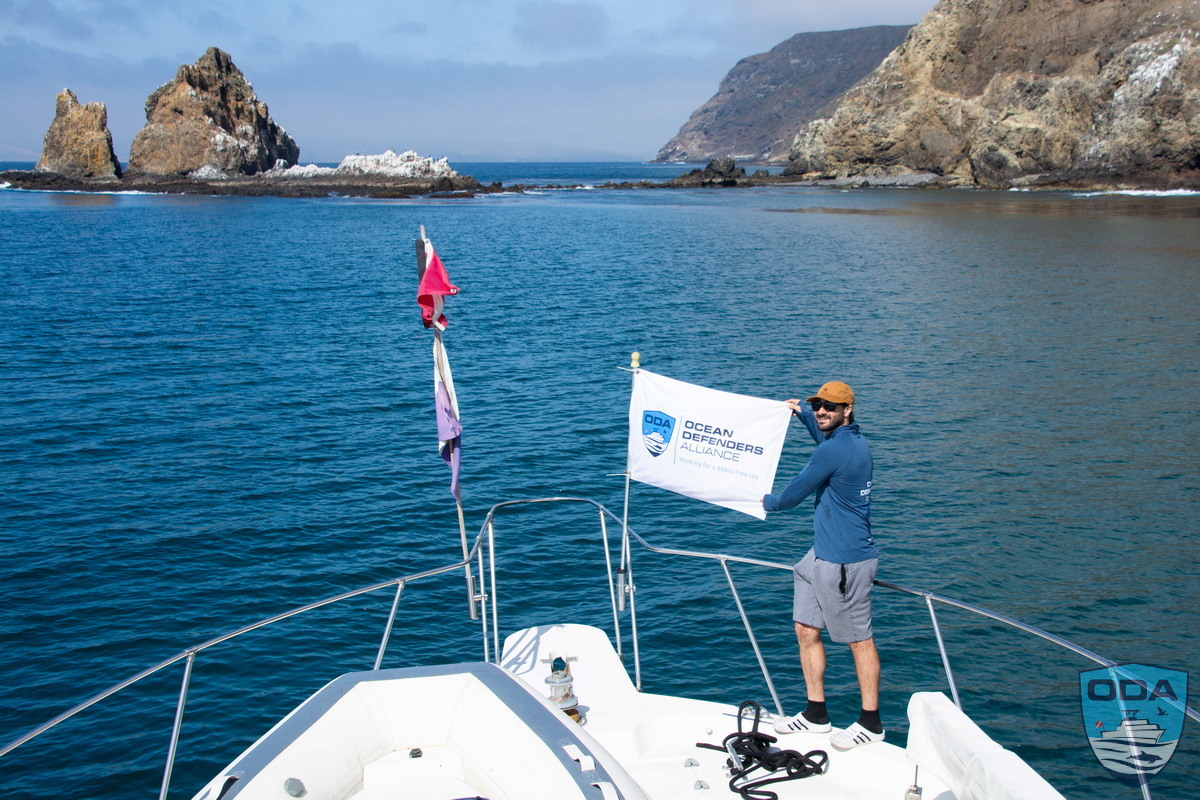
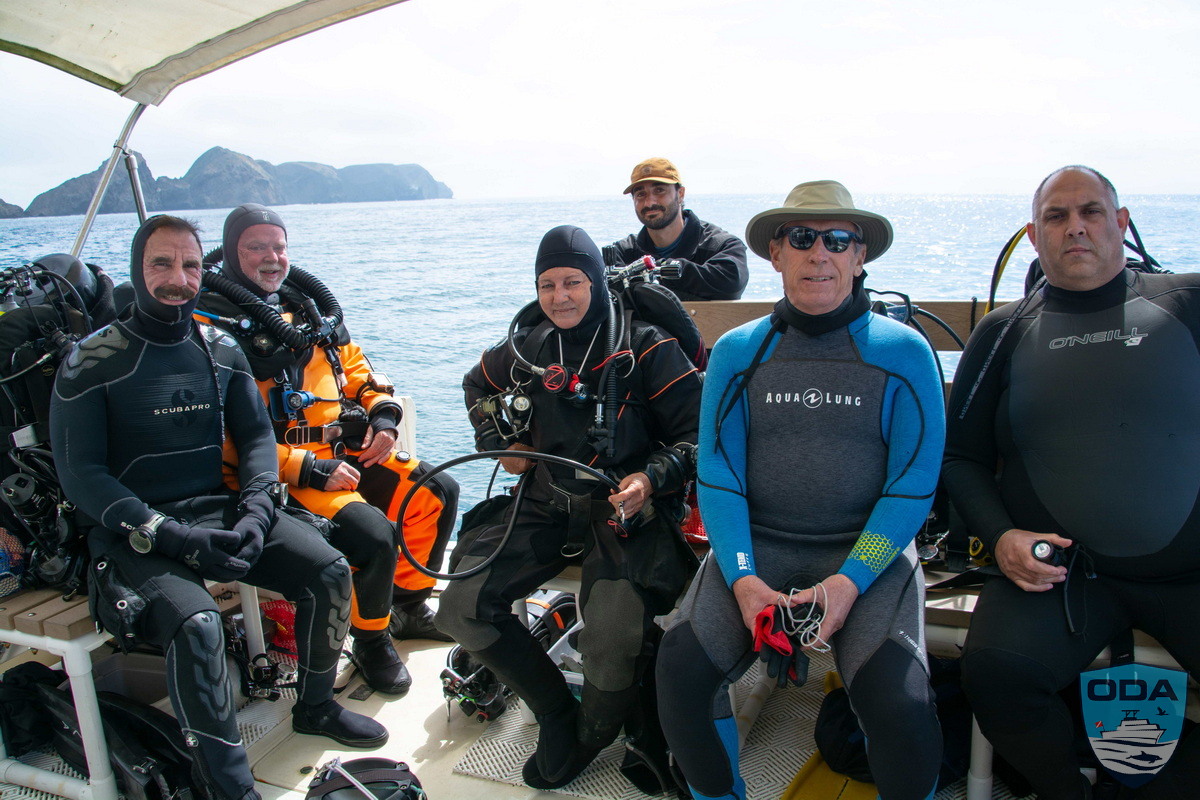
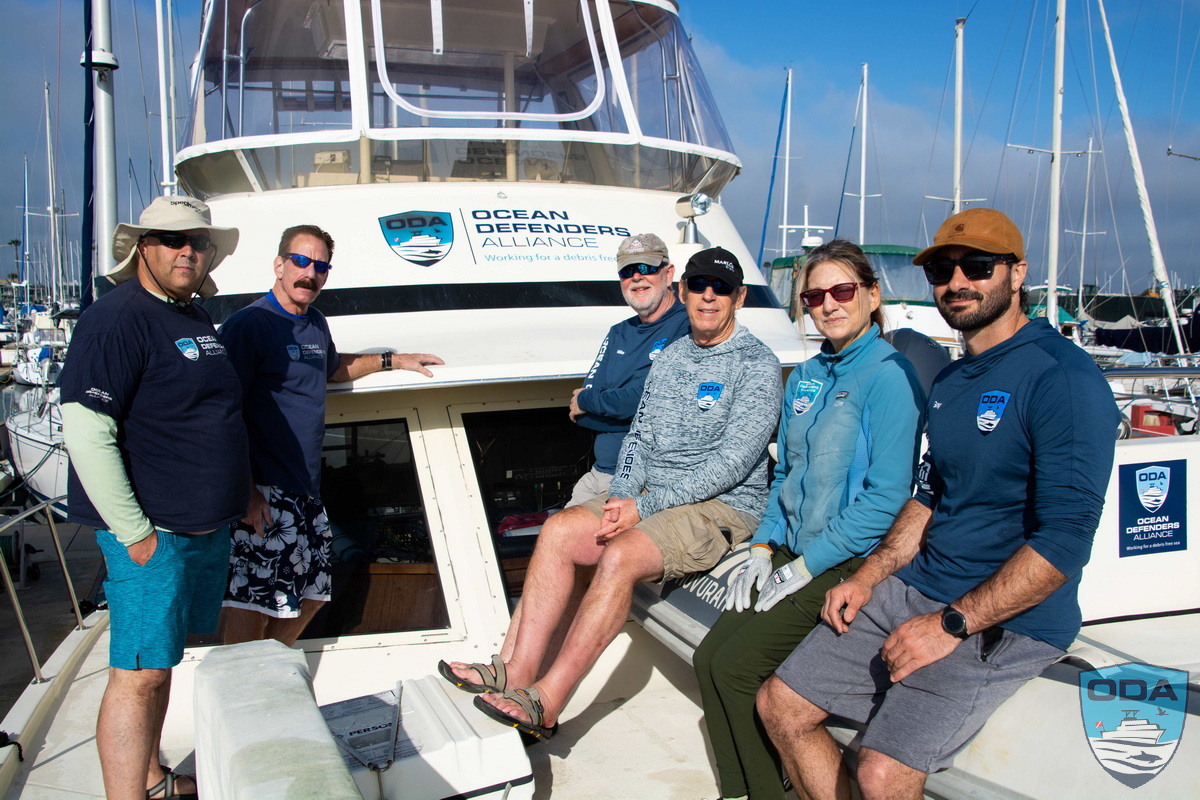
Divers this day were: Kevin Augarten, Kim Cardenas, Bart Steger, Geoff Walsh, and Mike Wynd. Helping me with all things on the boat was Greg Kaganovsky.
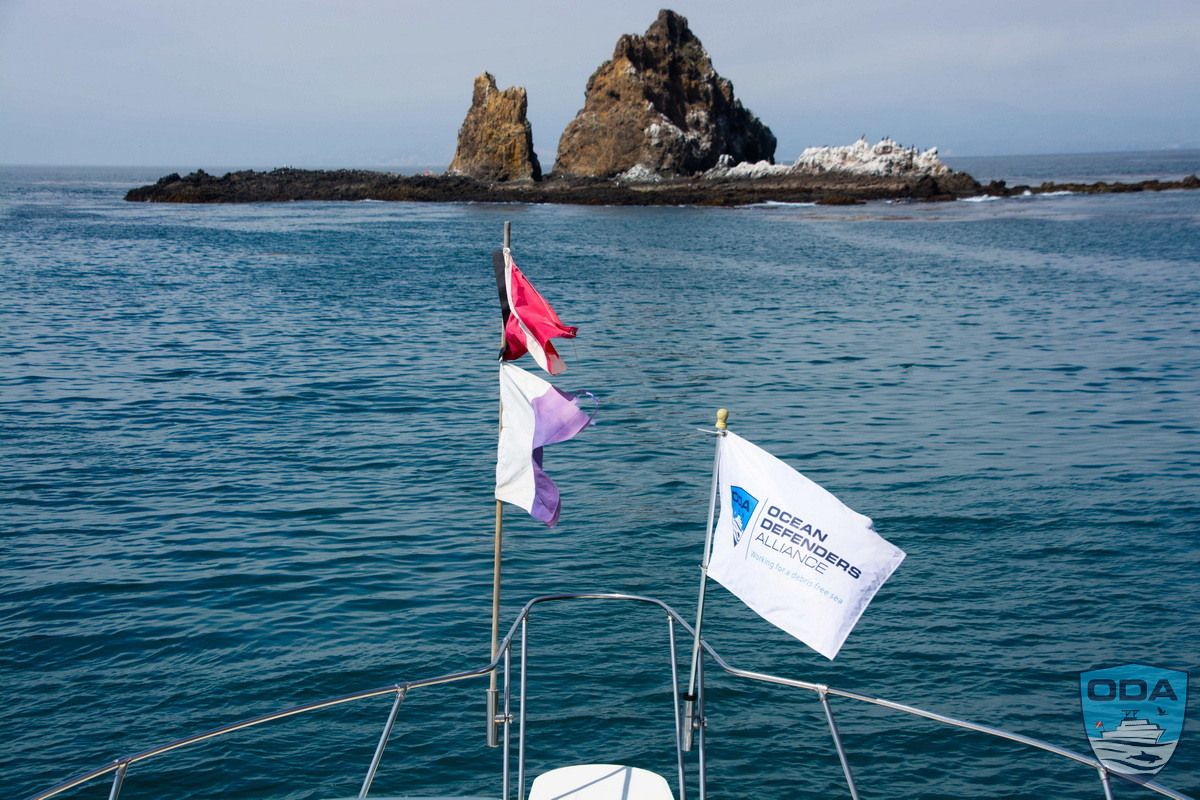
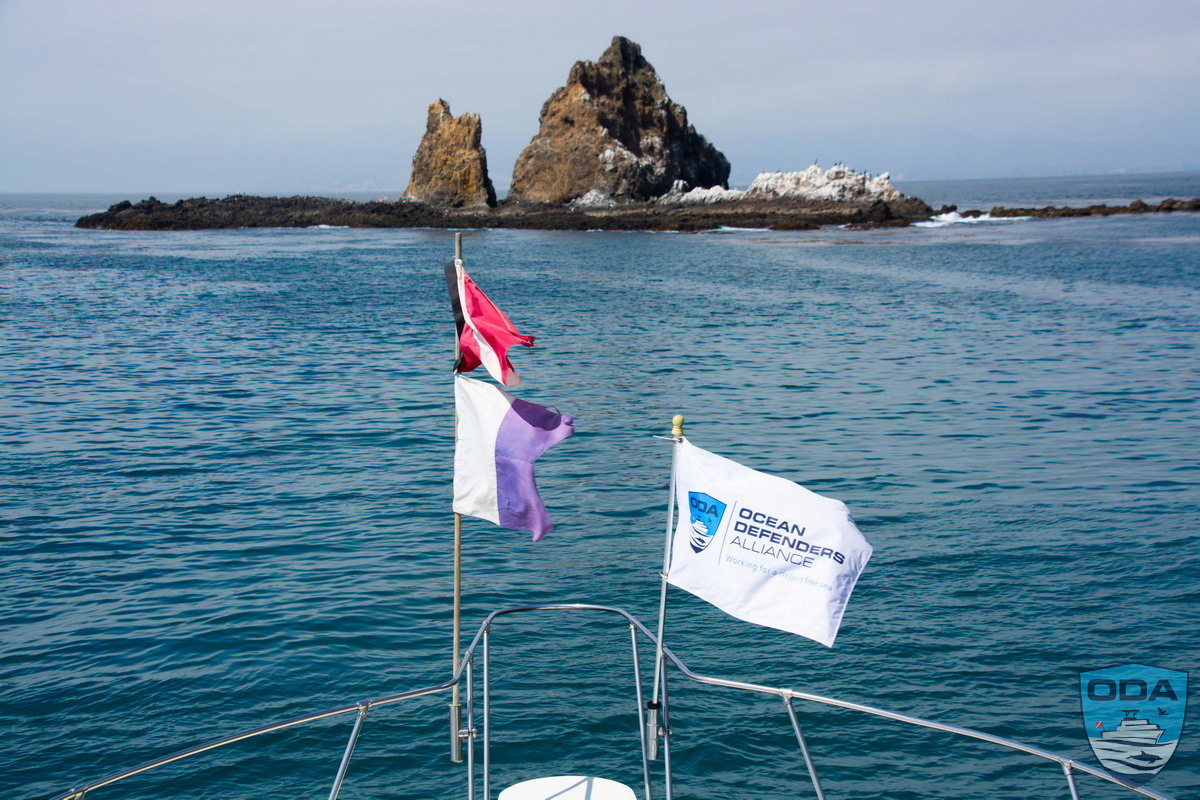
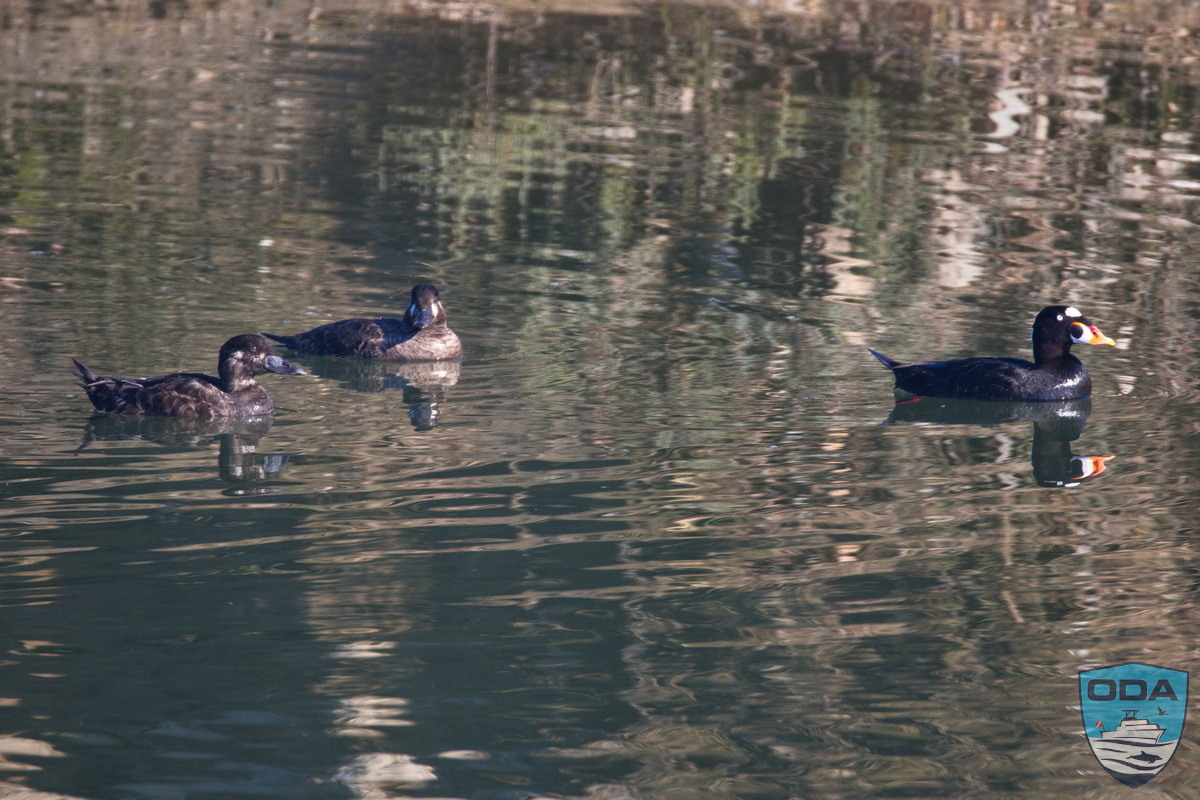
The day was really overcast, but the seas were pretty flat when we started out for the 16-mile trip. We didn’t see much wildlife on our way over, but once we got within a mile or so of the intended dive site, we started seeing lots of birds, most notably surf scoters. Hundreds of them. They are a migratory bird and were fattening up for their long haul up to Alaska.
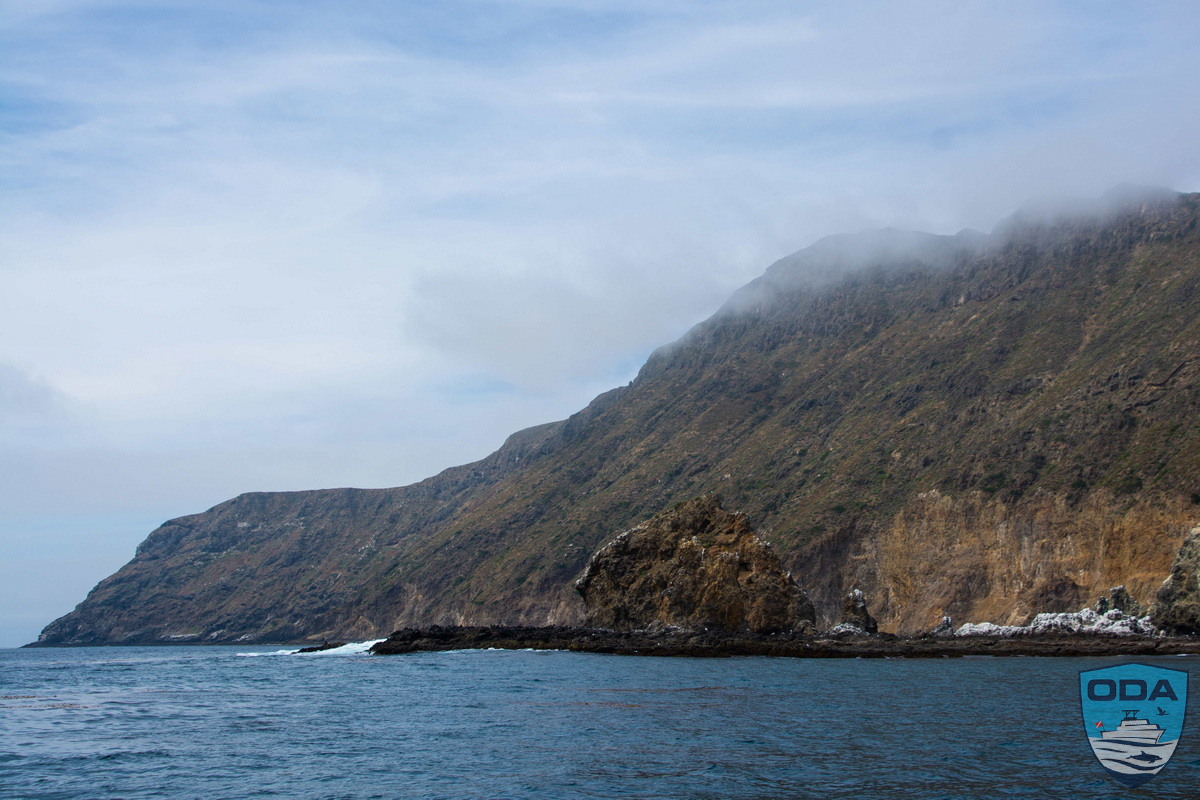
We anchored a short distance away from Cat Rock in about 35 feet of water thinking that this was roughly where Kevin and Kim had seen those traps.
It was about 11am and the skies were starting to open up. We could see kelp all around us, and the underwater visibility (vis) looked pretty good. At least from the surface.
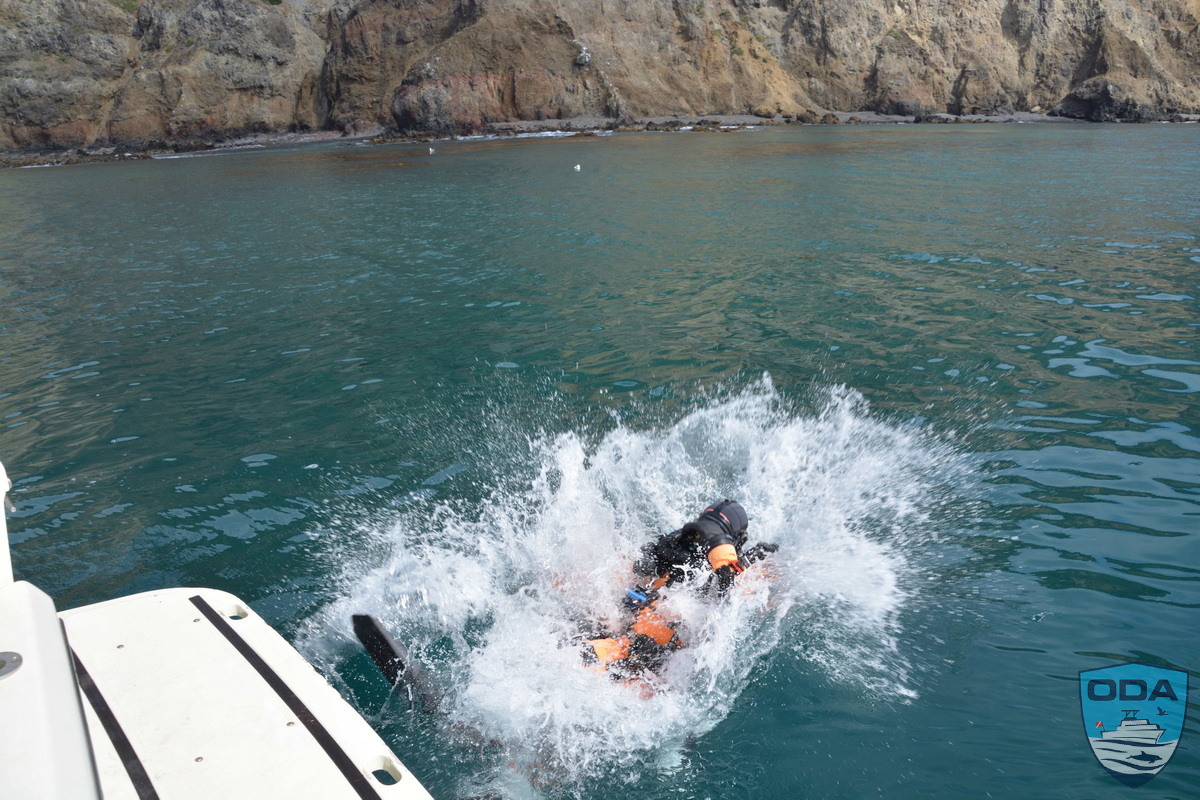
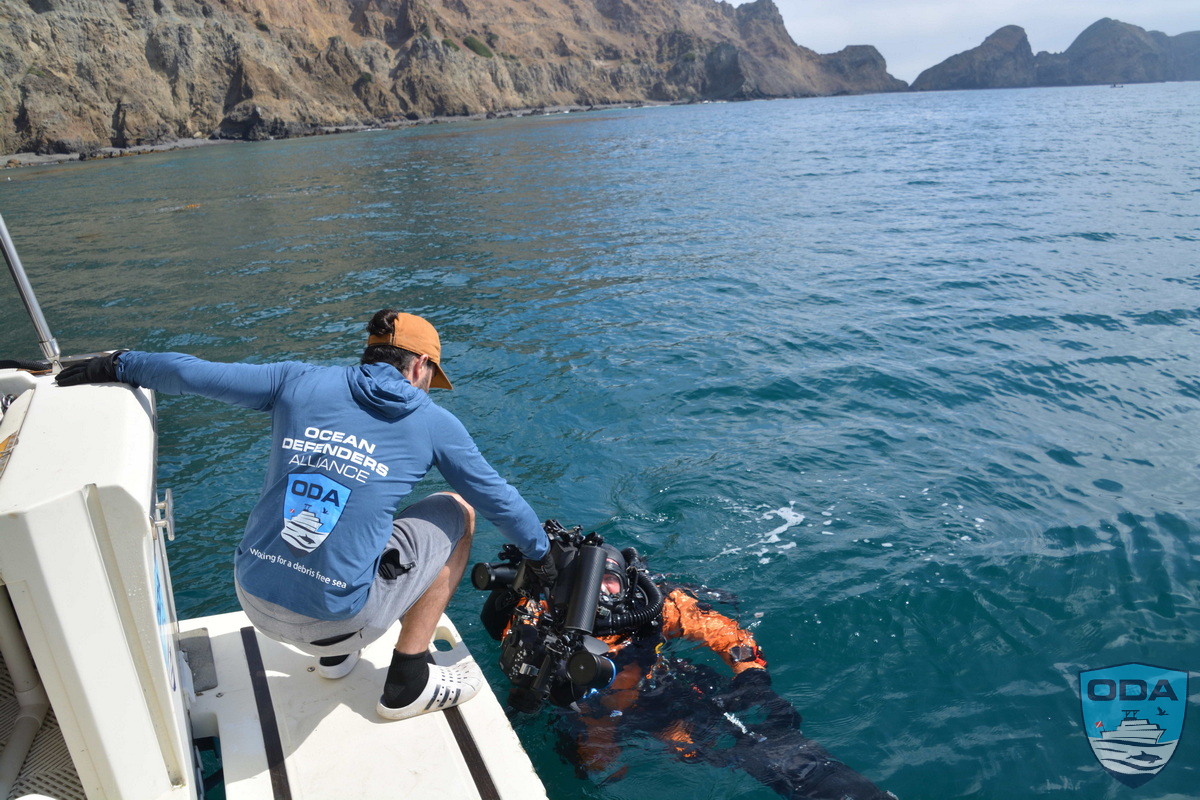
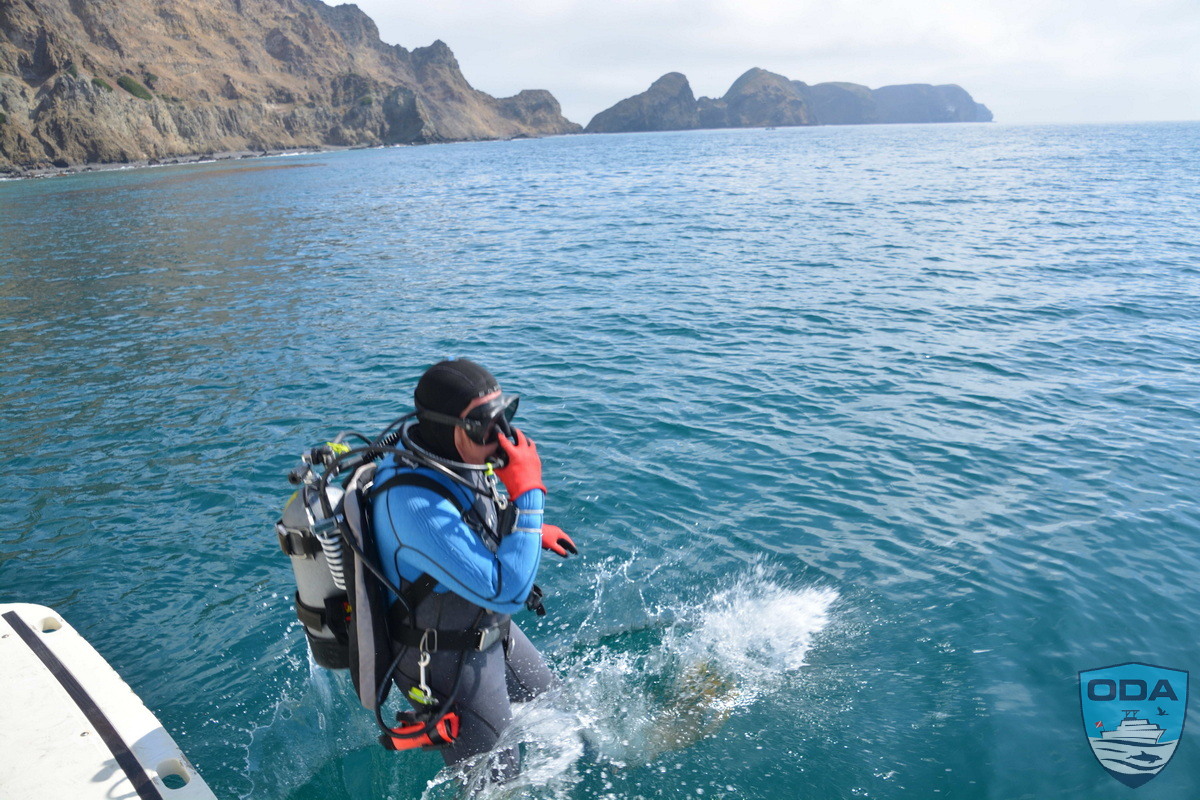
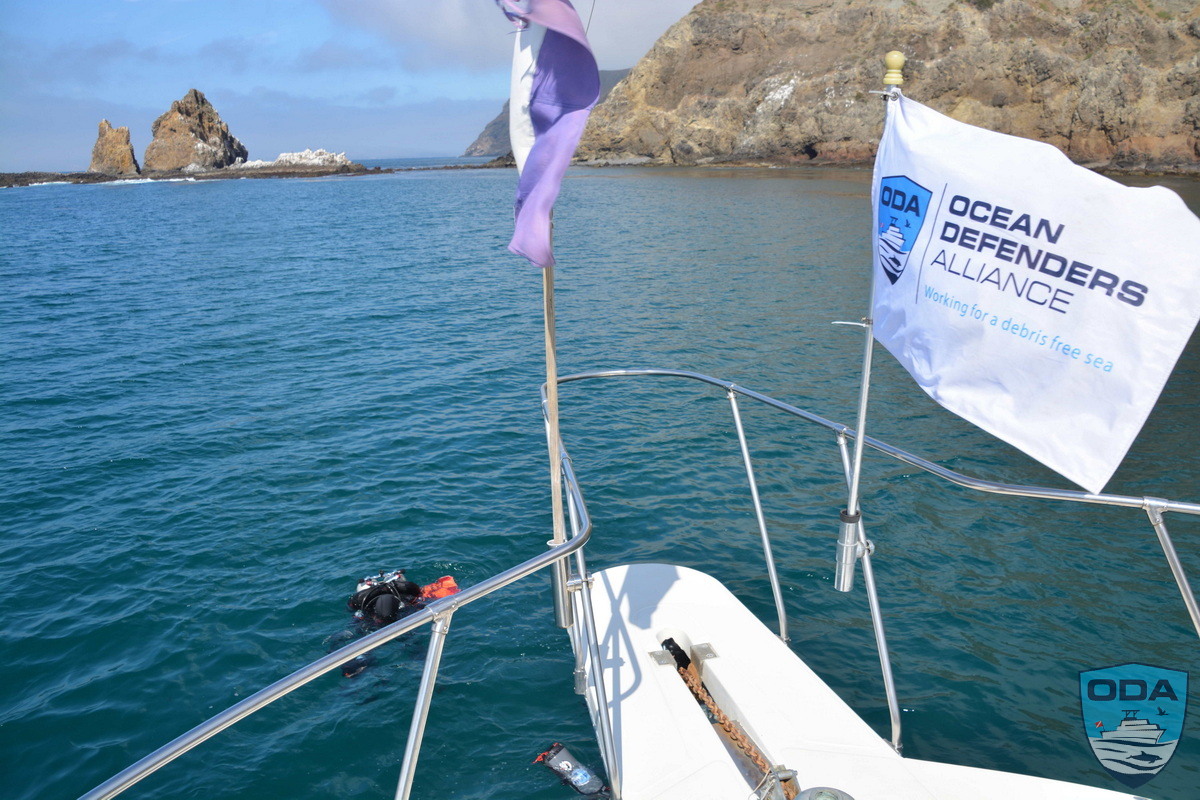
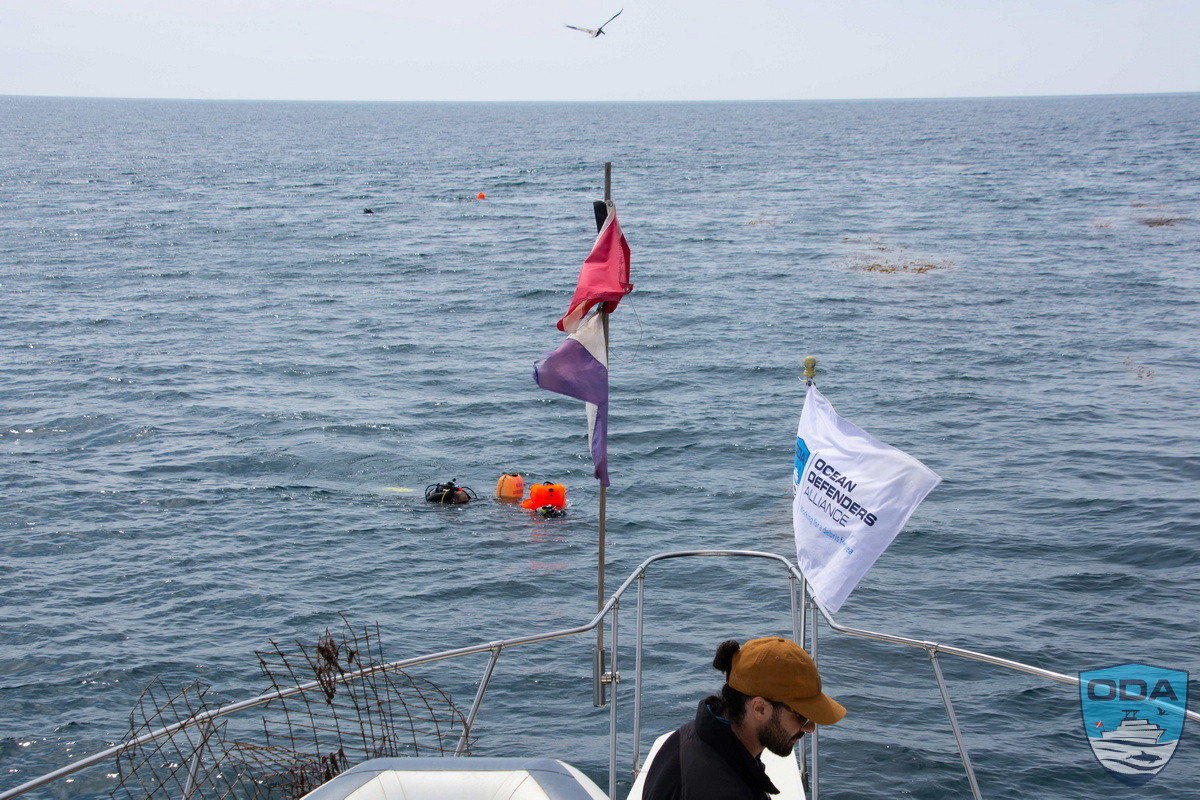
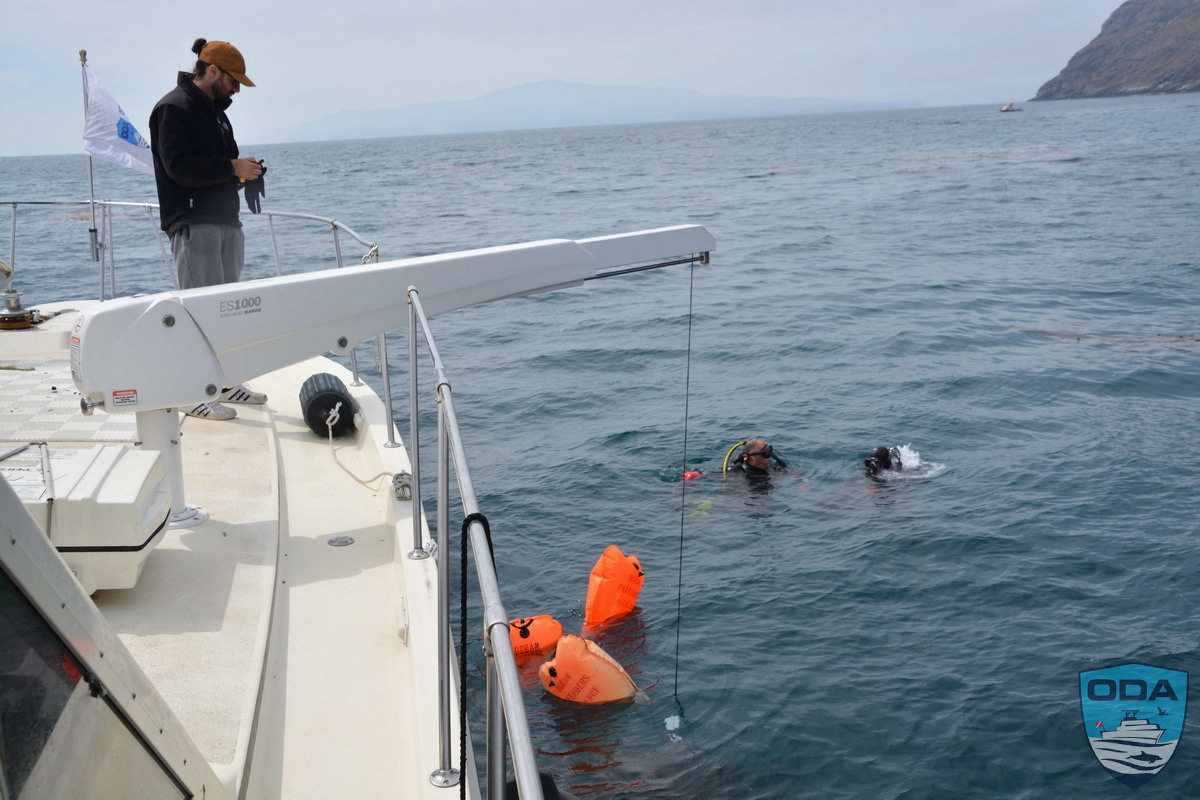
Mike was the first in, grabbed his scooter and camera, then headed down the anchor line. Kevin, Kim, Bart and Geoff followed suit about 10 minutes later.
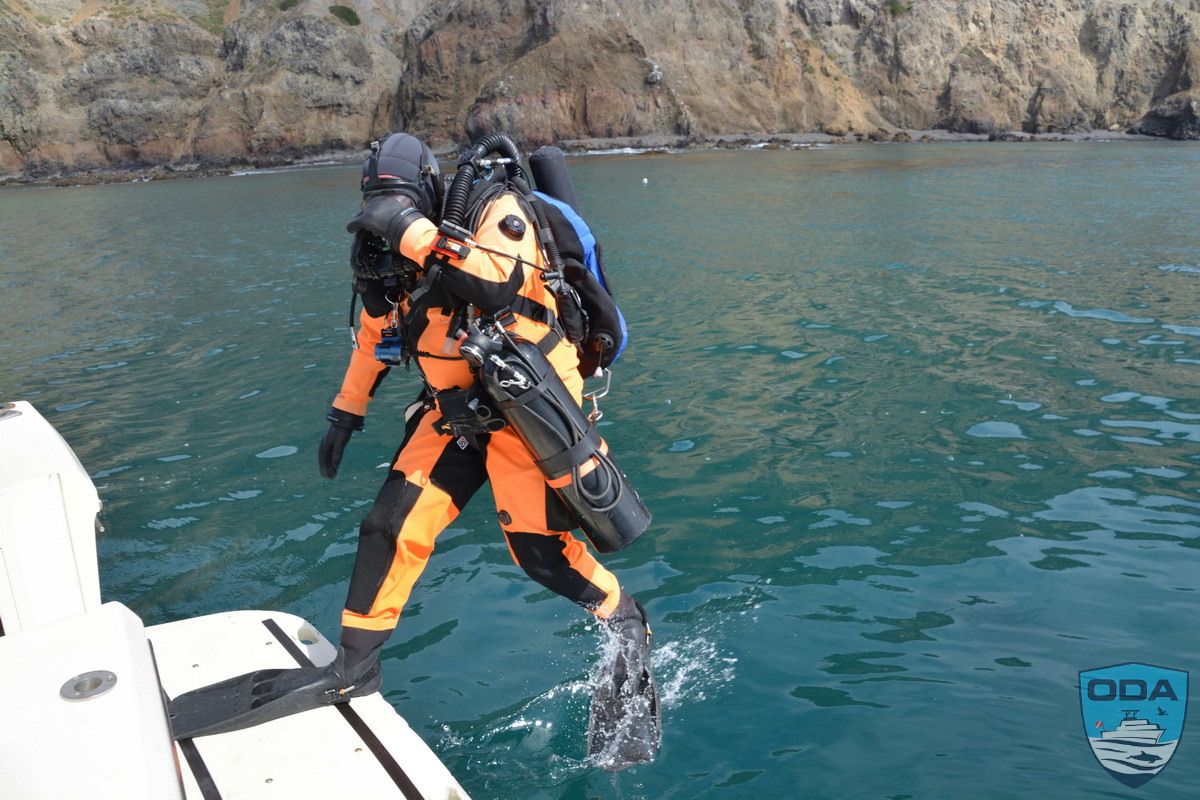
This gave Greg and I a few minutes to take in the beautiful sights that the Channel Islands have to offer. Lots of bird life flying around the cliffs, schools of fish flashing just under the surface, and California sea lions chasing them around hoping to nab a snack.
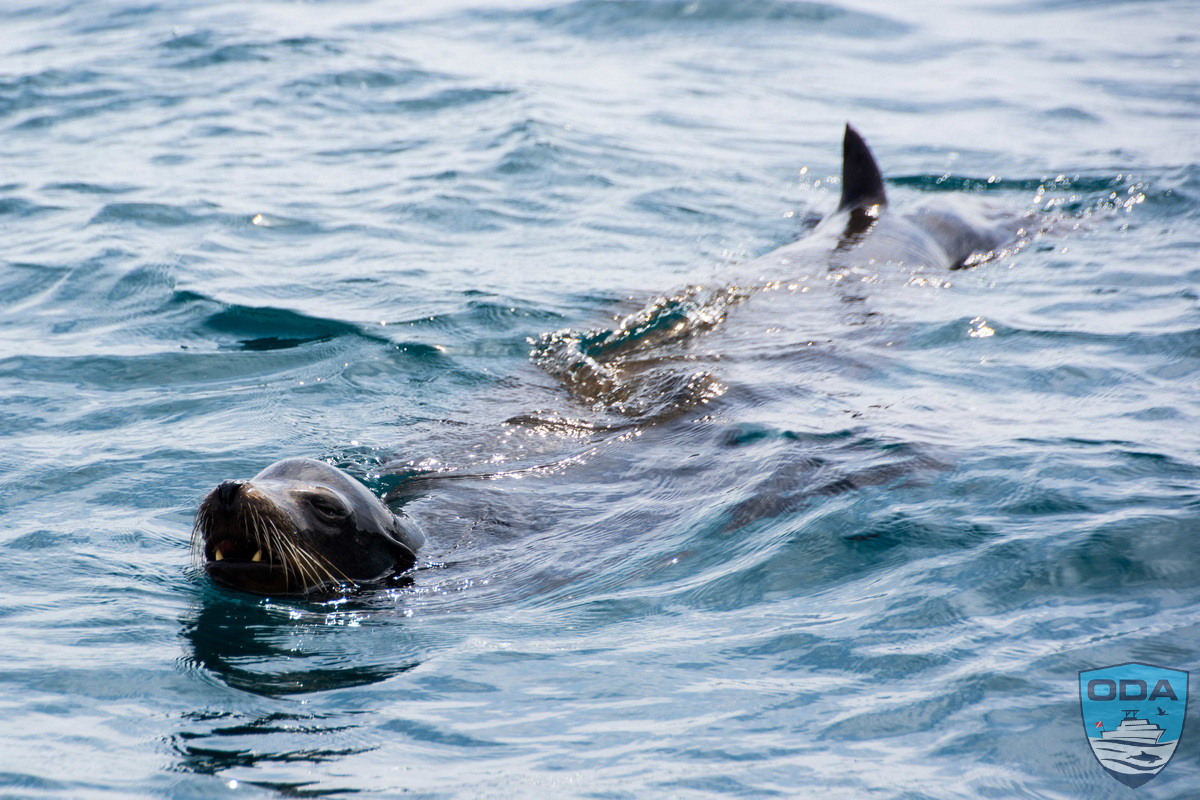
Then one of the seal lions stopped to visit.
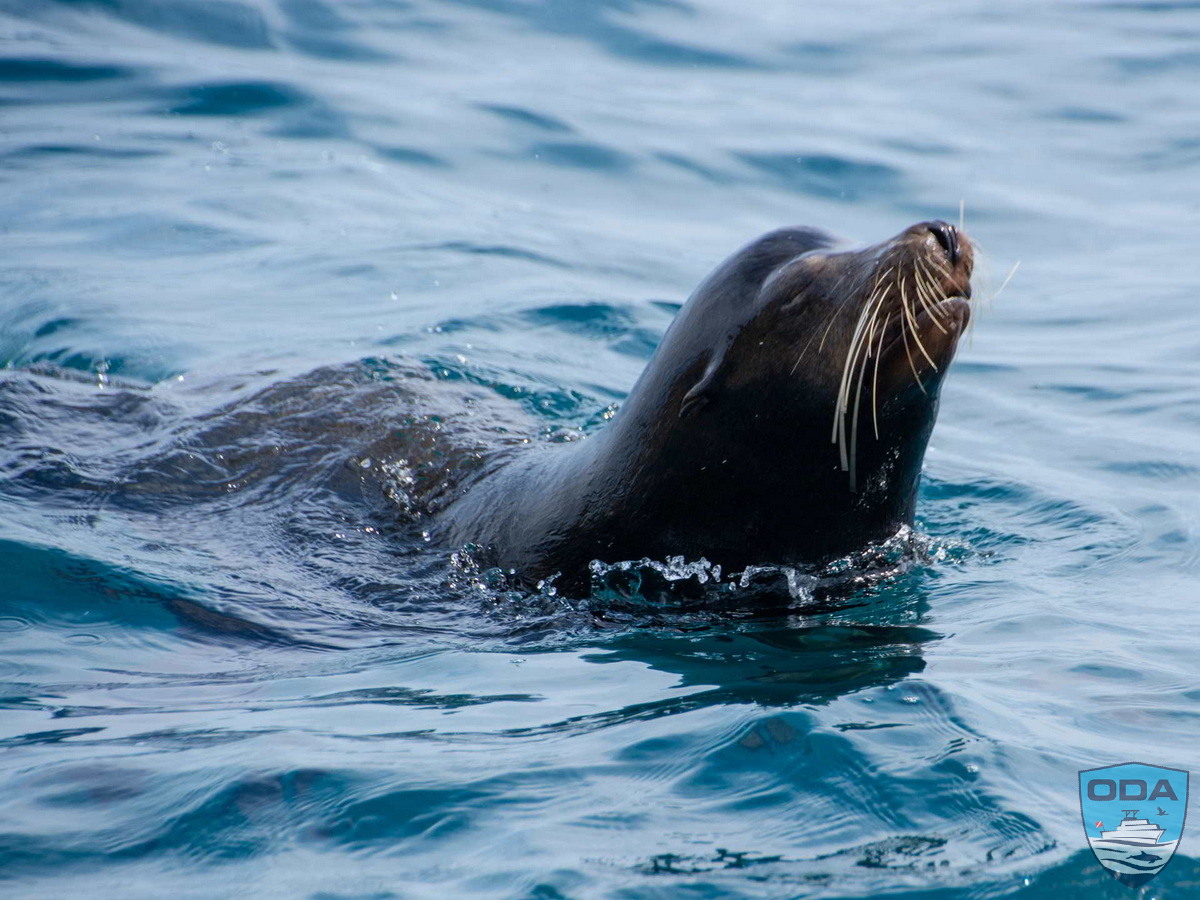
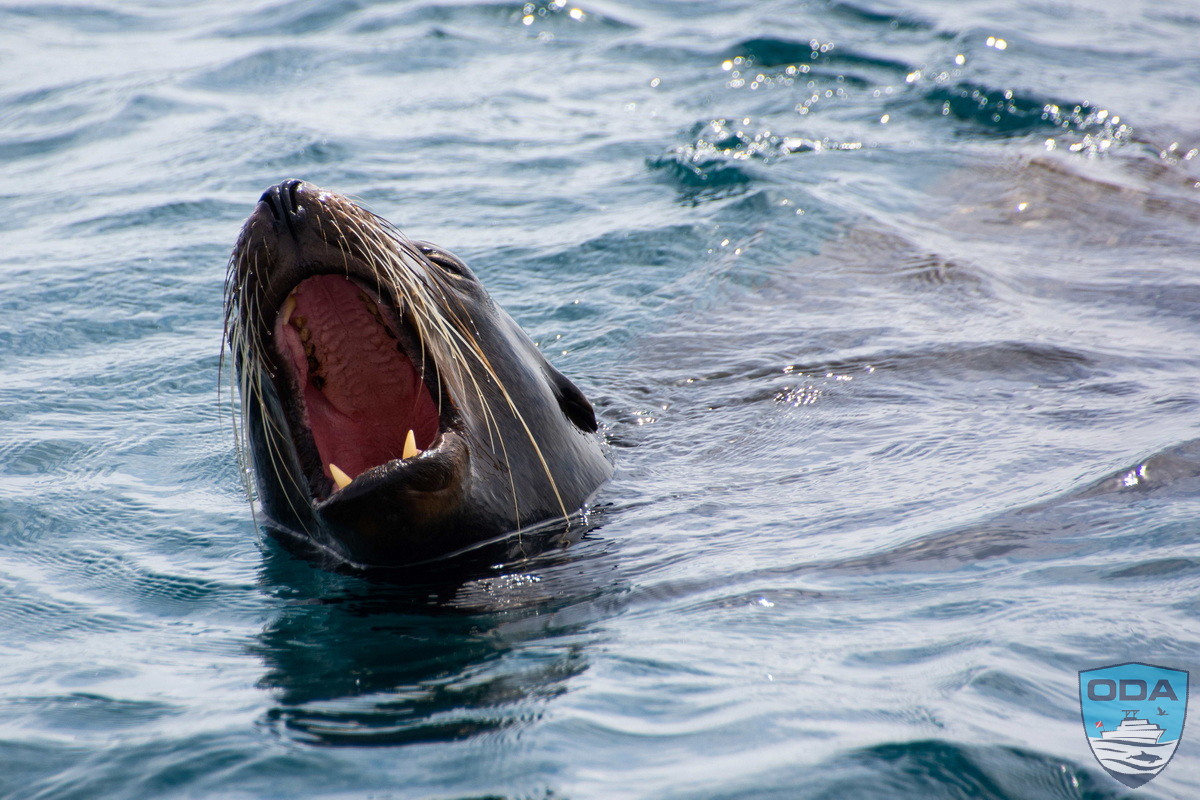
A large male sea lion was lounging around the boat and showed us his dentures. My oh my, what a lovely smile you have!
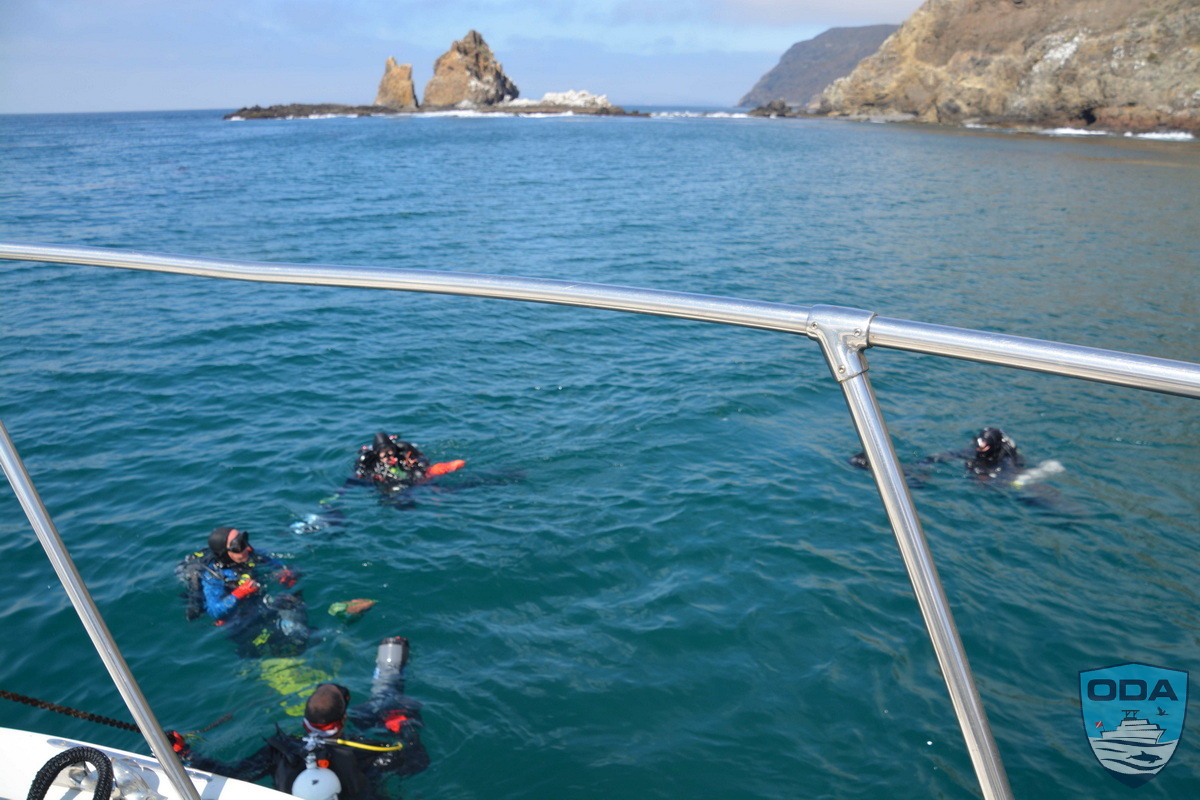
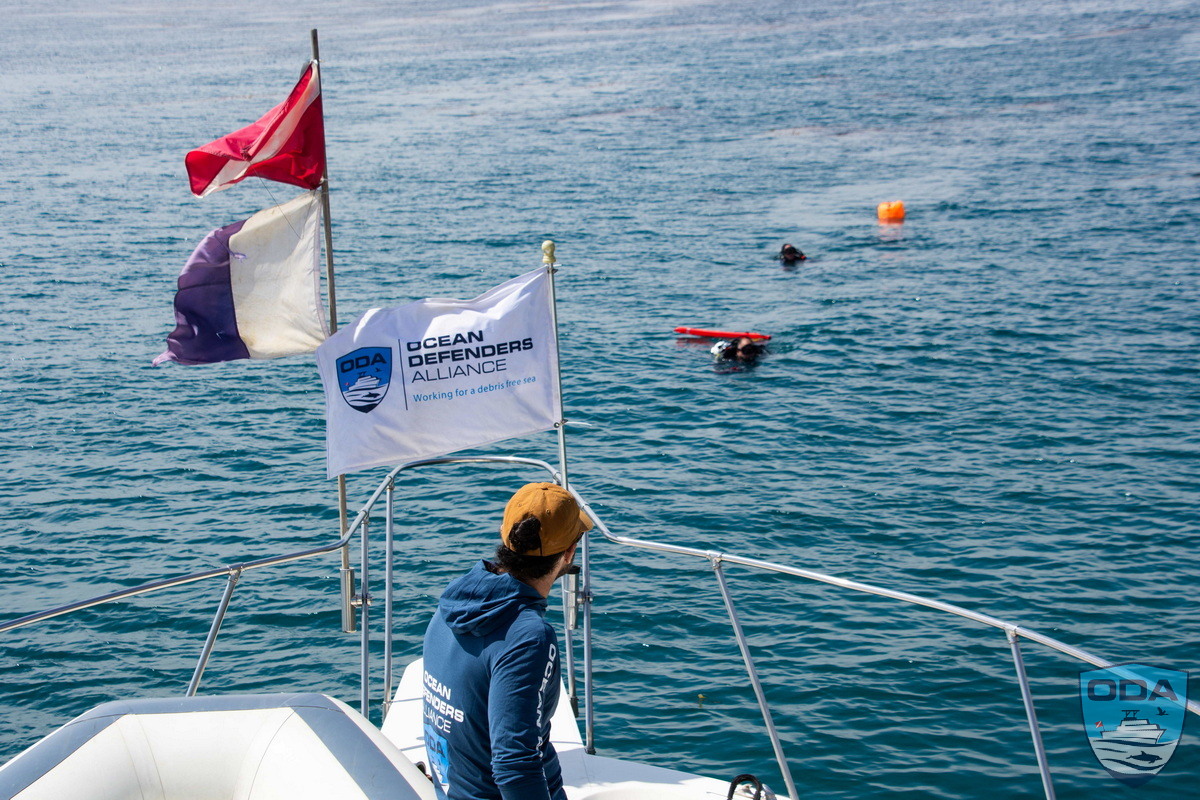
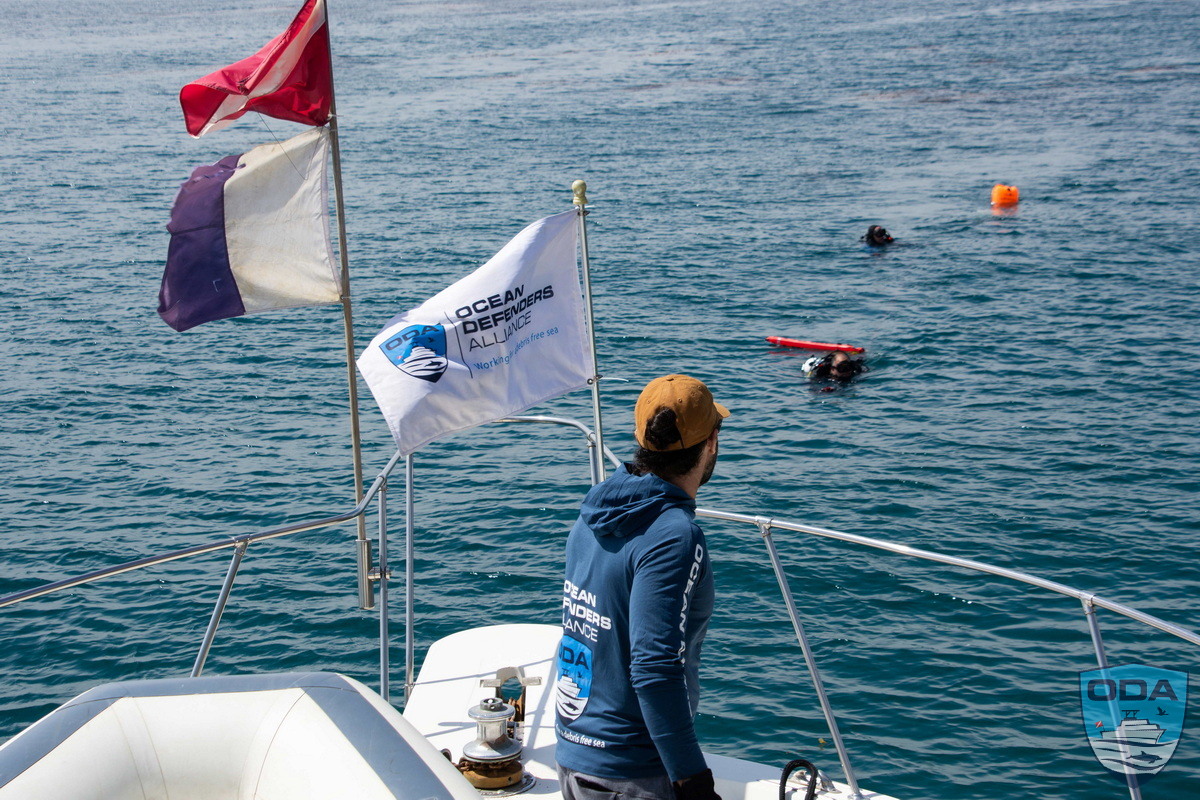
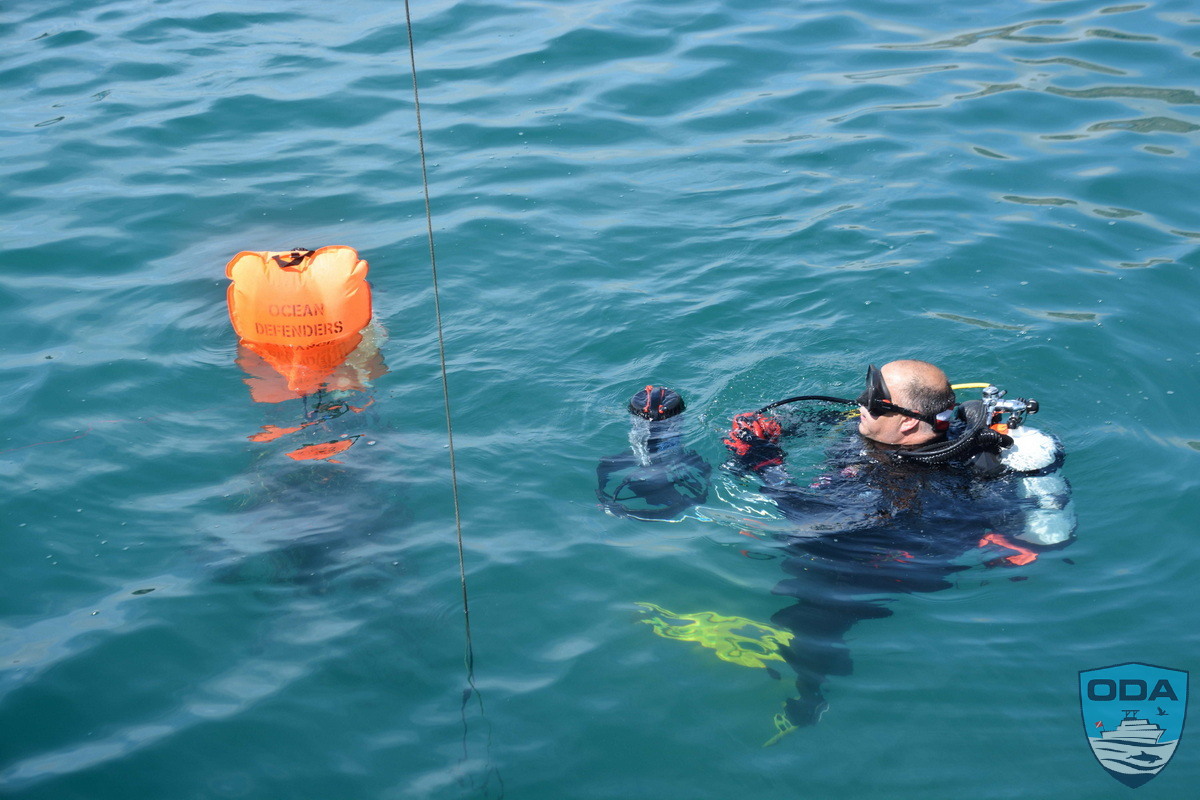
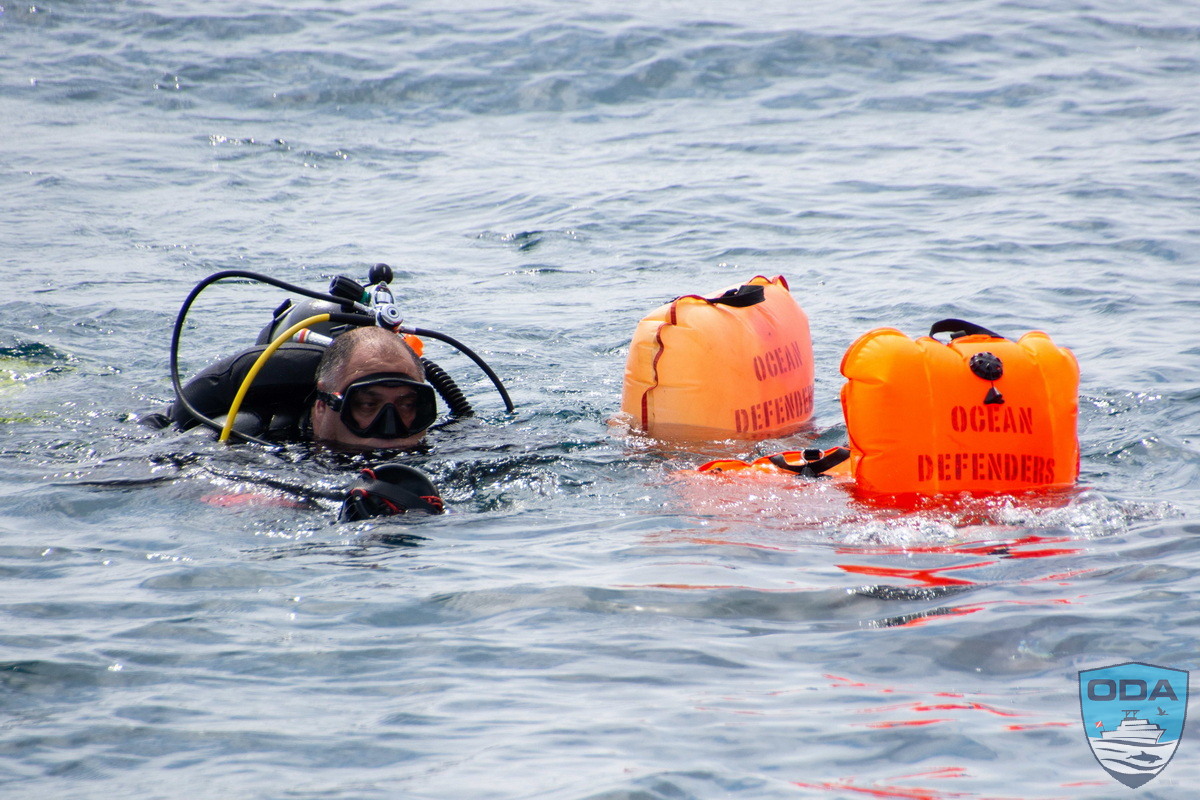
About 30 minutes went by and we still hadn’t seen a single lift bag at the surface. Then one popped up about 100 yards away. Excellent!
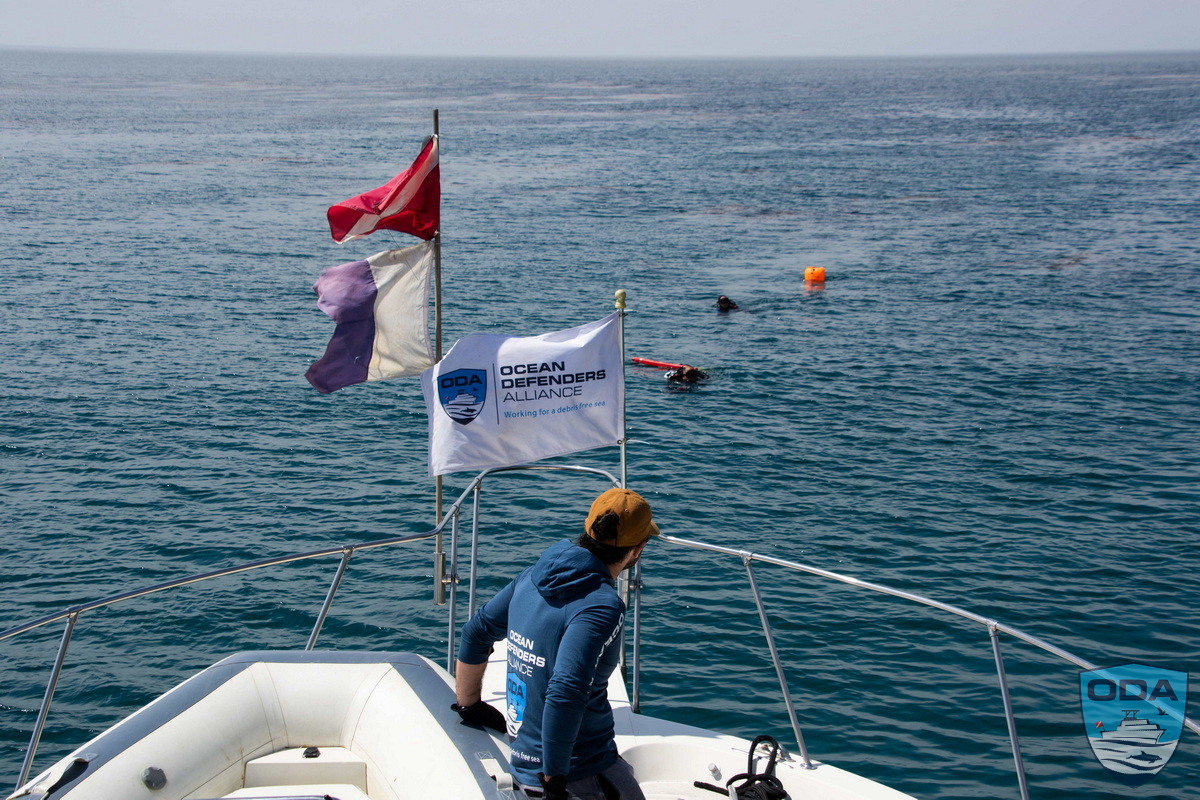
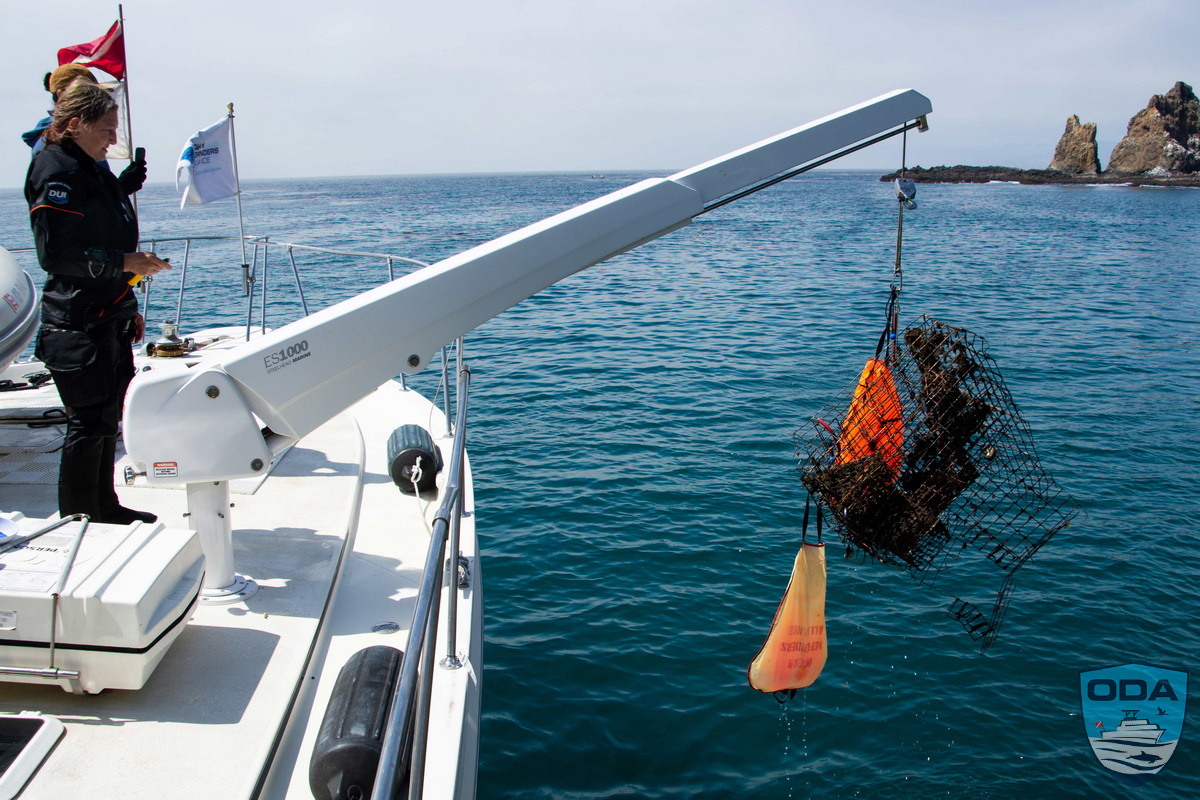
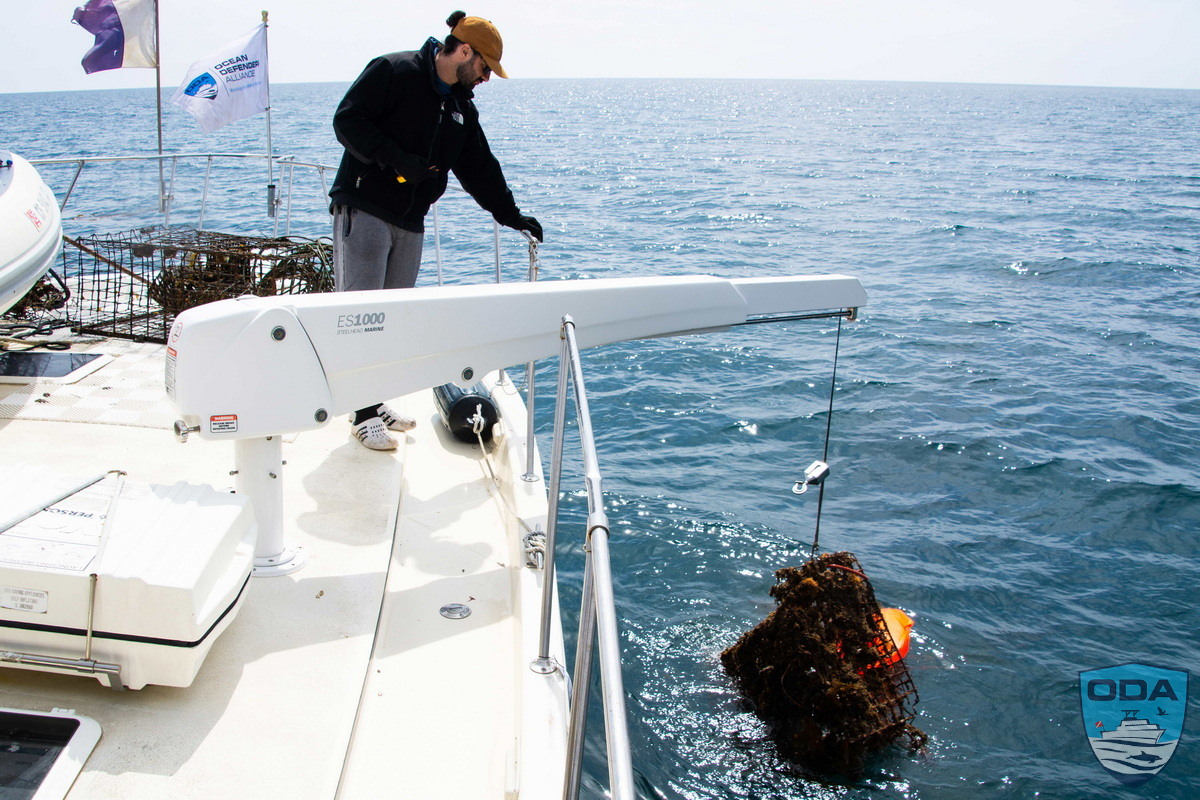
Because we were shorthanded on the boat, we couldn’t launch our smallboat that would normally be used to haul the trap back to the LegaSea. So, the divers used the power of their underwater dive propulsion scooters to haul it all the way back to us.It took them about 10 minutes to make that journey. Bart connected the trap to the hook on the end of the davit line (a crane onboard our boat), and up she came.
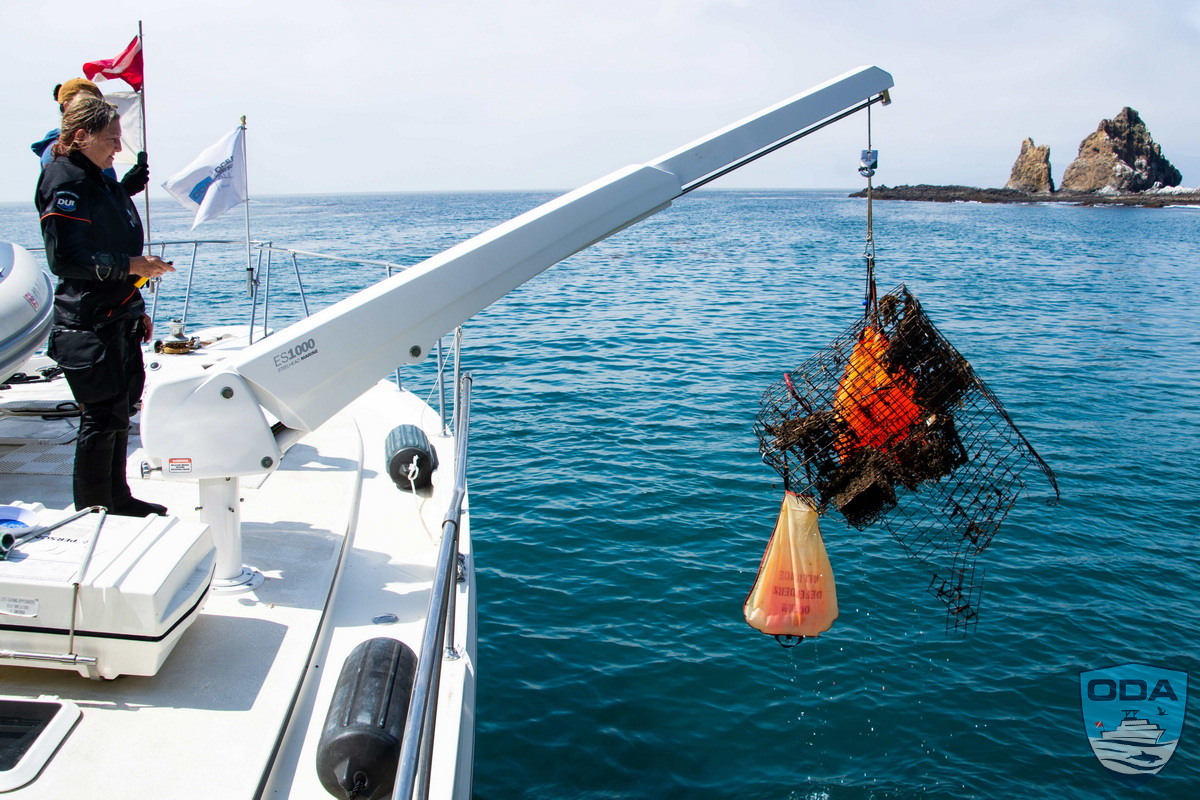
There's always the joy of wrangling the big cage onto the boat.
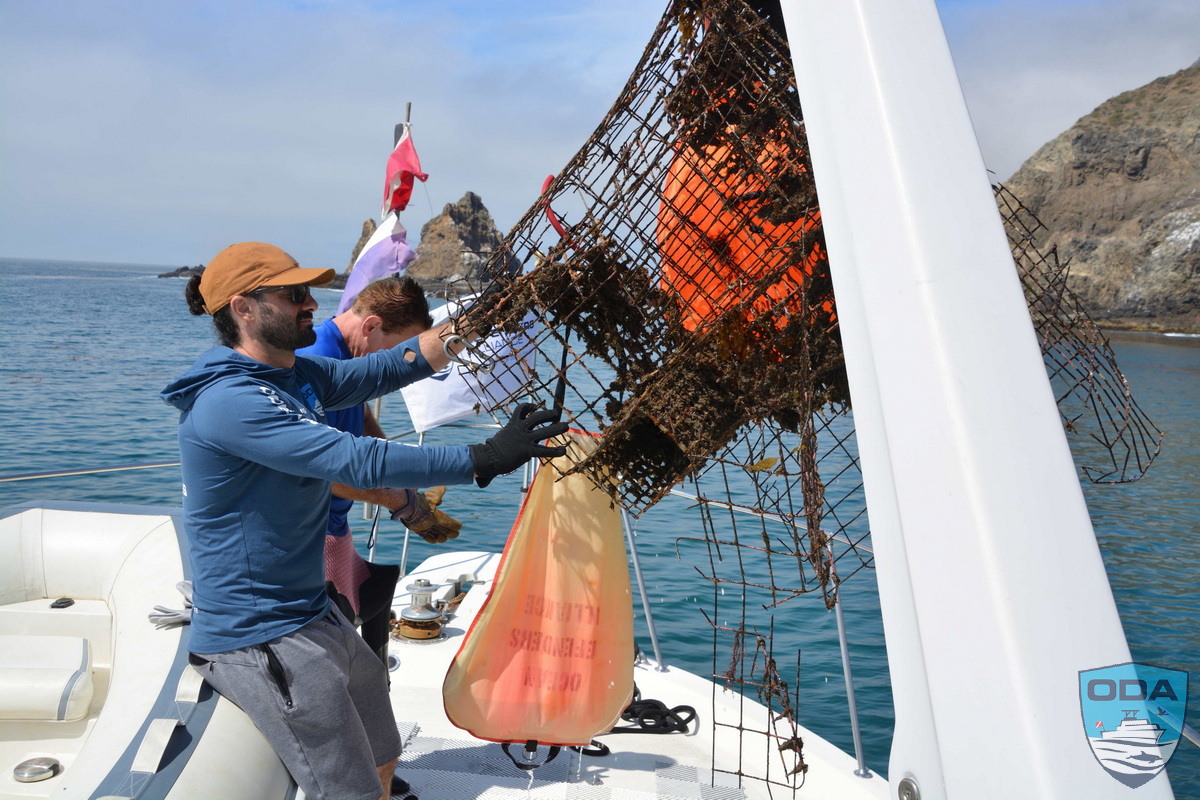
By this time, all the divers were back on the boat, and we heard all about how bad the vis was and that they couldn’t see more than 7 feet.
We sat around eating snacks while the divers warmed up and we discussed options for a second dive. Because the vis was so bad we decided to move into deeper waters and moved the boat about 100 yards away.
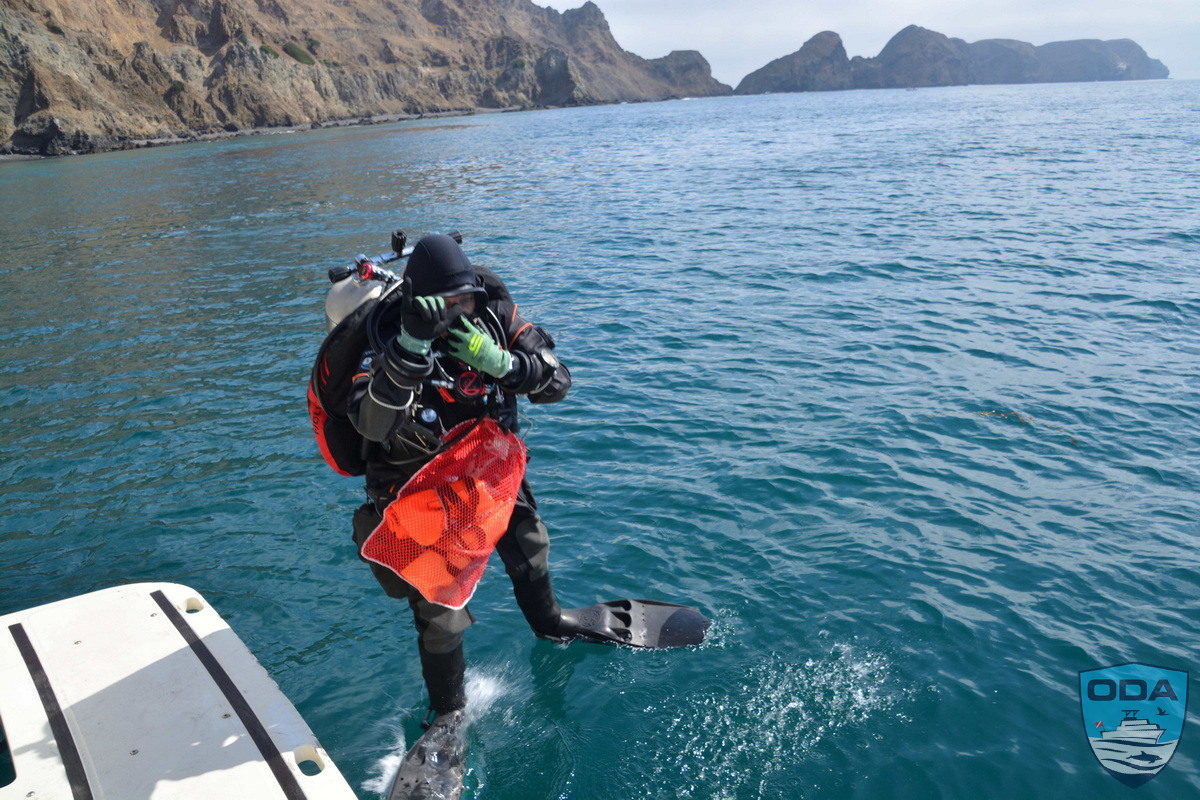
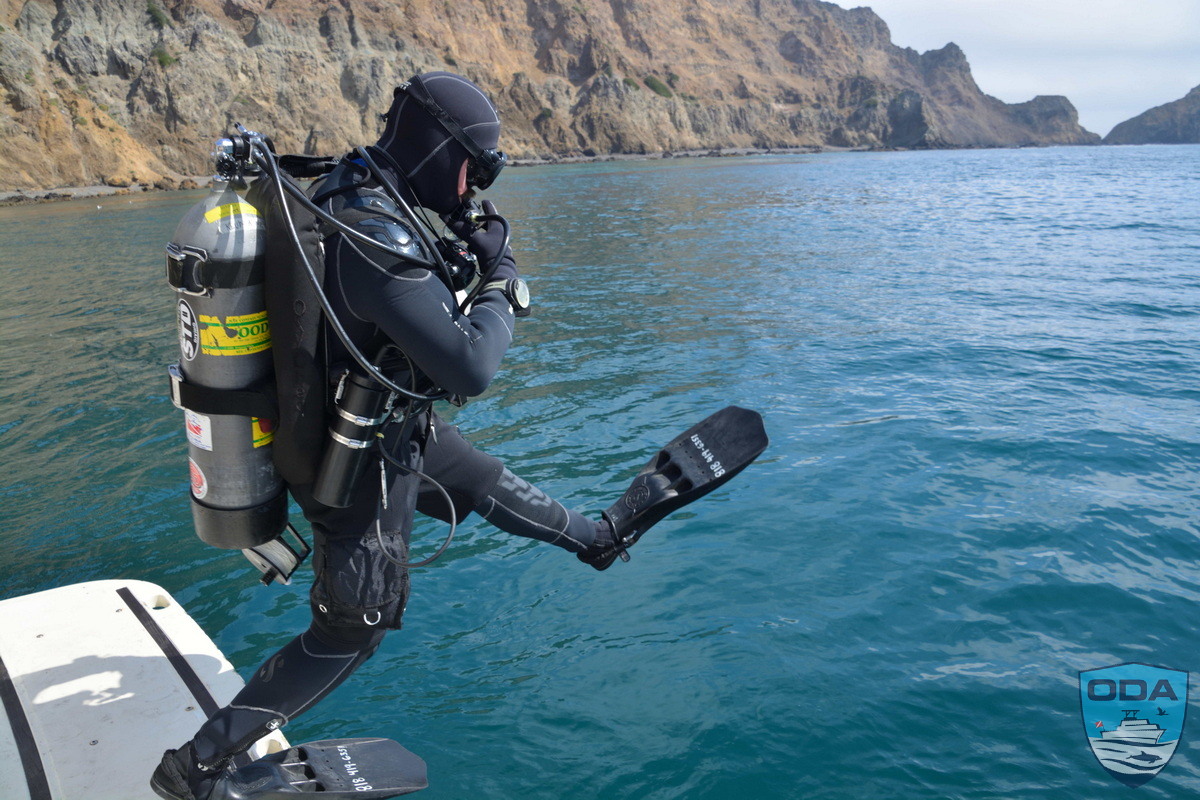
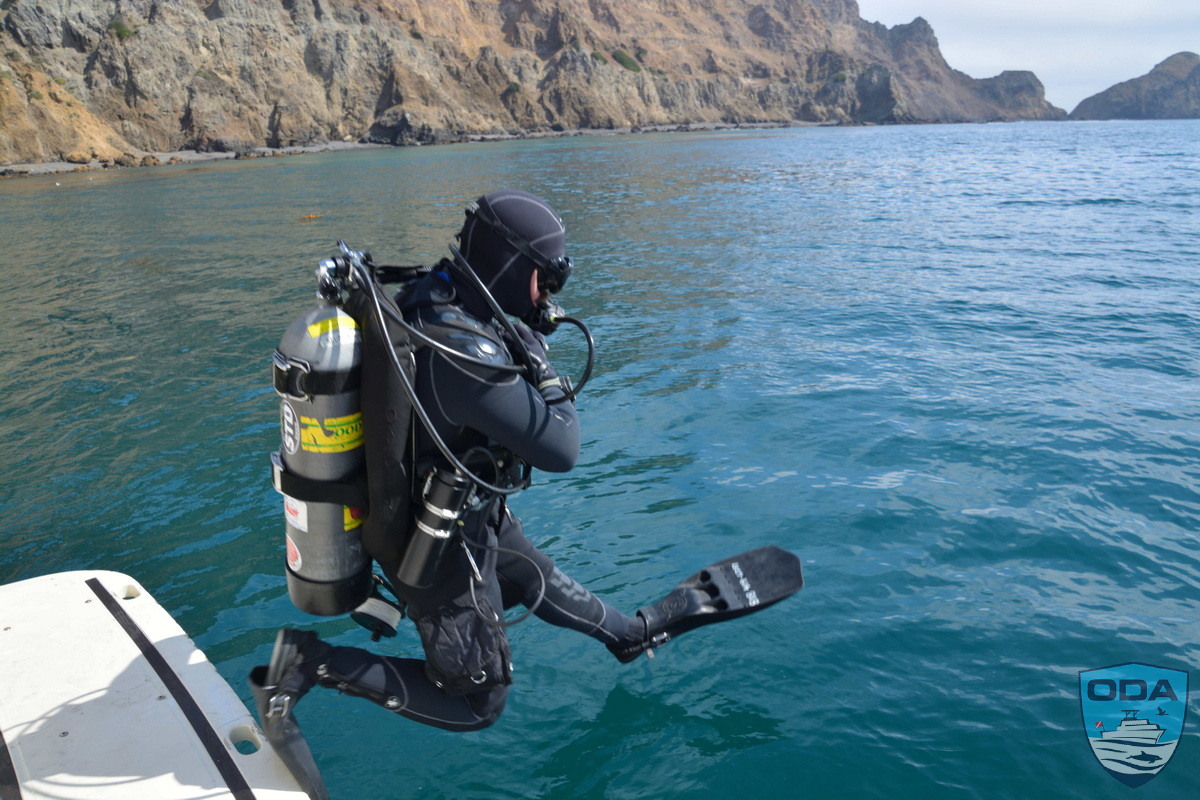
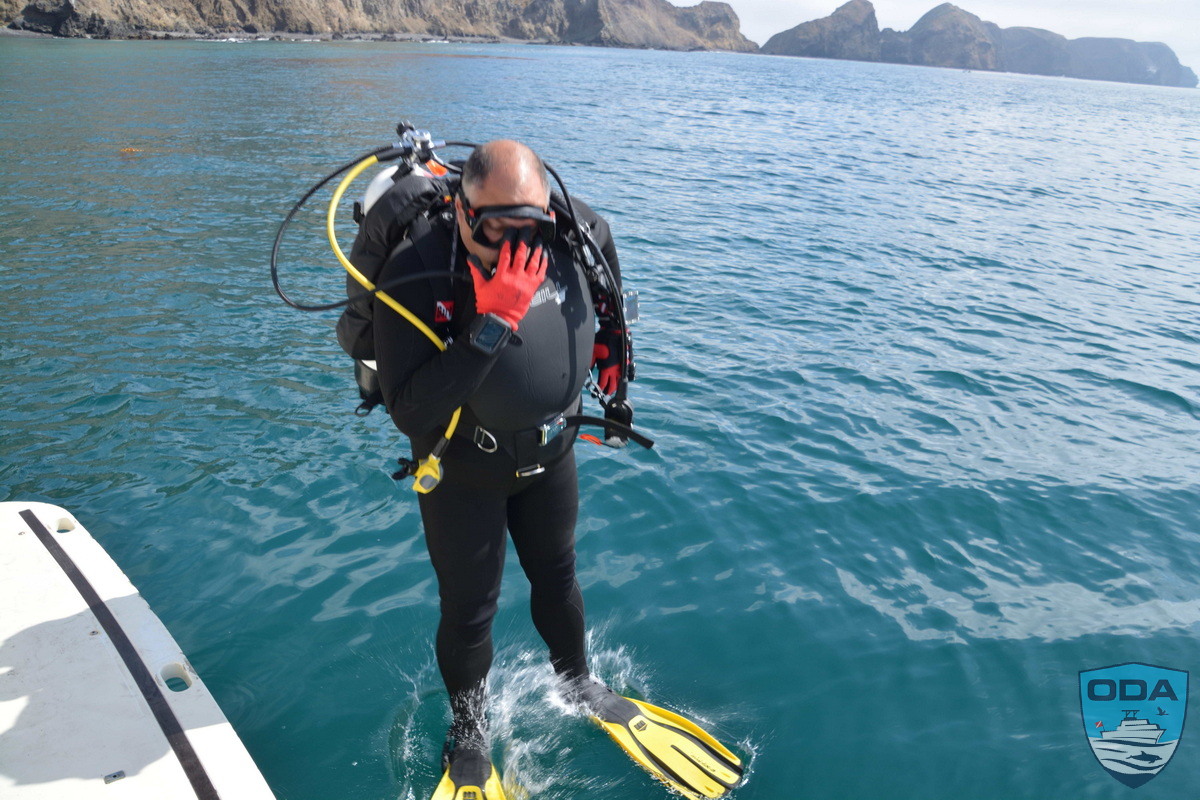
All divers jumped back in around 1 o'clock. Twenty minutes later we saw 2 lift bags pop up, this time about 125 yards away… oh boy that was going to take them awhile to haul it back to us. Indeed, it did, at least 15 minutes.
While that was transpiring, 2 more bags were spotted about 75 yards away. As the first team hooked up the trap to the davit, the second team were just minutes away from the boat, and we got both traps up with no major issues.
Once all the divers were back aboard, we inspected the traps to see if there were any ID tags on them. I only saw one and took notes of the ID numbers which I let the DF&W know about.
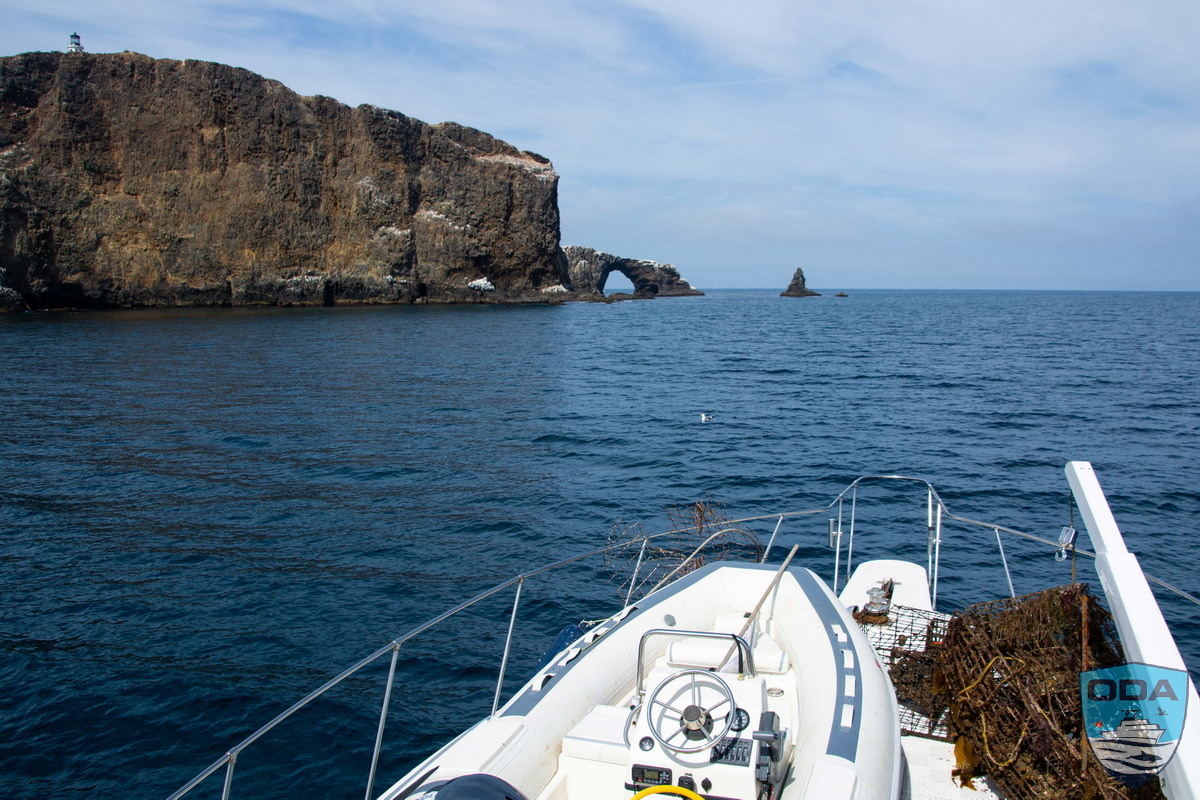
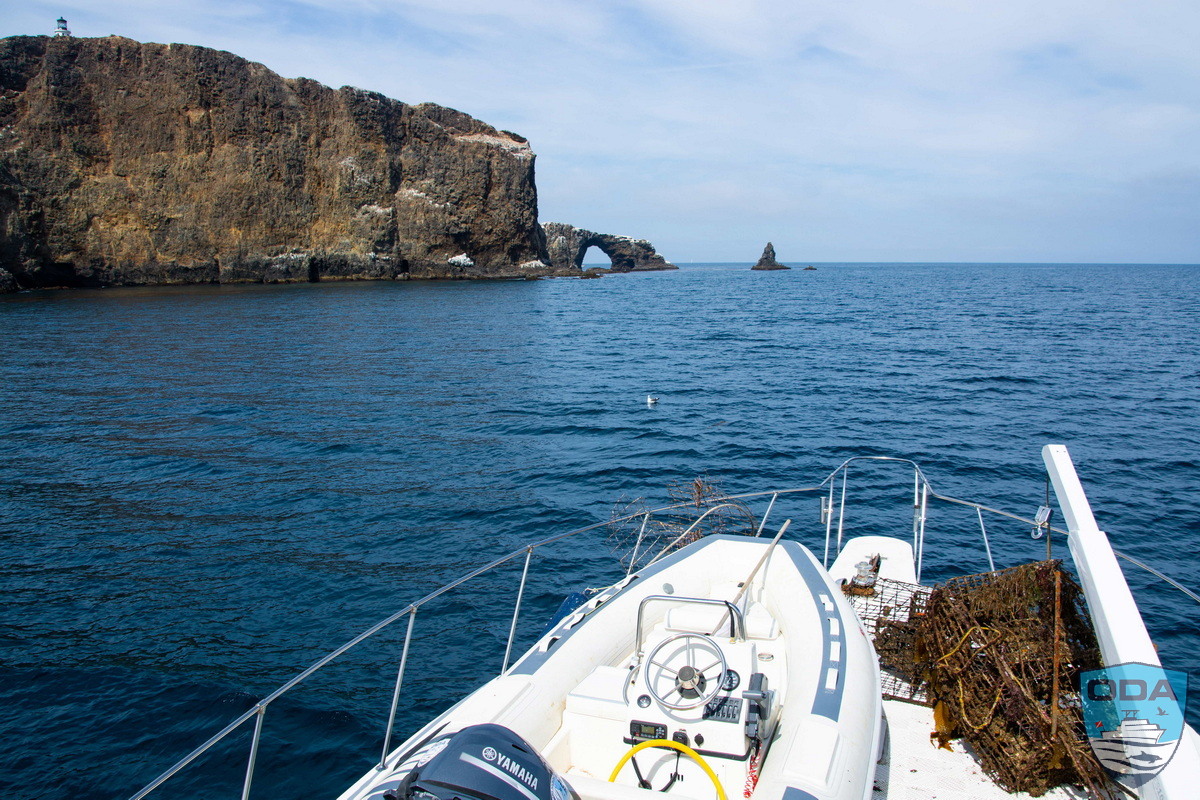
We headed back to port and just as we were rounding Arch Rock the seas started to get bigger. So, our ride home wasn’t as pleasant as the one in the morning. But we made the trek in about an hour.
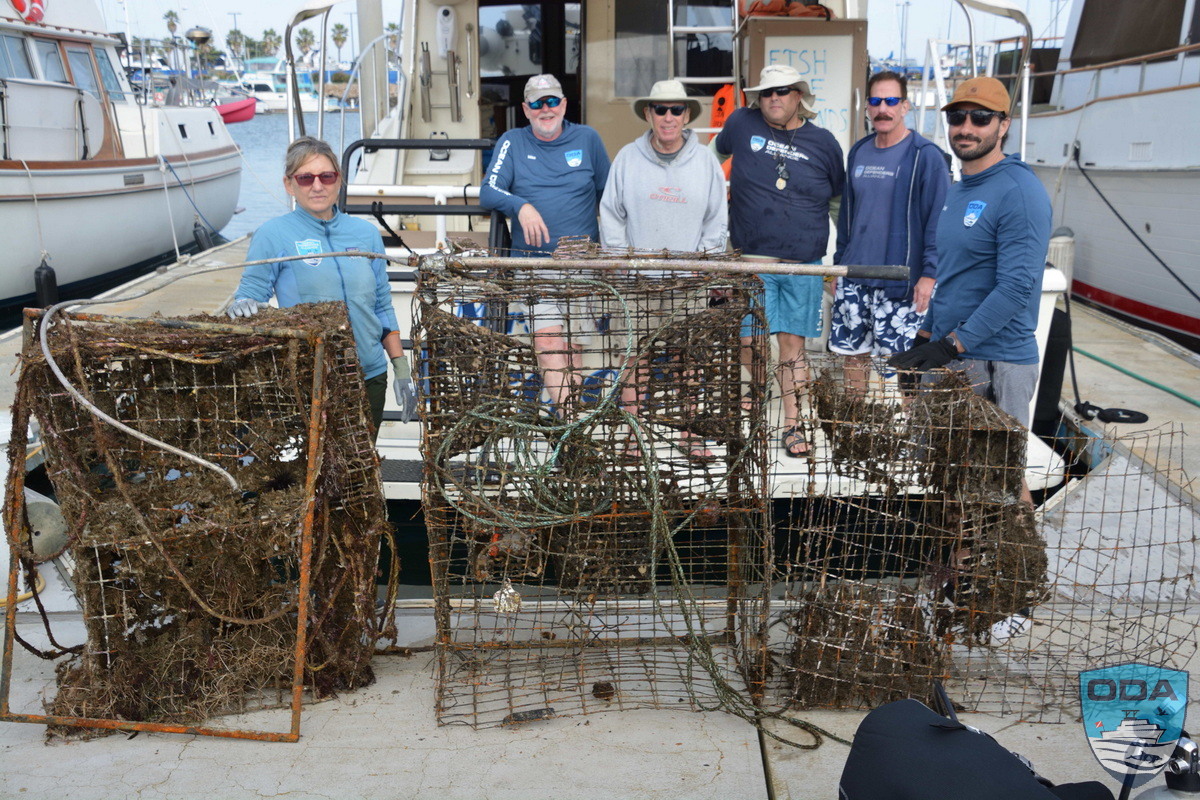
Once we got back to the slip we took the traps off the front deck, took a couple of pictures, and everyone pitched in to clean the boat, which took another hour.
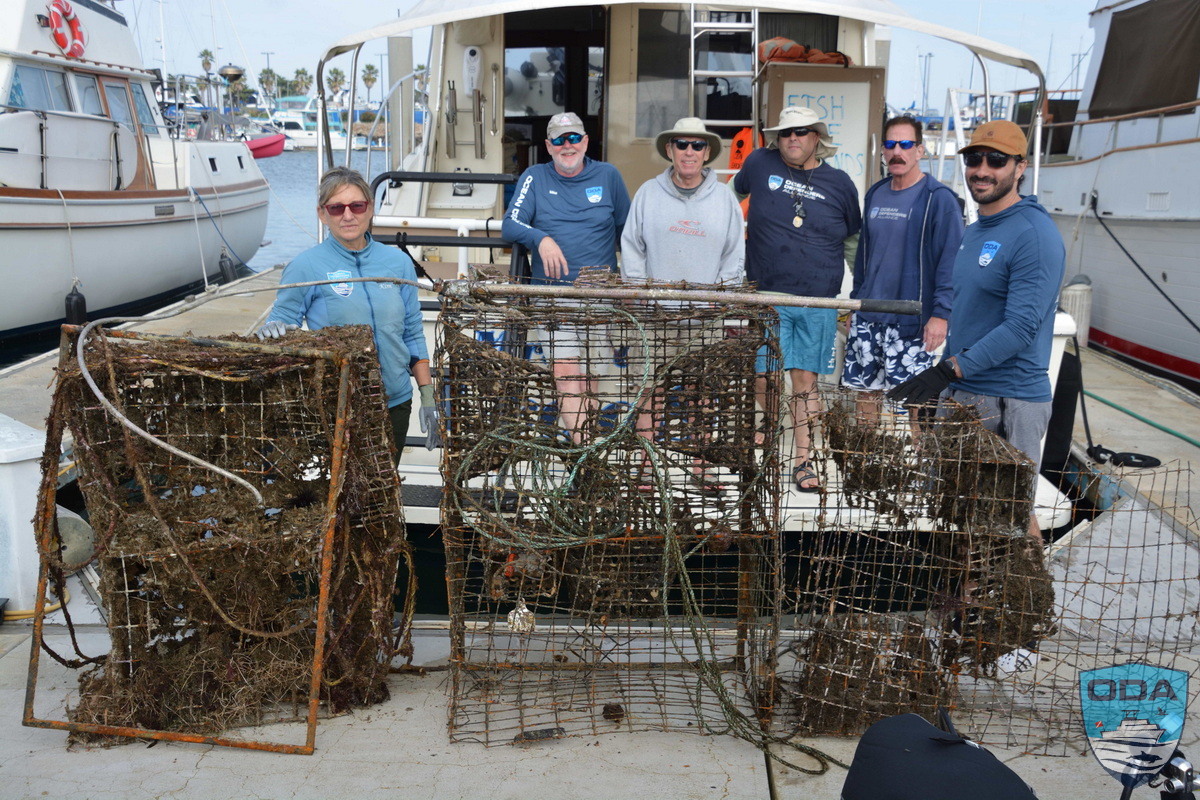 ODA Volunteer Crew with Their Catch of the Day
As this was our first time out in 7 months, it was pretty amazing that things went so well. Everyone had a good time, Mike came away with some mesmerizing underwater footage of the kelp beds, and we got 3 traps, with about 100 yards of trap line out of a National Marine Sanctuary.
Because the divers couldn’t see very far, we feel there are more abandoned traps in this area, so we will head back there soon. Stand by for some more ODA adventures!
If you would like to join our crew, either as a diver or deckhand, please check out our Crew page and send back your crew application.