By Founder and President Kurt Lieber
Huge waves prevented us from getting out to locate and remove abandoned lobster traps, for the last 3 weekends in a row. But that just gave our volunteers time to fix and upgrade their dive gear, and we had 9 people chomping at the bite to get out again.
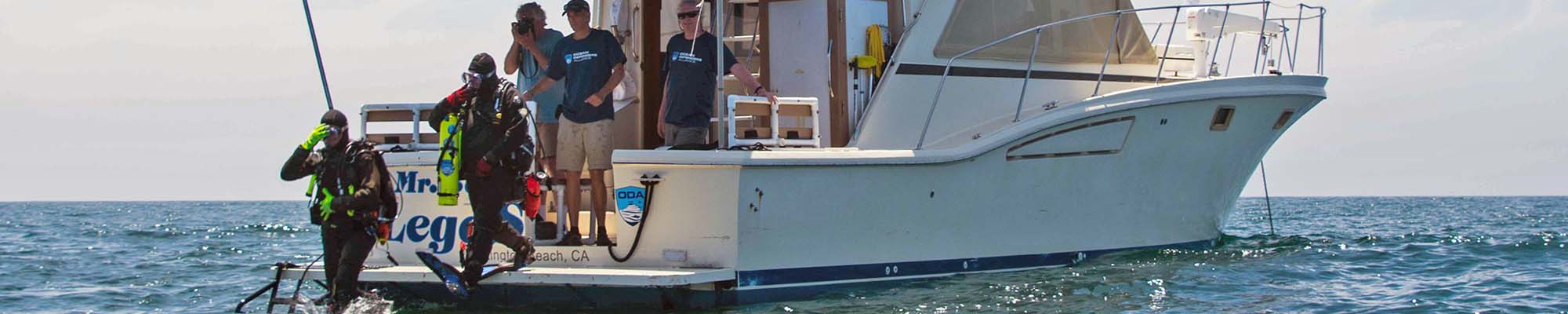
Sunday, August 9th, we finally got a break from the storms that had been coming in from the south, so we loaded up our flagship vessel Mr. Barker’s LegaSea with fuel, water, food, and plenty of dive gear.
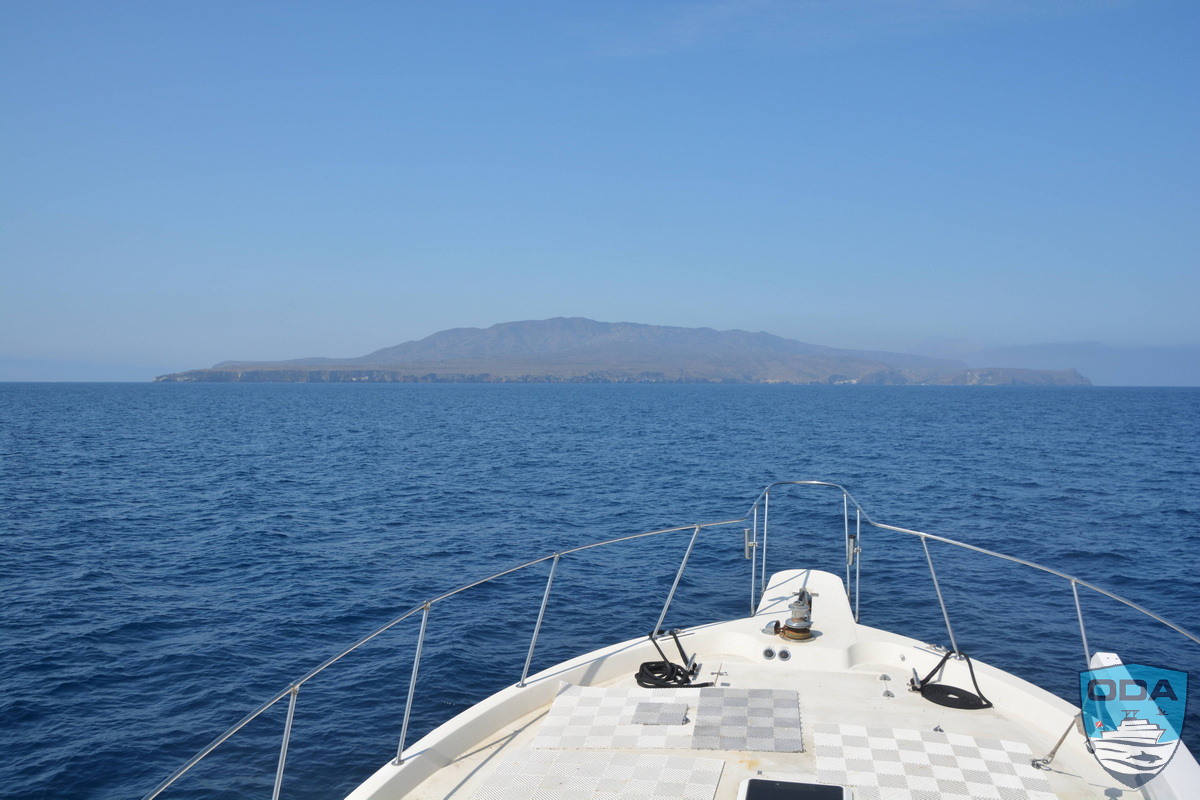
The crew this morning was: Kevin Augarten, Kim Cardenas, Melanie Kemmann, Rick Lindwall, Fred Reed, Bart Steger, Geoff Walsh, and Mike Wynd.
The seas were relatively flat on our 17-mile voyage over to Santa Cruz Island. We were heading to a site where we had had past success near a dive site called the Spirit of America wreck.
As we approached the site, I saw that there was another boat anchored directly over the wreck. Dang. So, we cautiously approached the site and talked with the people onboard, asking if they had divers in the water. They did. Not wanting to get close as to interfere with their dive, we anchored about 150 feet away.
This put us close enough that Mike felt that our divers could just use the power of their scooters and navigate to the wreck.
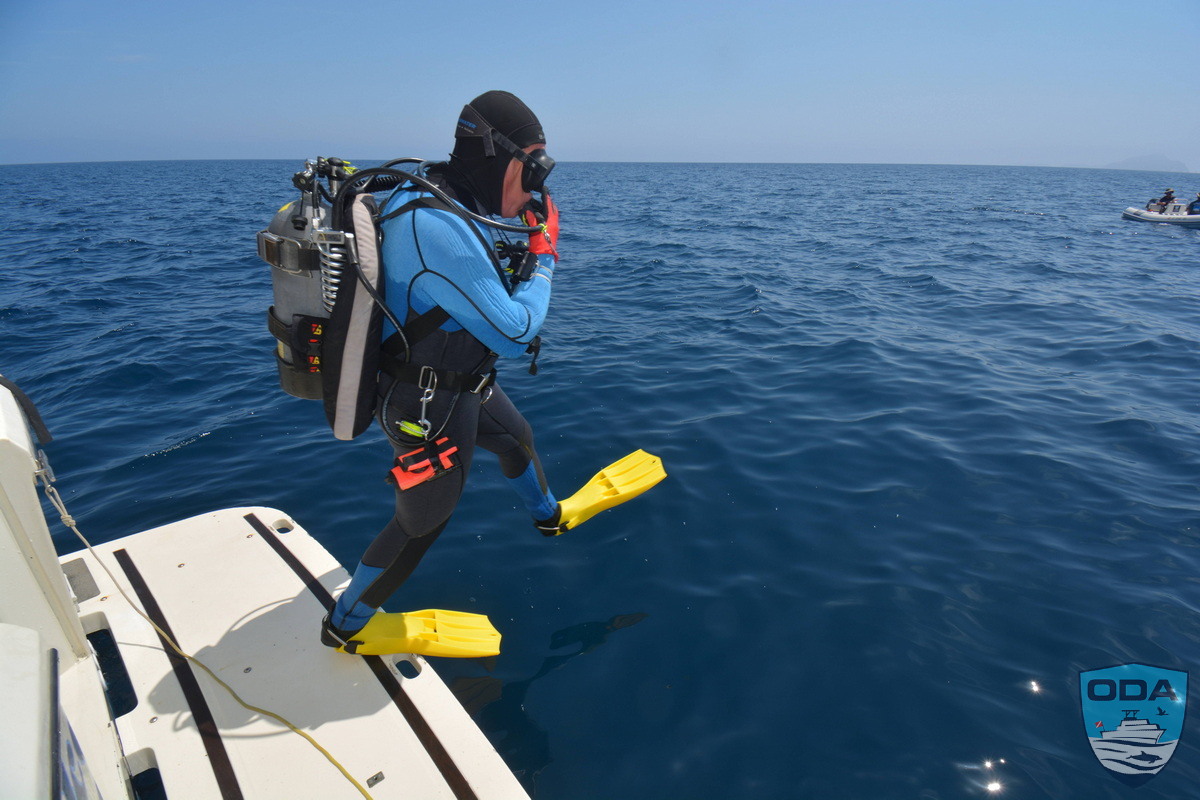
Mike gets his gear on...
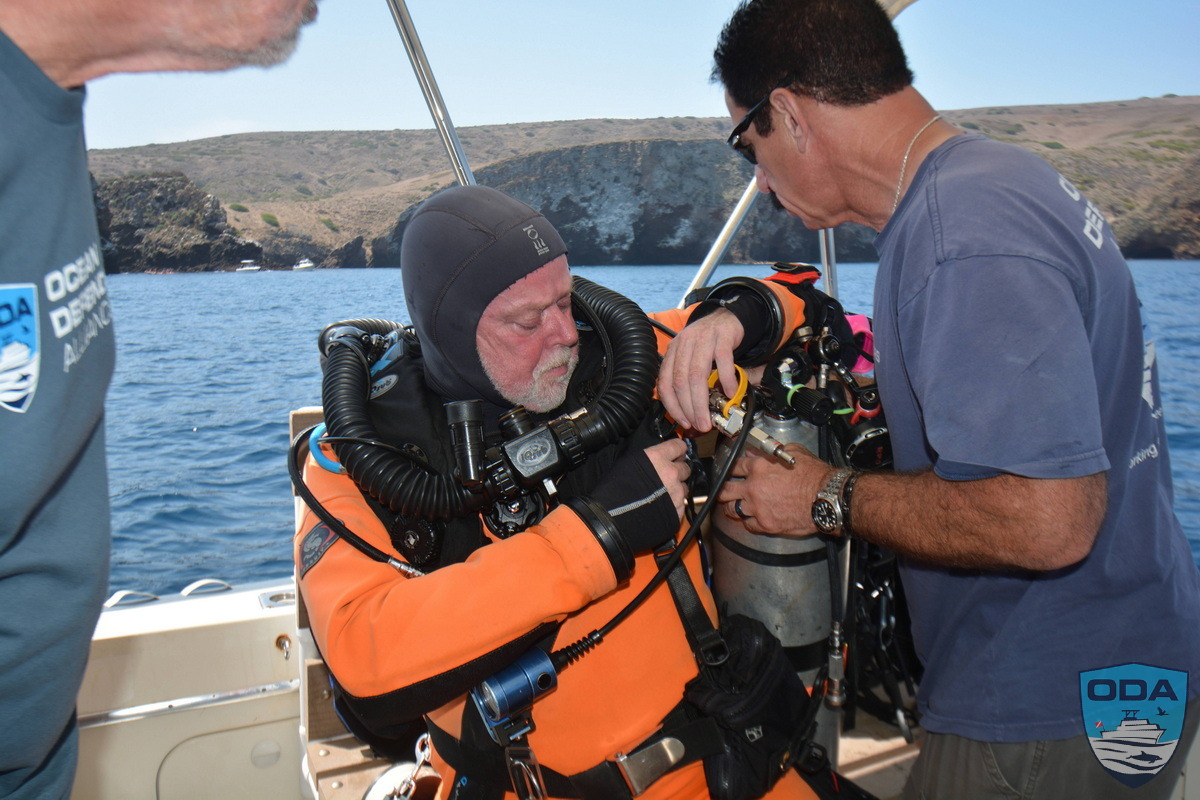
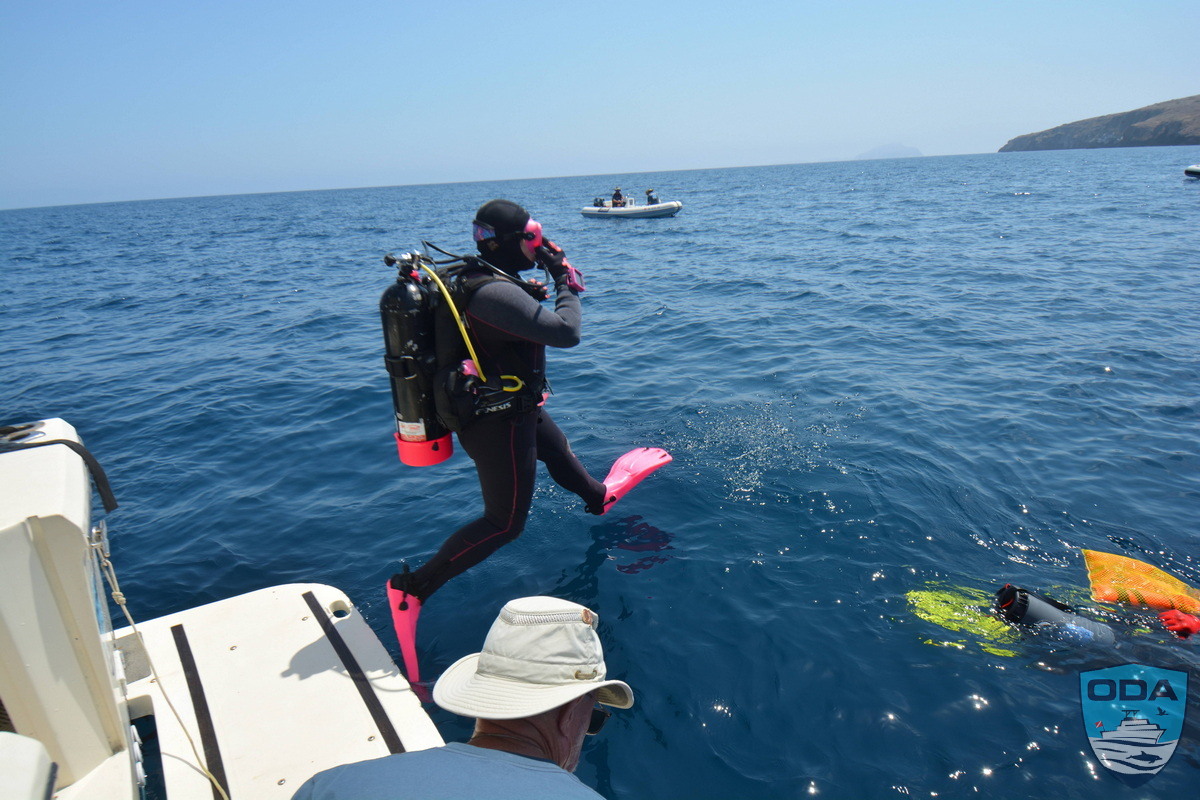
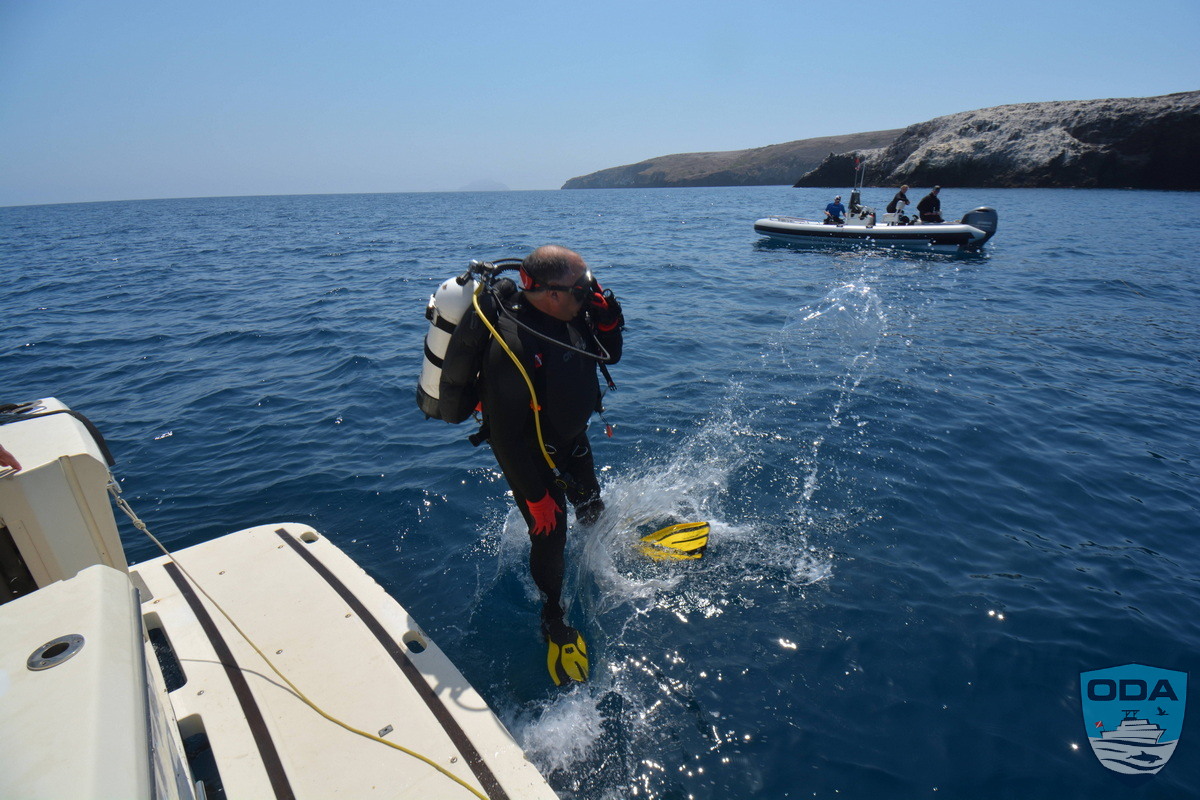
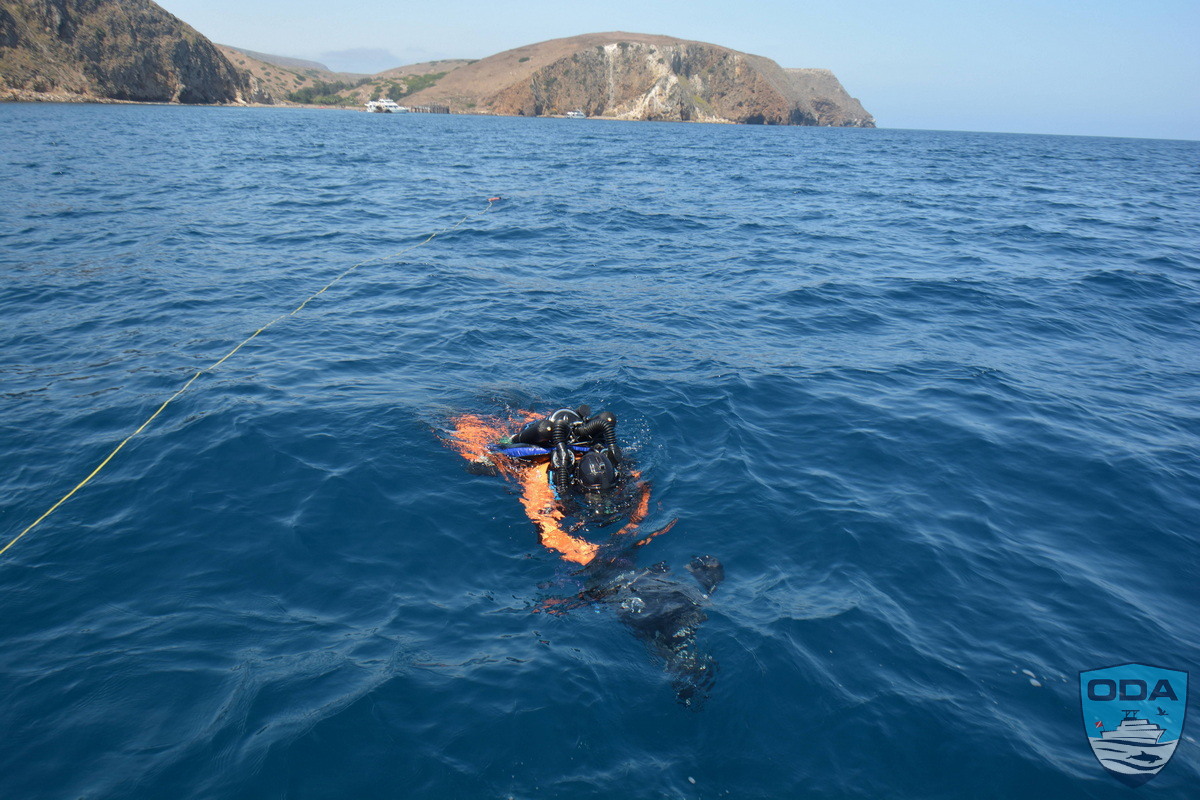
The other divers also got in their dive gear, and one by one made the leap into the beautiful blue waters that we were treated to this day. Once everyone grabbed their scooters they headed to the anchor chain to start their descent.
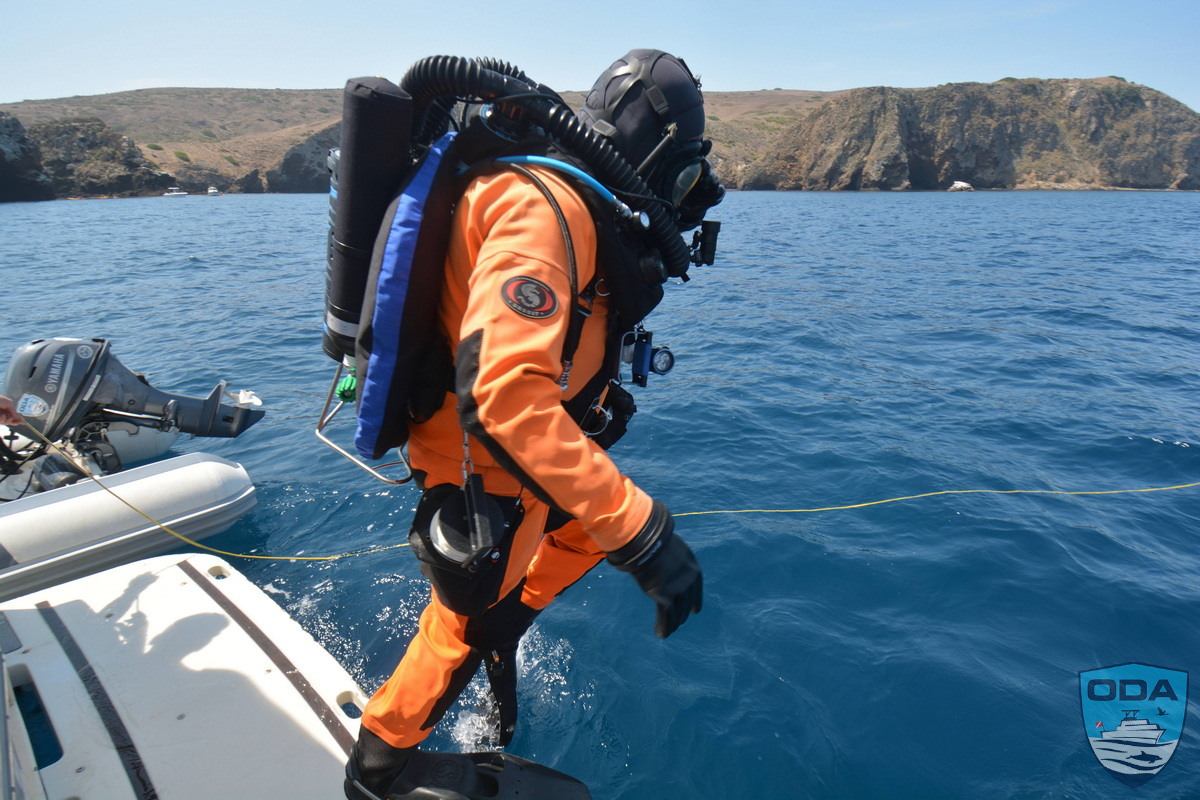
Only one problem, Kim’s underwater scooter (Dive Propulsion Vehicle) wouldn’t work. Even though she had tested it out of the water, once submerged something was shorting the electronics. She climbed back aboard as the others headed for the anchor chain.
As we were all tracking the movement of the divers’ bubbles so we knew where they were, we were close enough to that other boat that we could shout questions to them. One of them revealed that they had found a bag full of lift bags on the wreck. They wondered if we had any idea who they belonged to.
Turns out they were ours. Last year when we were working this site and Mike’s bag of float bags had become unclipped from his BC. Wholly mackerel a whole year later and there they were!
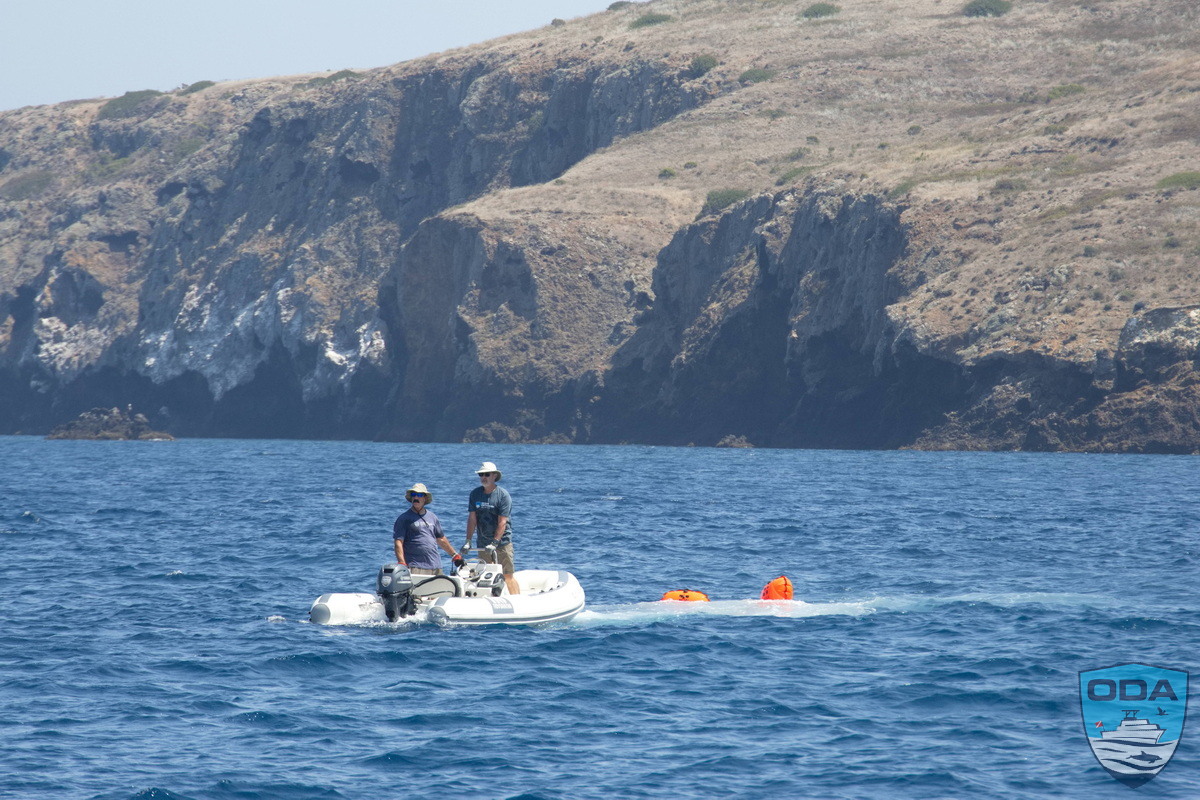
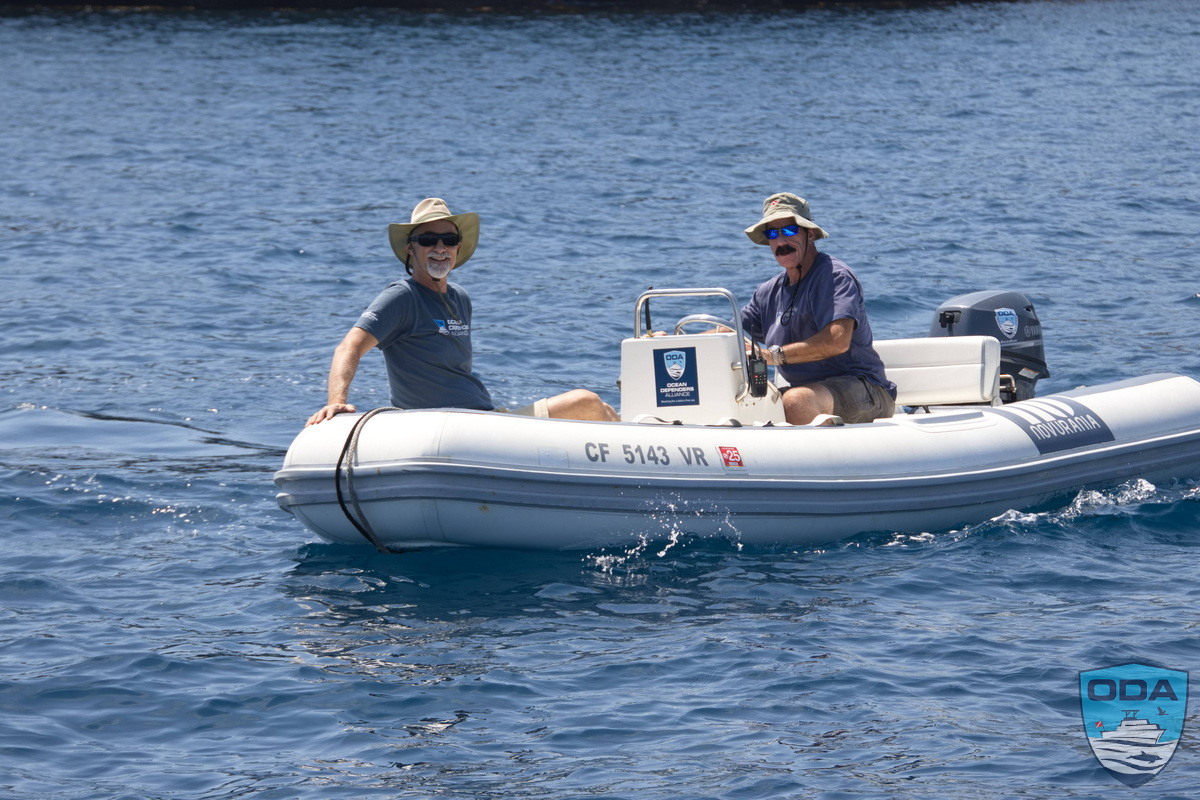
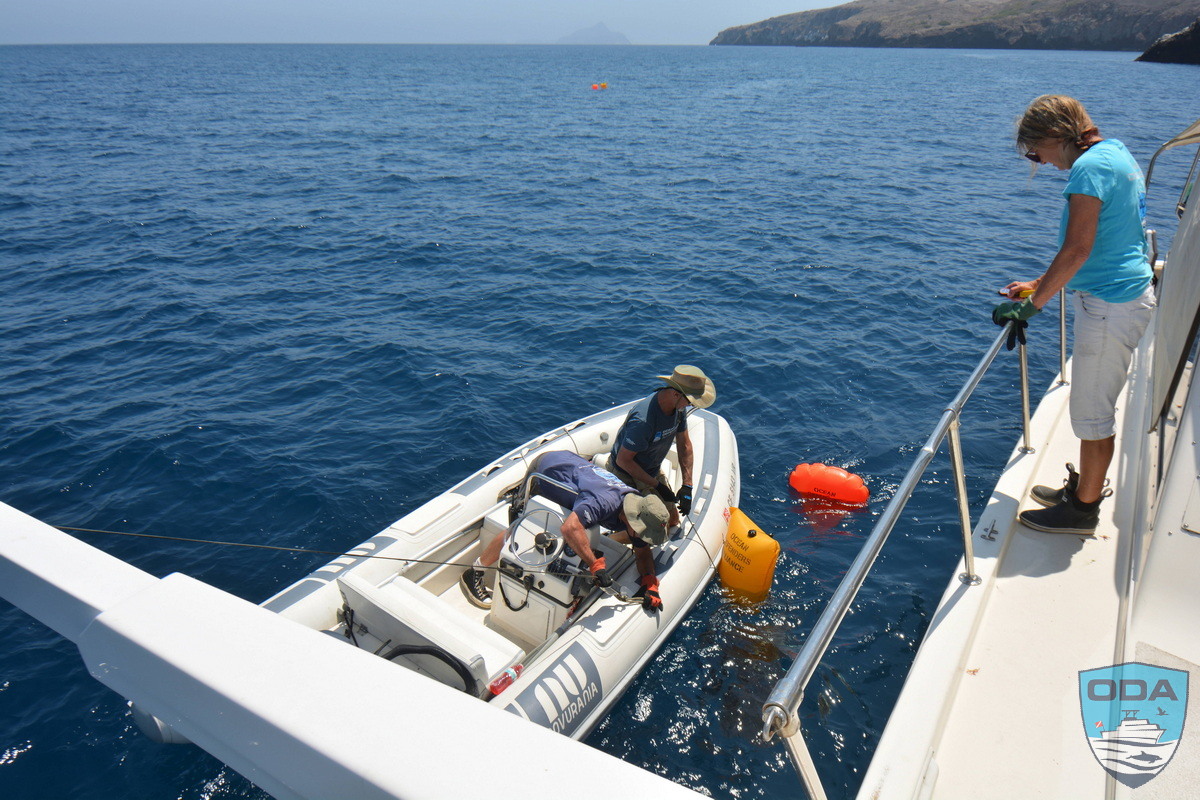
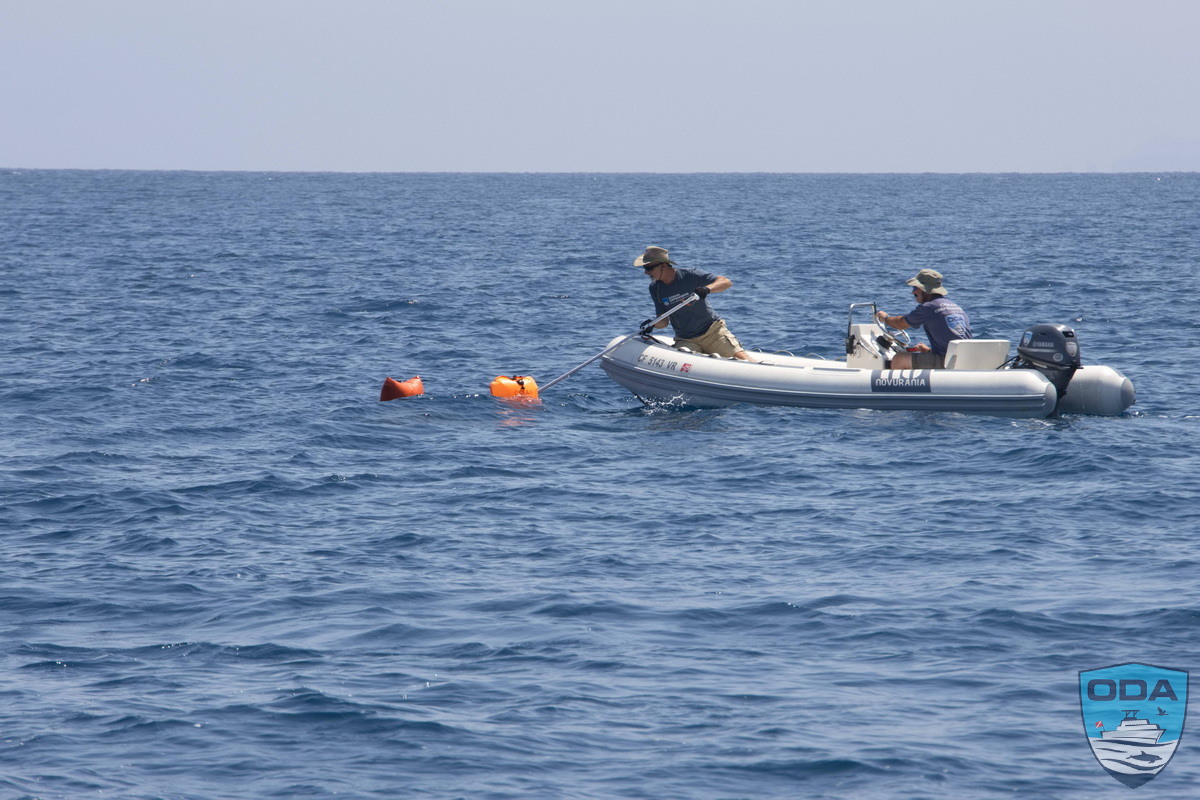
Kevin and Fred motored over to our new friends in our RIB (rigid inflatable boat) and grabbed Mike’s long lost lift bags. Mike was right happy about that.
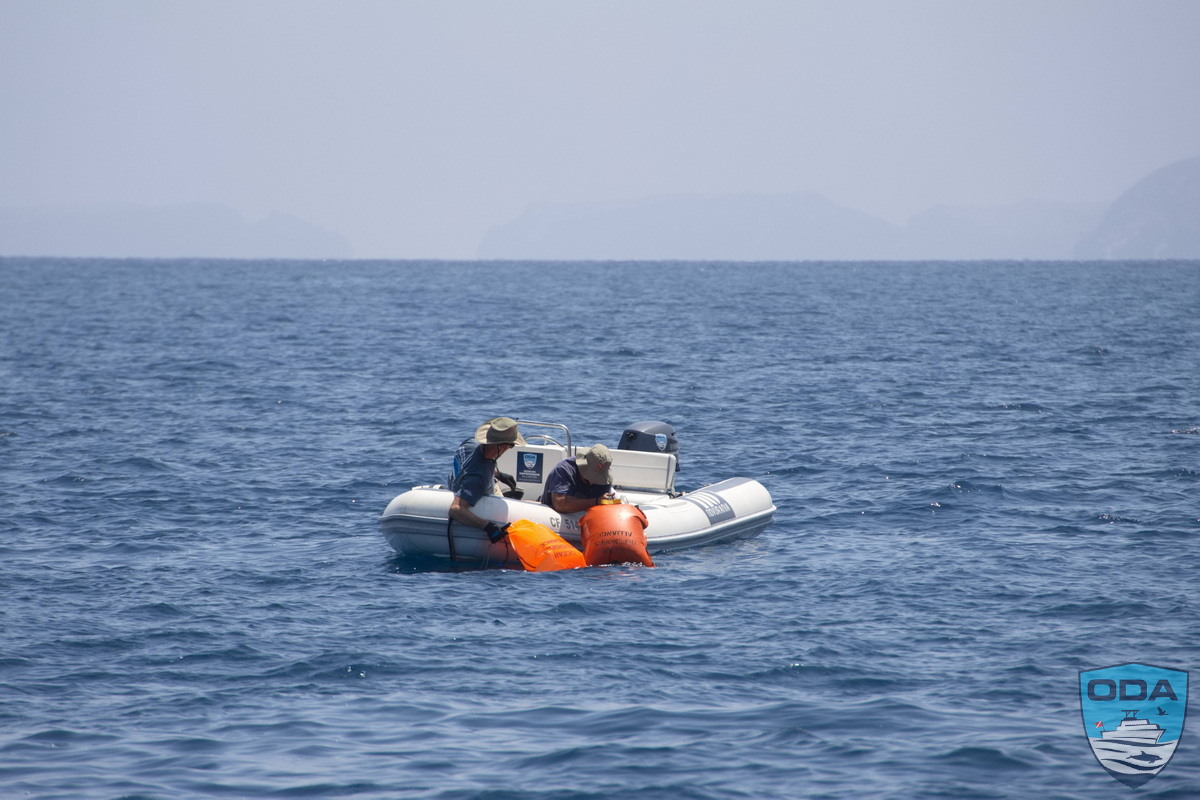
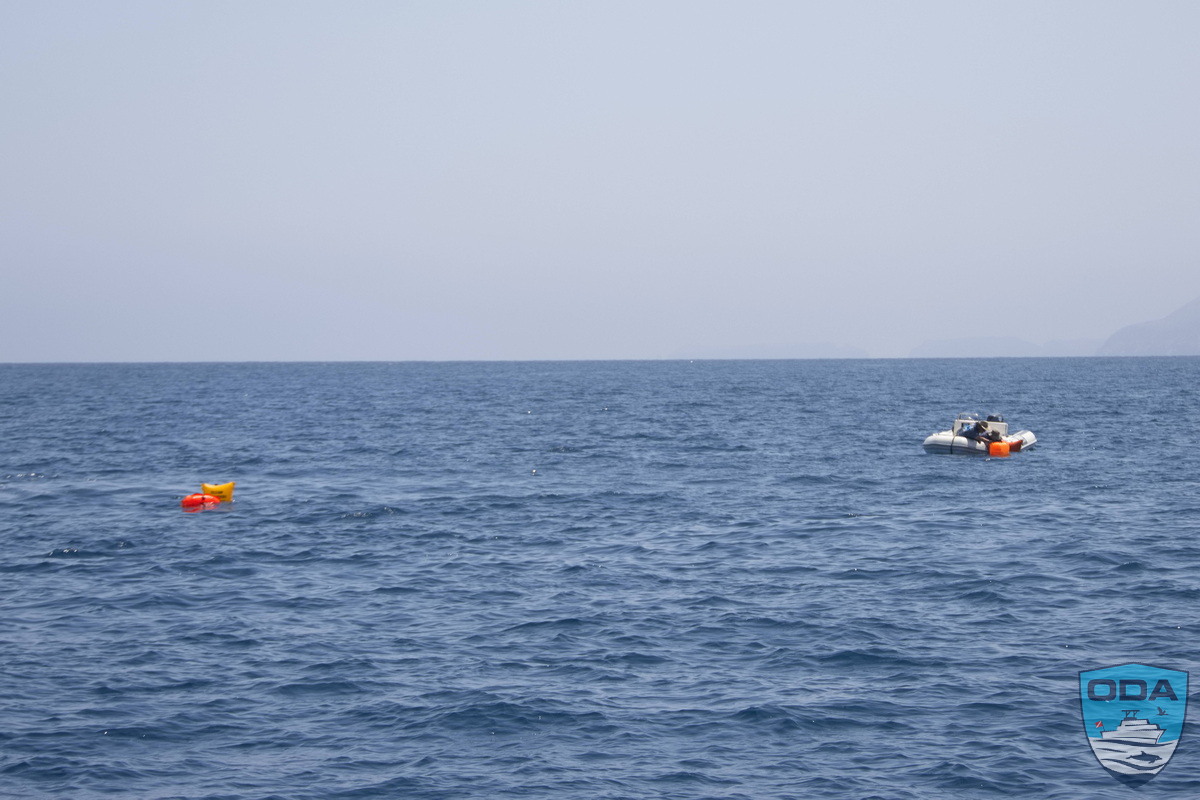
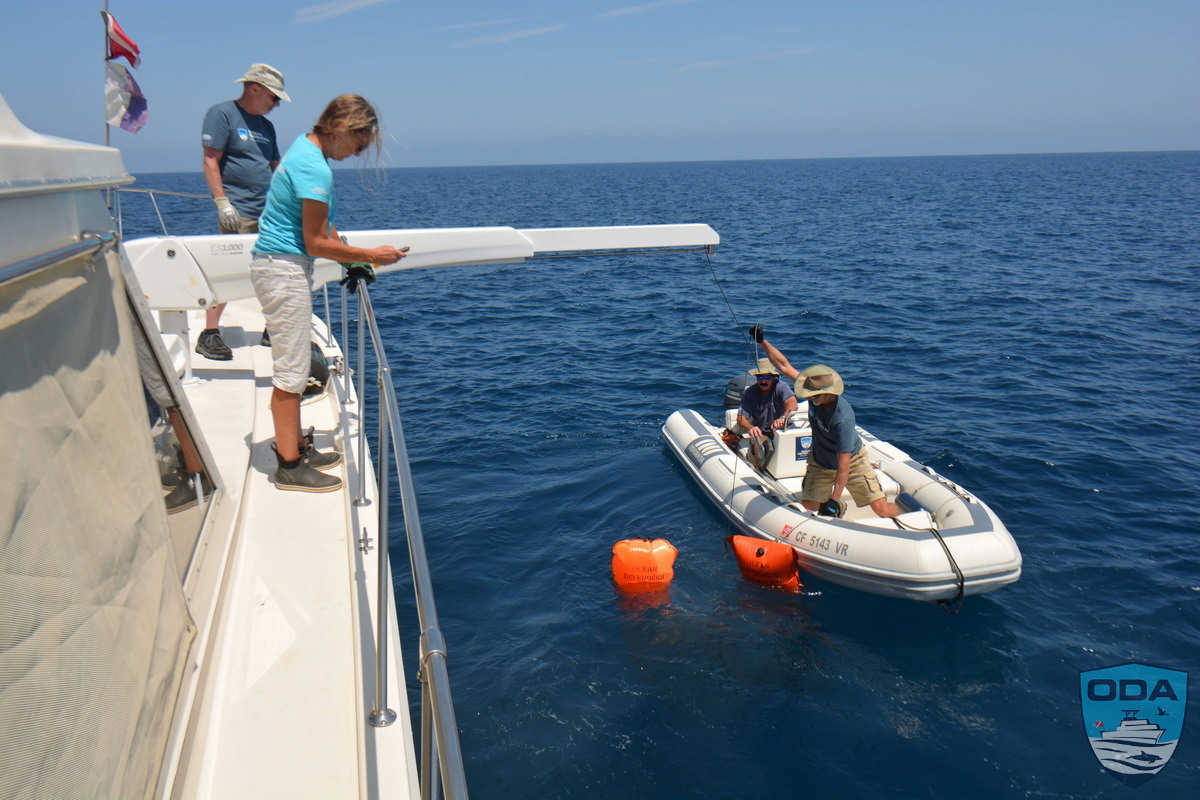
We didn’t have to wait long to see the first set of lift bags break the surface indicating that the dive team was sending up debris. The RIB team jumped into action. While they were hooking that trap up to their tow line, another set popped up not 50 feet away from them.
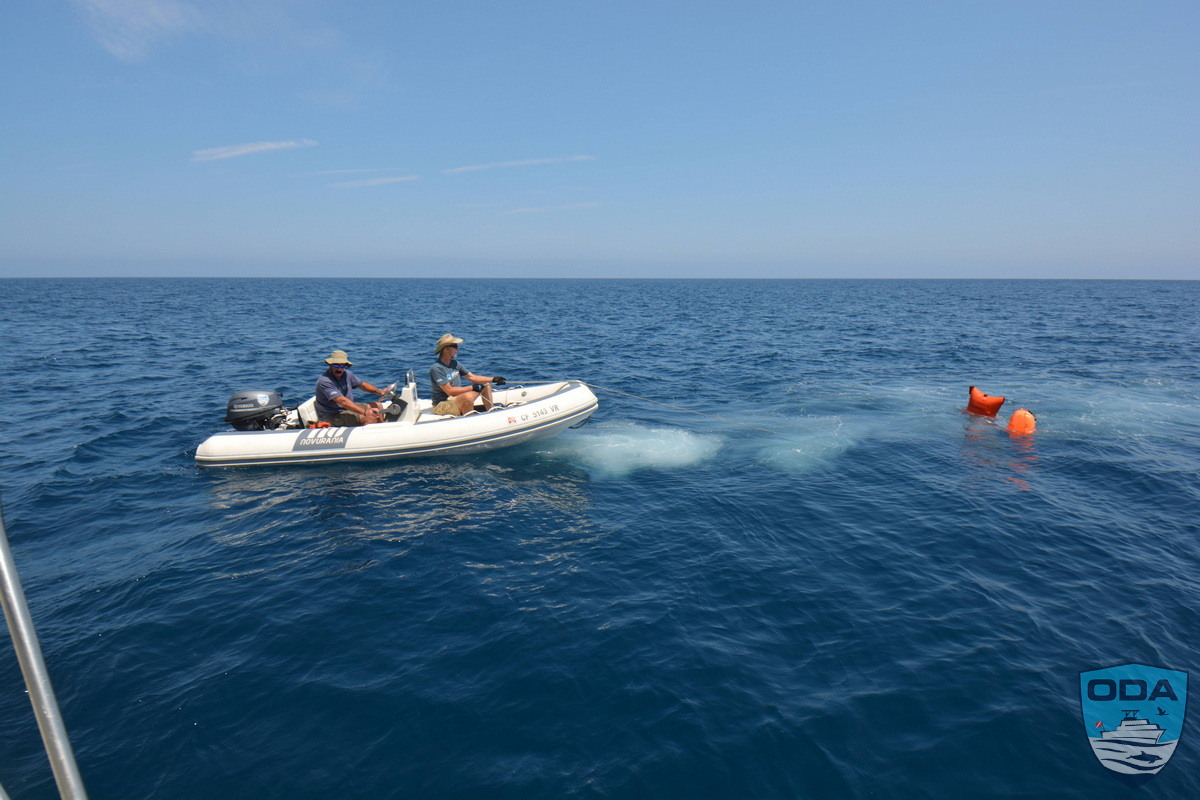
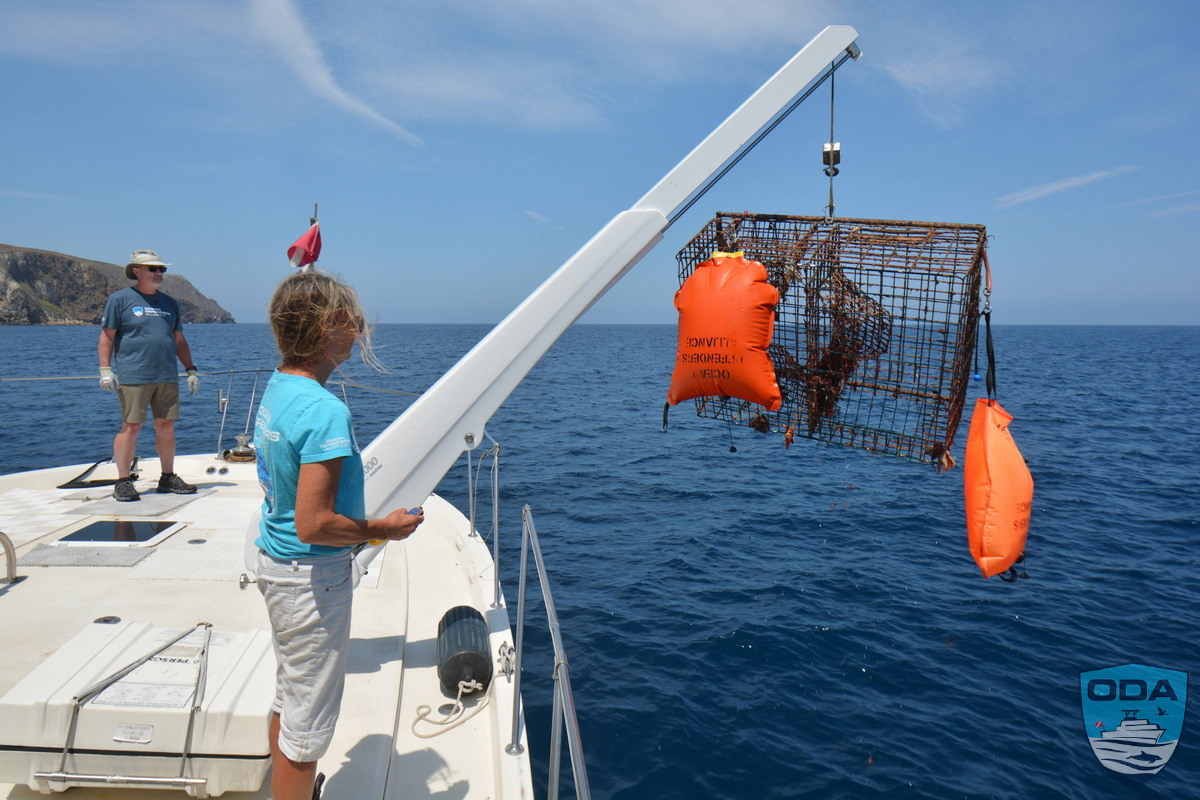
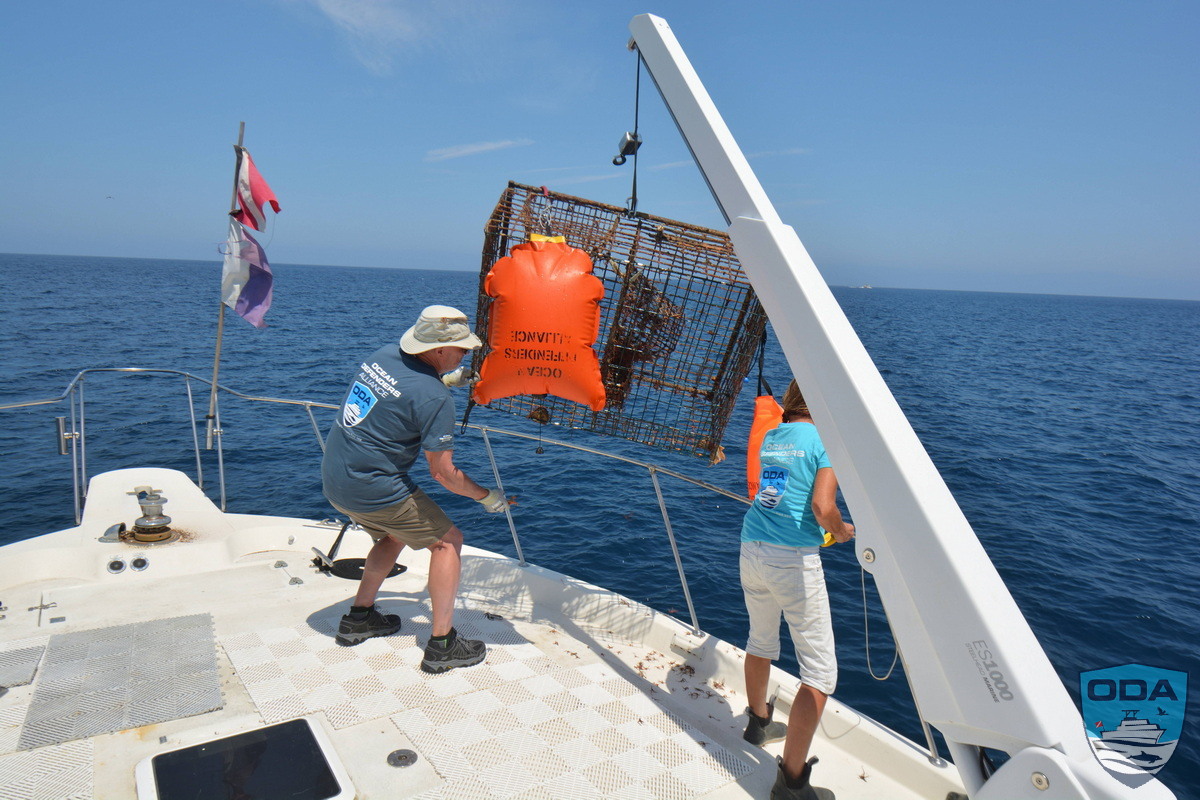
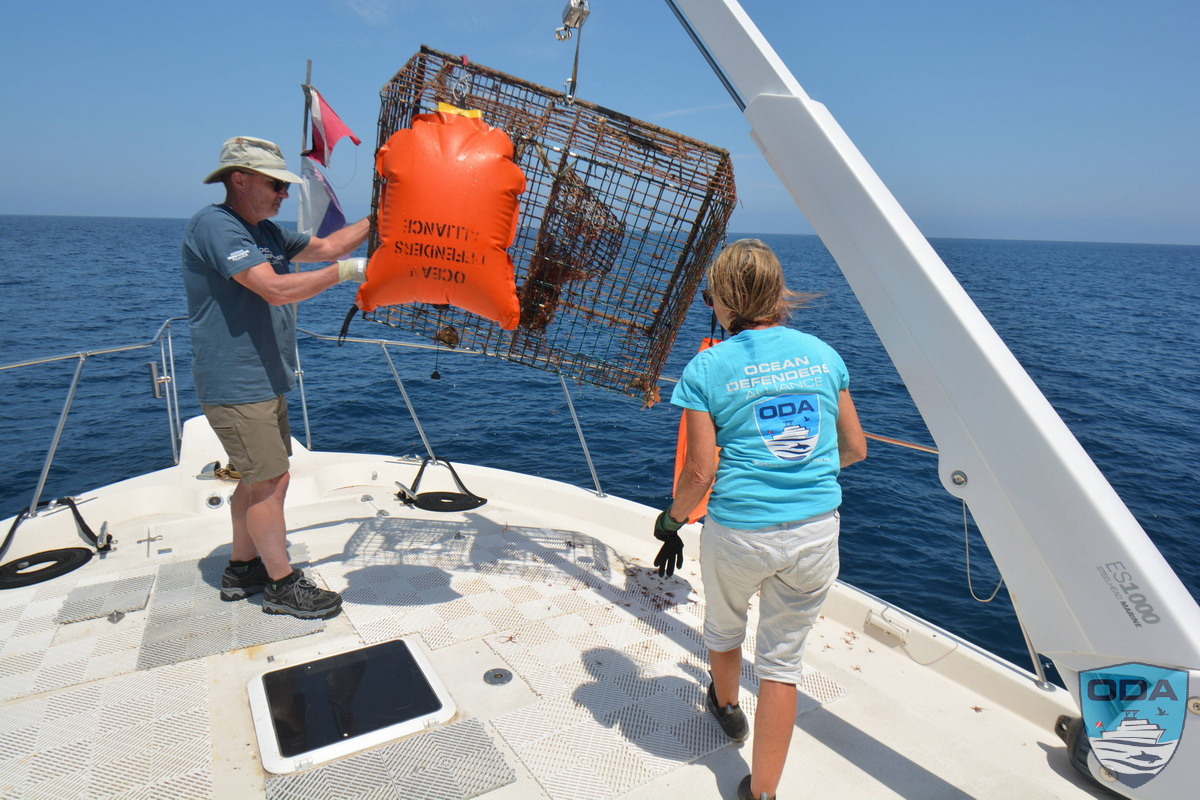
As they were towing that first trap to us, the second one drifted pretty fast from where it first came up. As quickly as we could, we got that first trap hooked up to the davit, and off the RIB team were to retrieve the fast-moving trap.
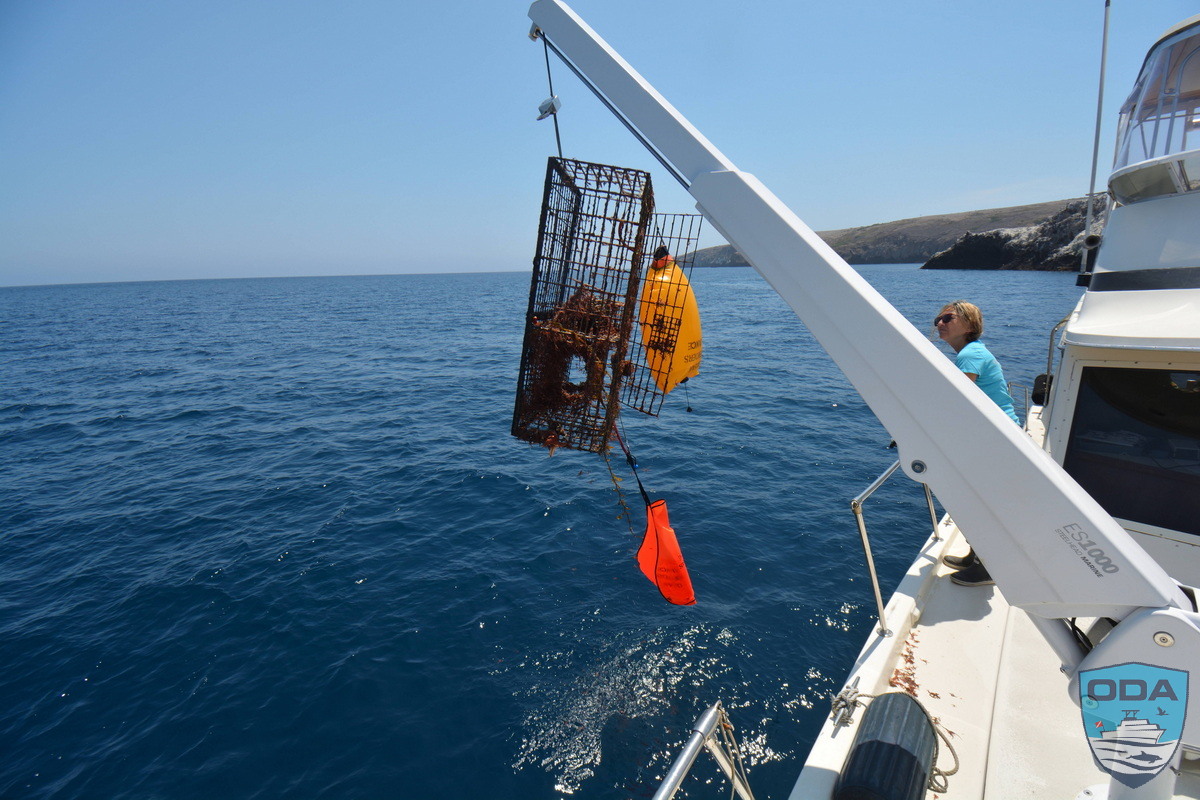
As they hooked that one up to their tow line, we could see that the current had really picked up. They had a hard time plowing their way to us. But, after 10 minutes or so they had pulled alongside of us and eventually got the trap on the davit hook. Up she came.
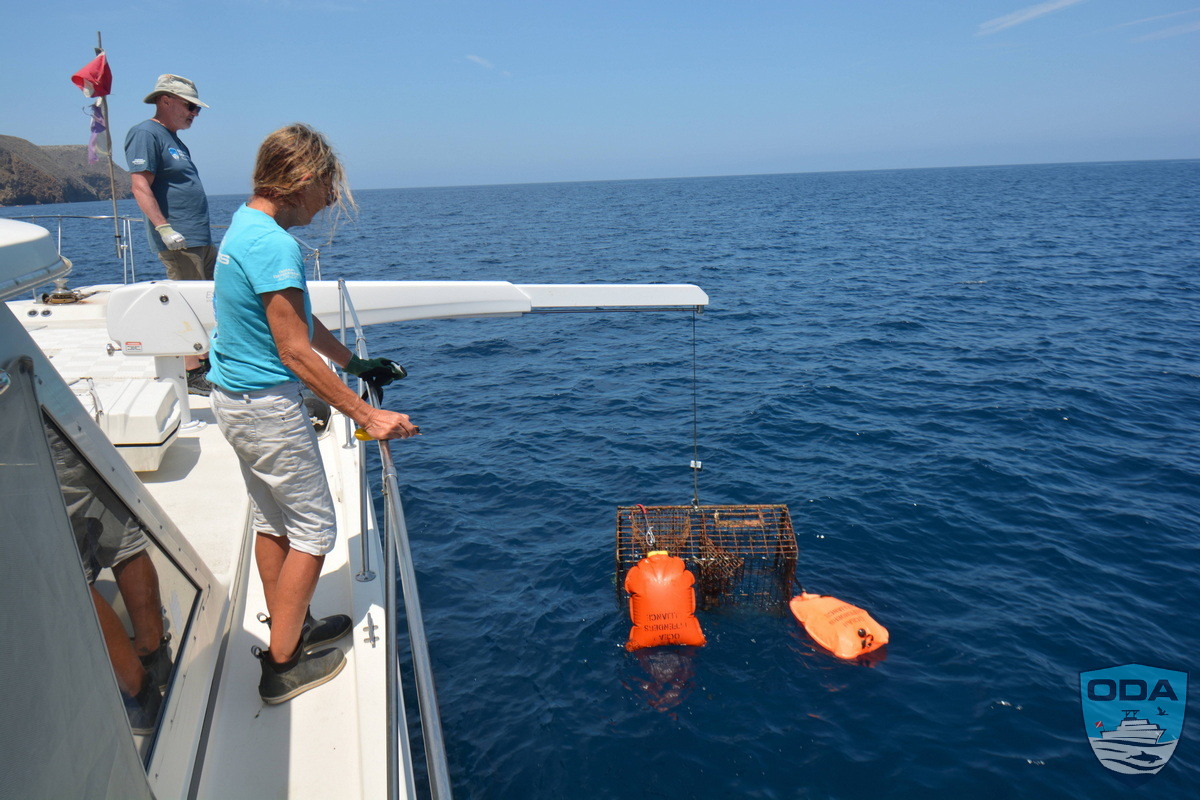
By then there was another trap at the surface, not too far away from us and the team didn’t have much trouble towing it to us.
At this point the divers were climbing back aboard, and we ate some snacks while discussing what to do about the next dive.
Turns out they had seen 3 more traps in the area but were running low on air, so they left them knowing we’d do a second dive here.
Mike revealed that he had captured some video of the team releasing a lobster out of one of the traps. Underwater (UW) visibility (vis) was exceptional at 20 to 25 feet. The water temperature was almost tropical at 70 to 74 degrees, whereas it would normally be around 68. That’s why the vis was so good; this warm water comes up from the tropics and is a harbinger of an El Niño season to come this winter.
Second dive
After a one-hour surface interval (break), all 4 divers jumped in and headed down the anchor chain. But conditions were changing. The current had completely changed direction, and the boat had swung around 180 degrees from where we had initially been positioned. Not only had that changed but the current was really ripping.
They found two of those traps, but after that, because of the current they decided to call it quits and headed to the surface.
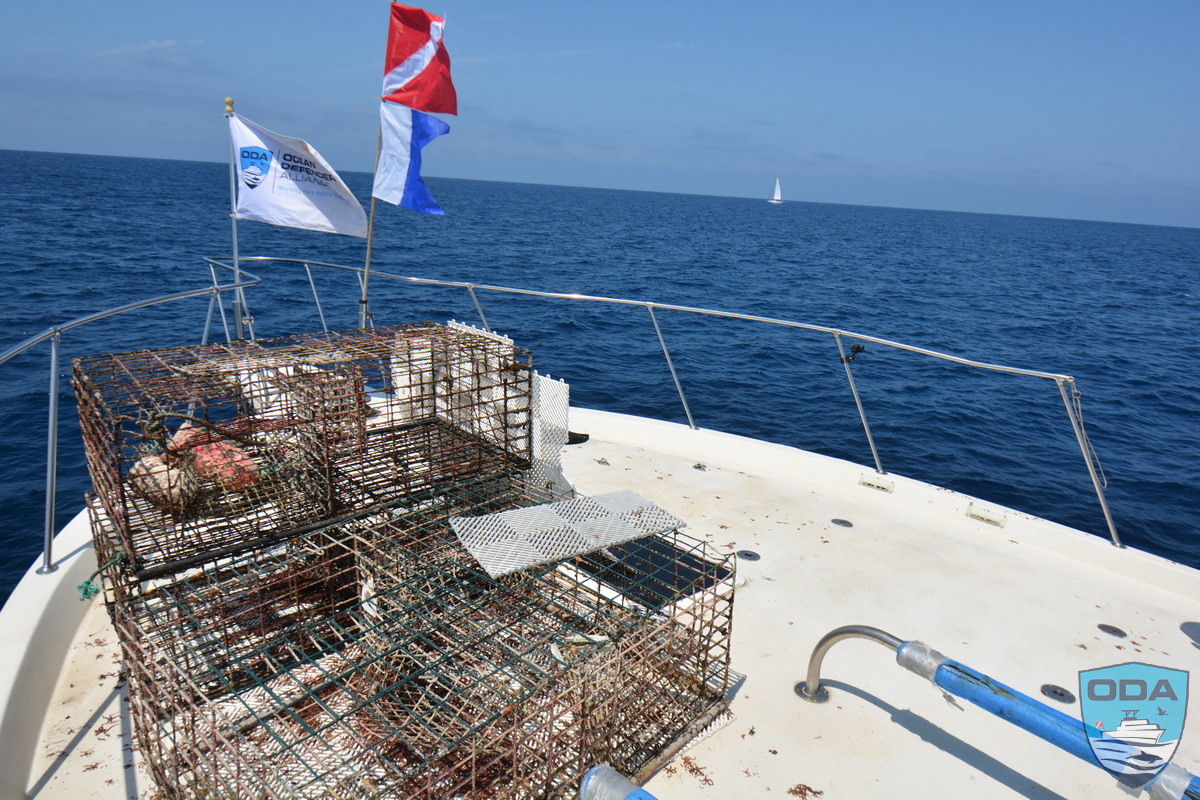
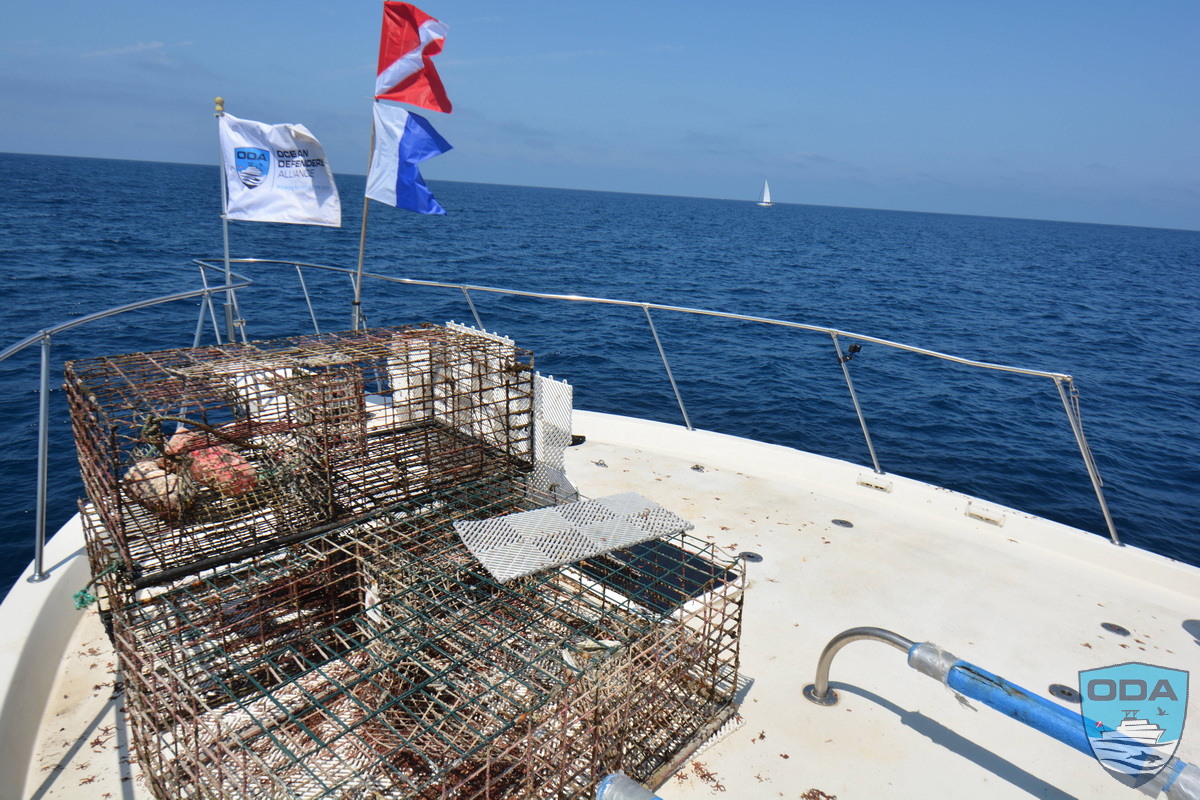
We got the traps onto the front deck, admired our work and headed back to port around 3:30pm.
We love to motor back to port with a stack of recovered traps on our deck!
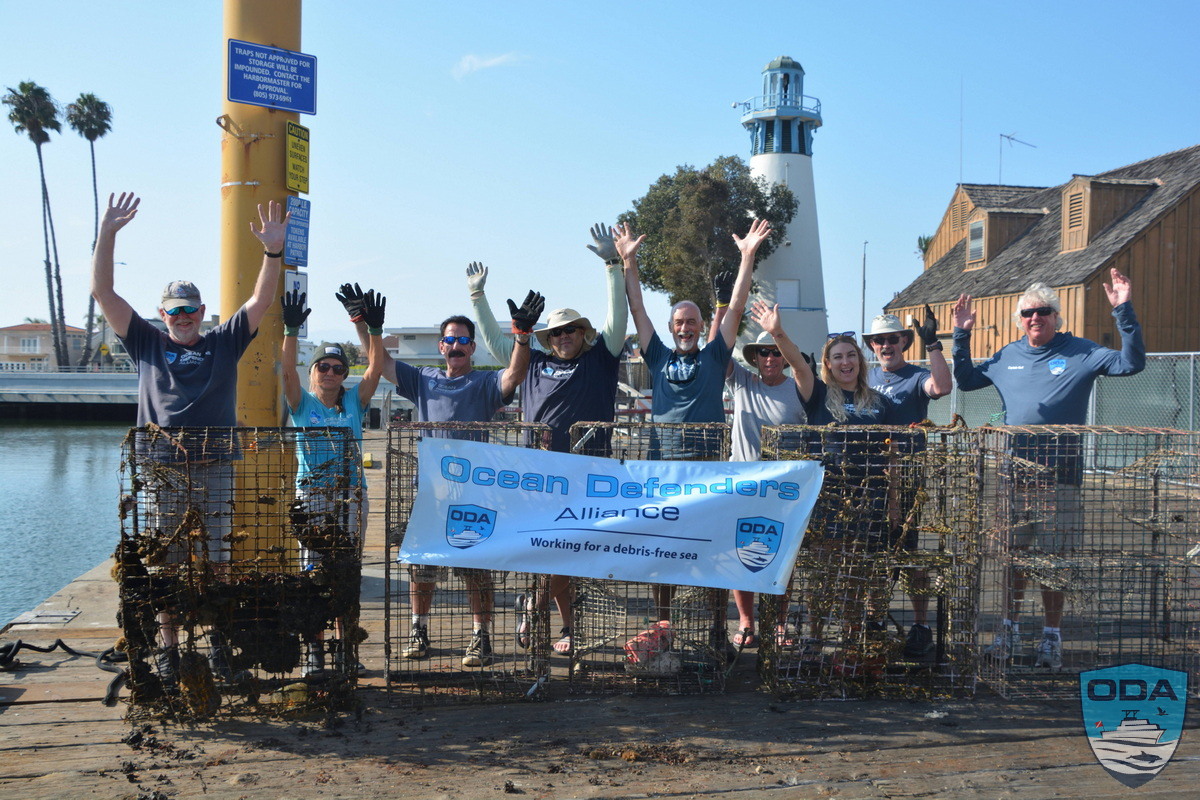
We pulled into Channel Islands Harbor around 4:30pm. Motored over to a loading dock where the fishermen load and unload their traps. We set up our “Catch of the Day” in front of an old lighthouse, got the group shot, and headed back to our slip where we spent the next hour unloading all the gear and cleaning the boat.
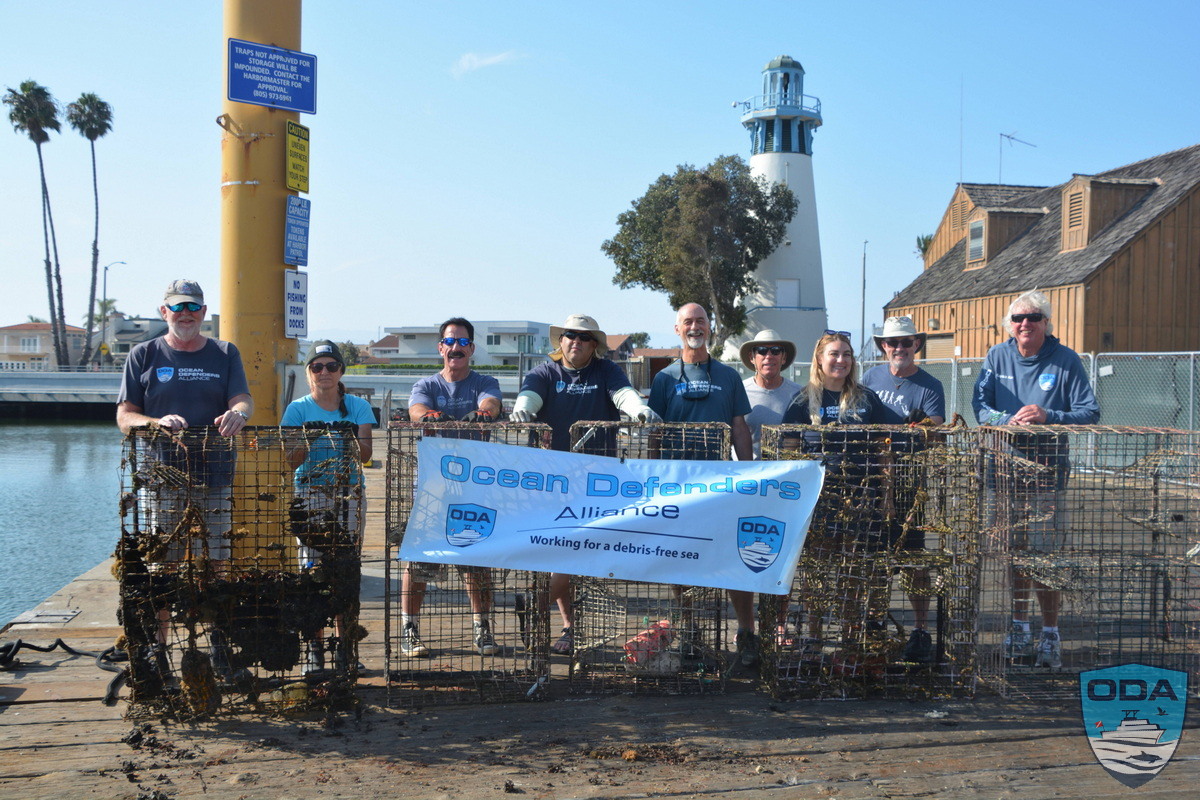
This was the first time for Fred and Rick to volunteer on the LegaSea. Both of them are skilled divers and want to join us while utilizing their dive skills. I always ask new volunteers to help out on deck first, so they can see what goes on while the divers are doing their thing.
They both now have a better understanding of all it takes to have a successful outing.
10 hours, 5 traps, and about 30 animals freed. It ain’t easy, but it is certainly worth the effort!
You can help us from wherever you are with a donation to help keep our crew at sea doing what they do best -- thank you!
Donate to Keep Our Seas Debris-Free!