By Jeff Milisen, ODA Volunteer andAdvisory Board Member
Please take a moment to reflect on 3 to 5 small choices you made in the past 24 hours. Did you drive your car or go grocery shopping? Are you reading this on your cell phone? Every choice you make has an environmental cost. The car burns fossil fuels and requires an infrastructure of highways; your food likely comes from large-scale farms and is shipped via a supply chain; and even your cell phone burns electricity through data centers. Even the “green” choices we make are a balance of the lesser of two evils. I mention this because we should be mindful of the distant reach that many of our choices can have.
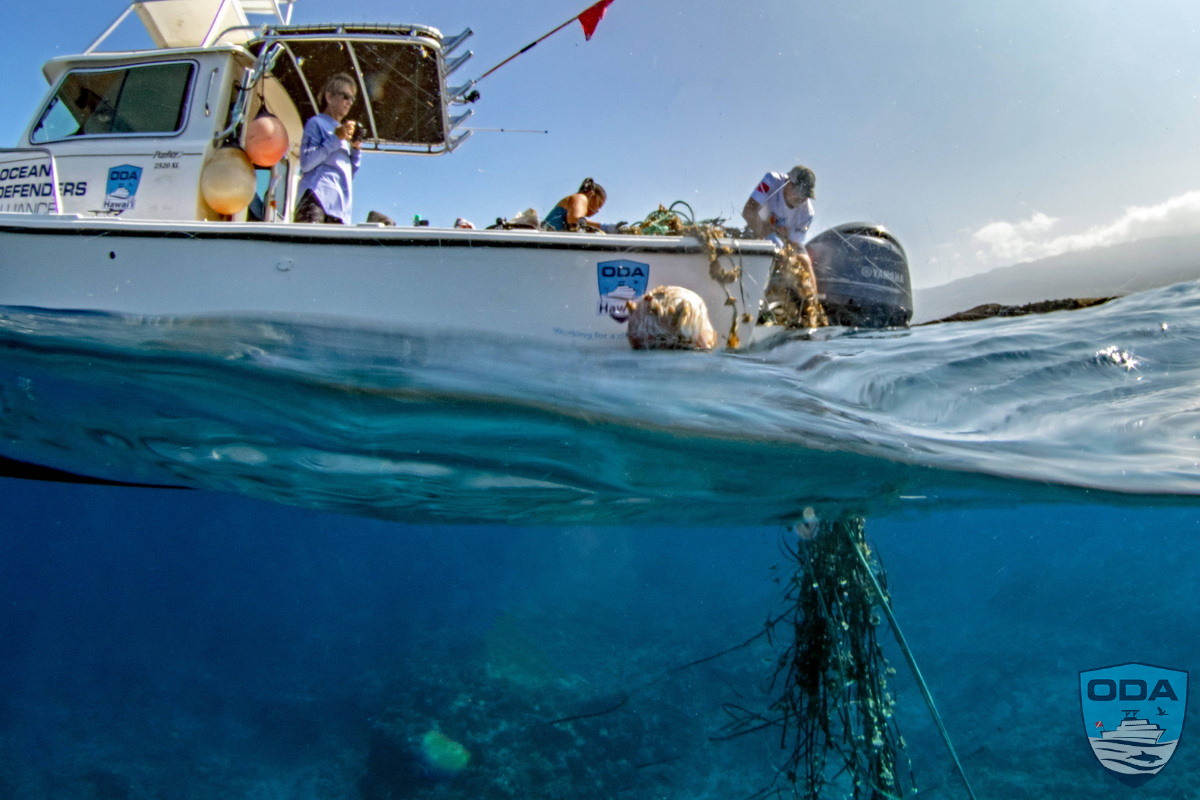
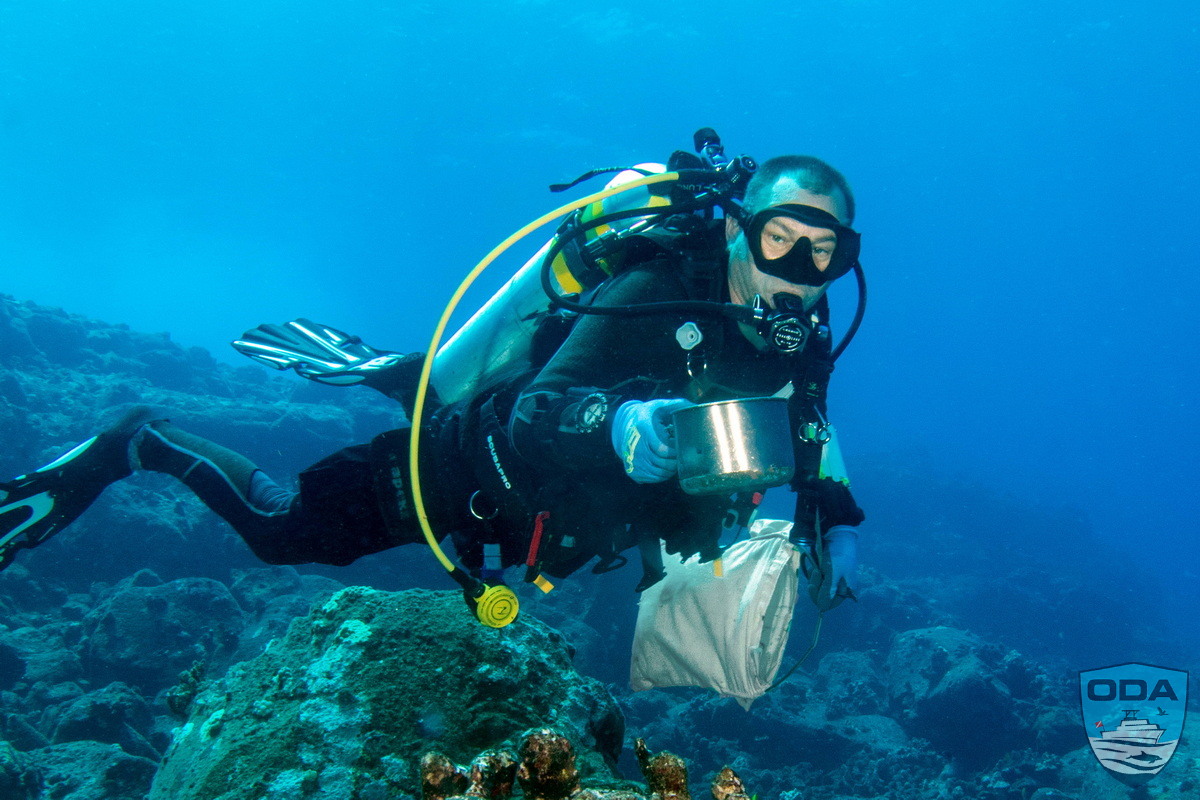
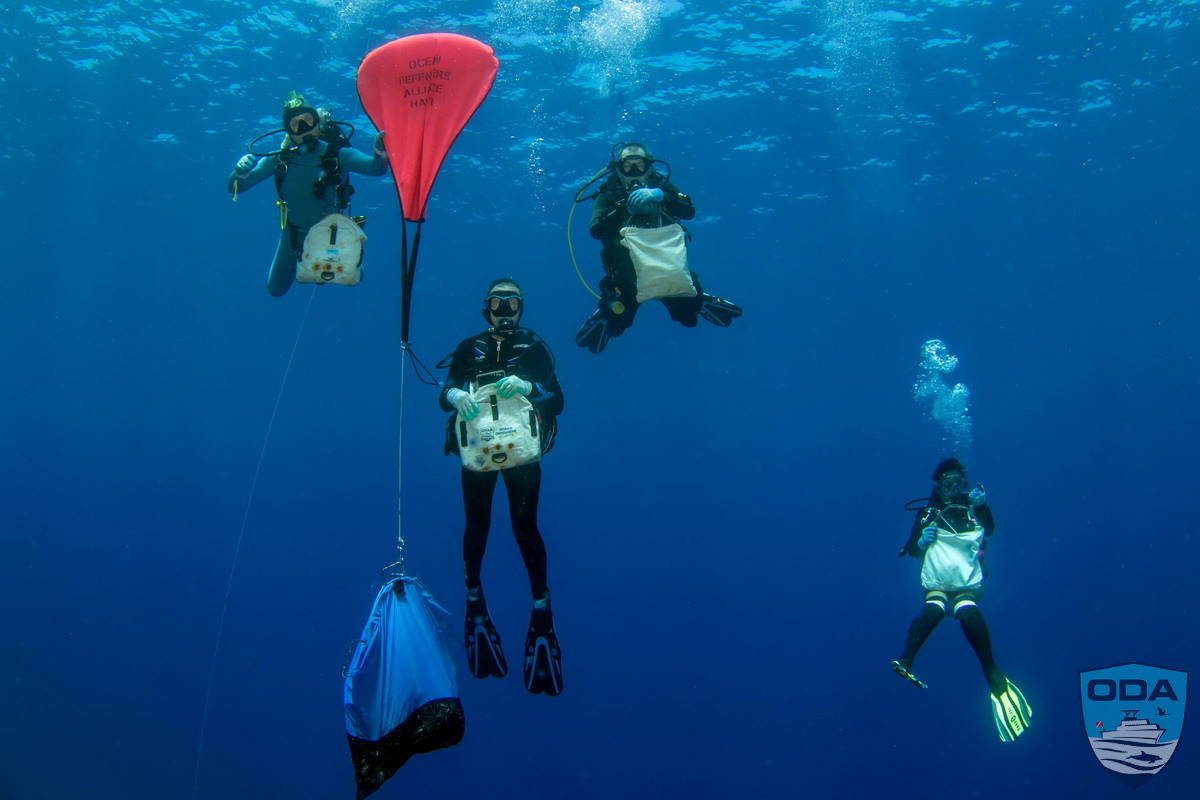
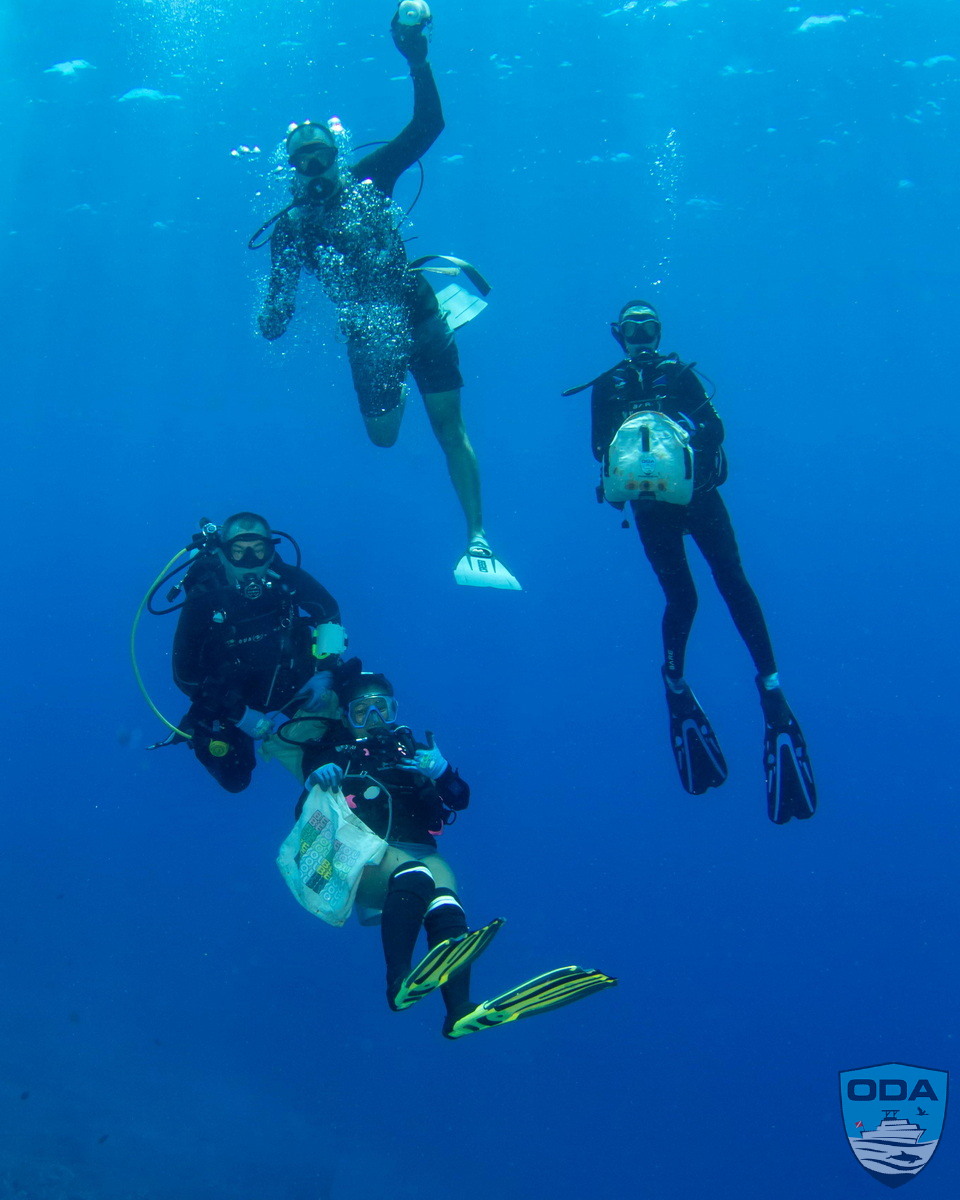
Making informed seafood choices is one of the most important ways we can help the ocean, as we saw on this weekend’s “twofer” mission to clean up messes from both commercial fishing and local shore-based casting. The dedicated reef cleaners were Adrian Murphy, Bo and Jamie Pardau, and Neng Sutherland. Bo assumed his role as photographer, while my wife Sarah and I swapped out, each doing one dive while the other stayed topside to man the vessel.
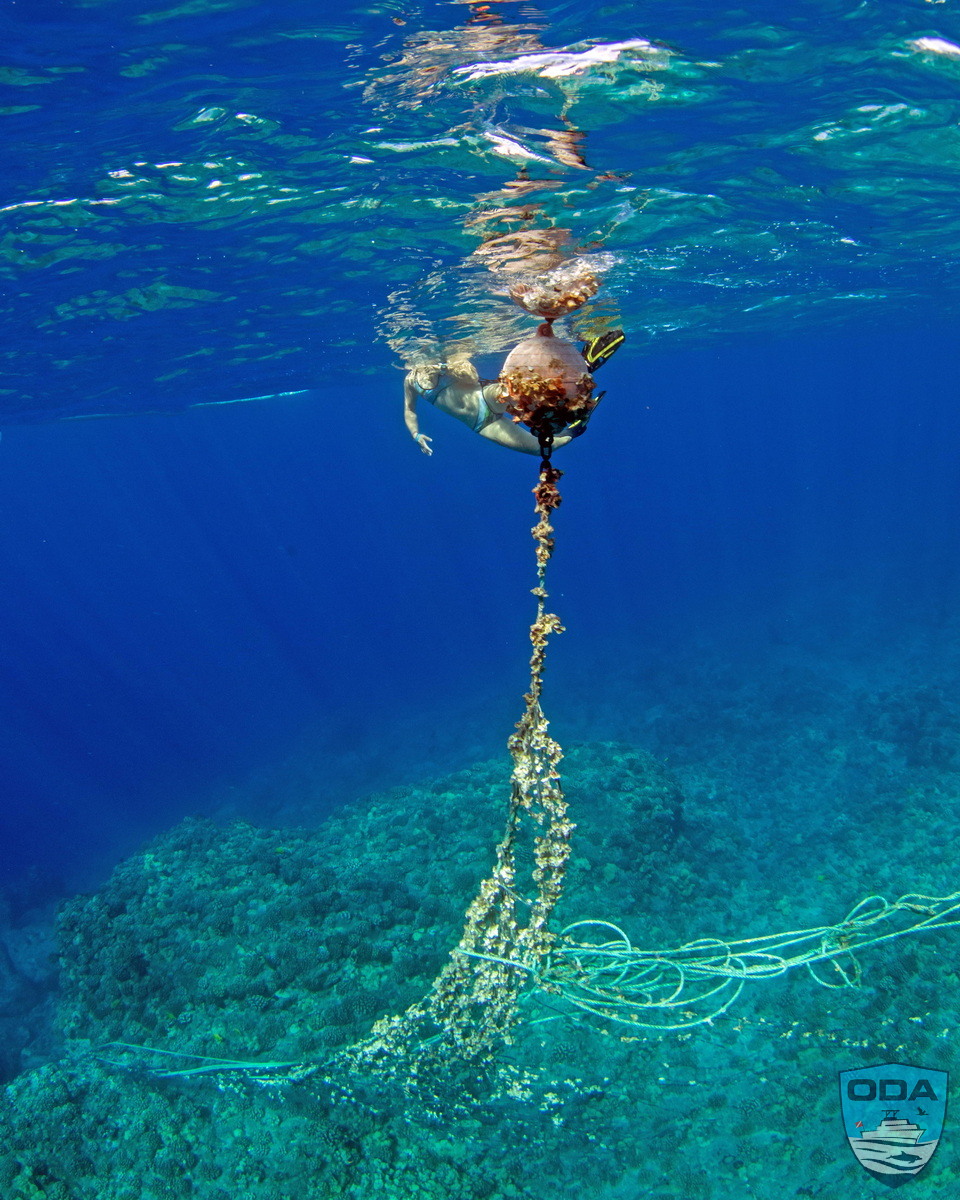
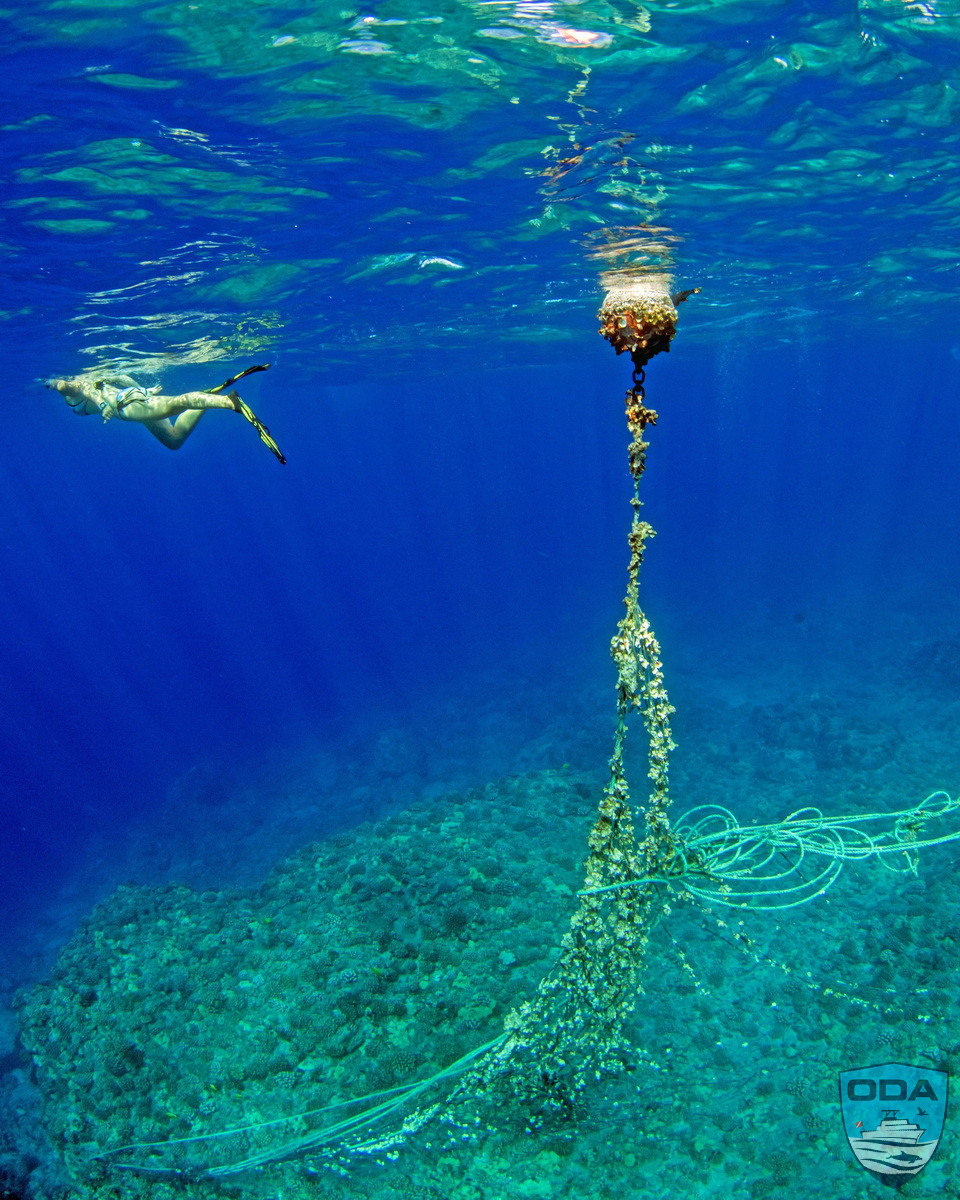
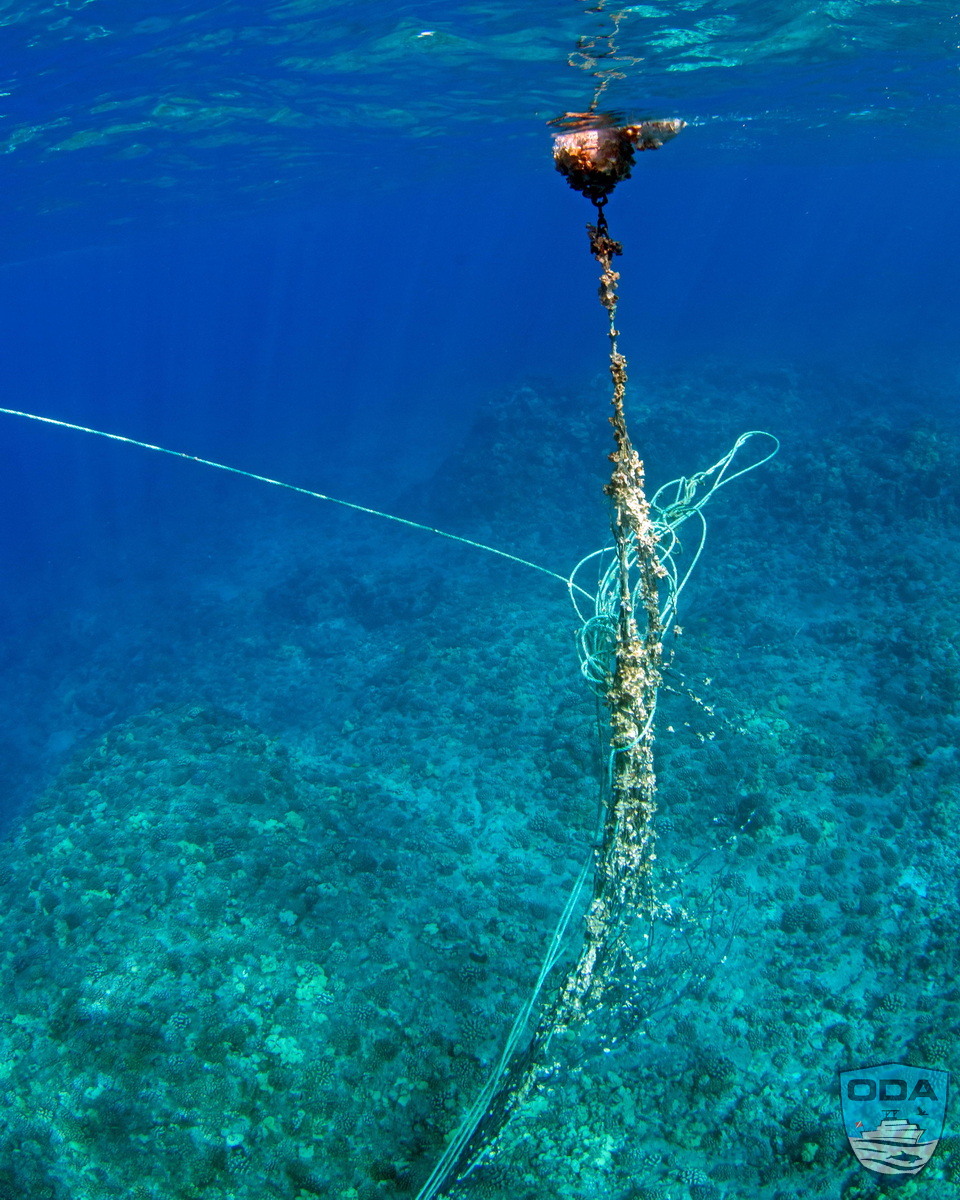
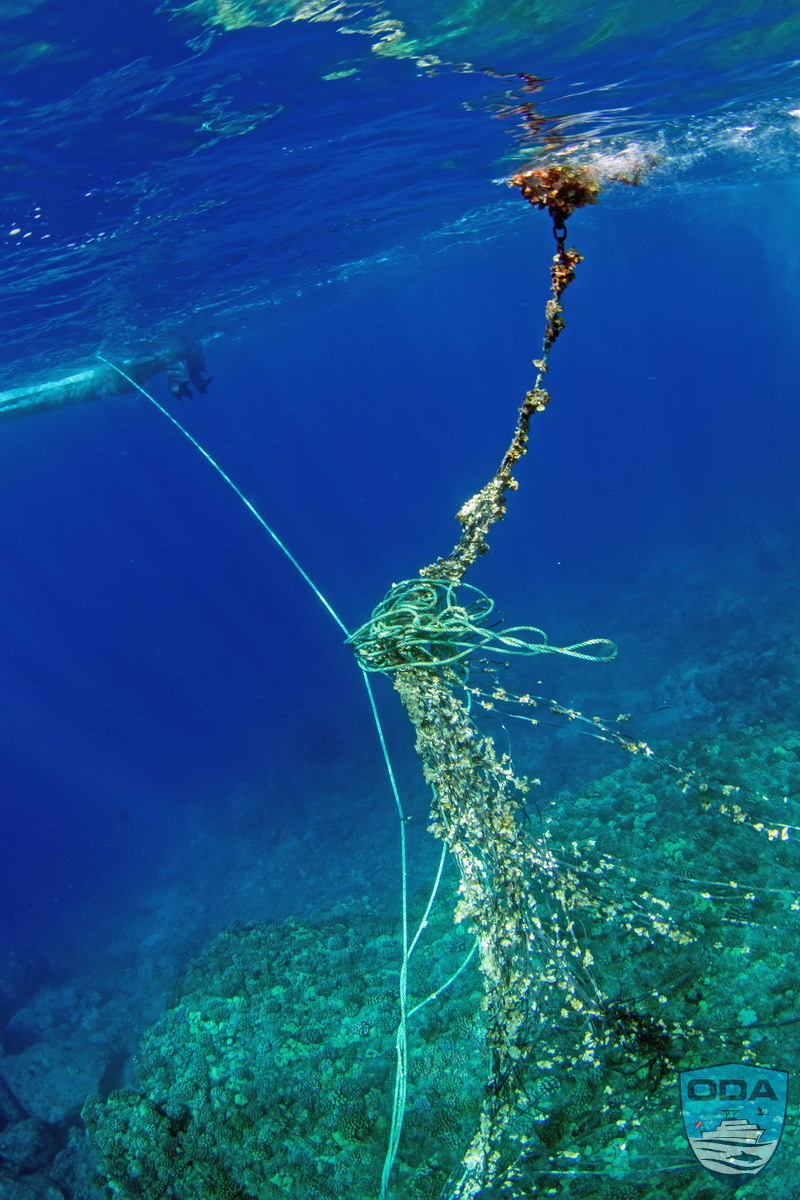
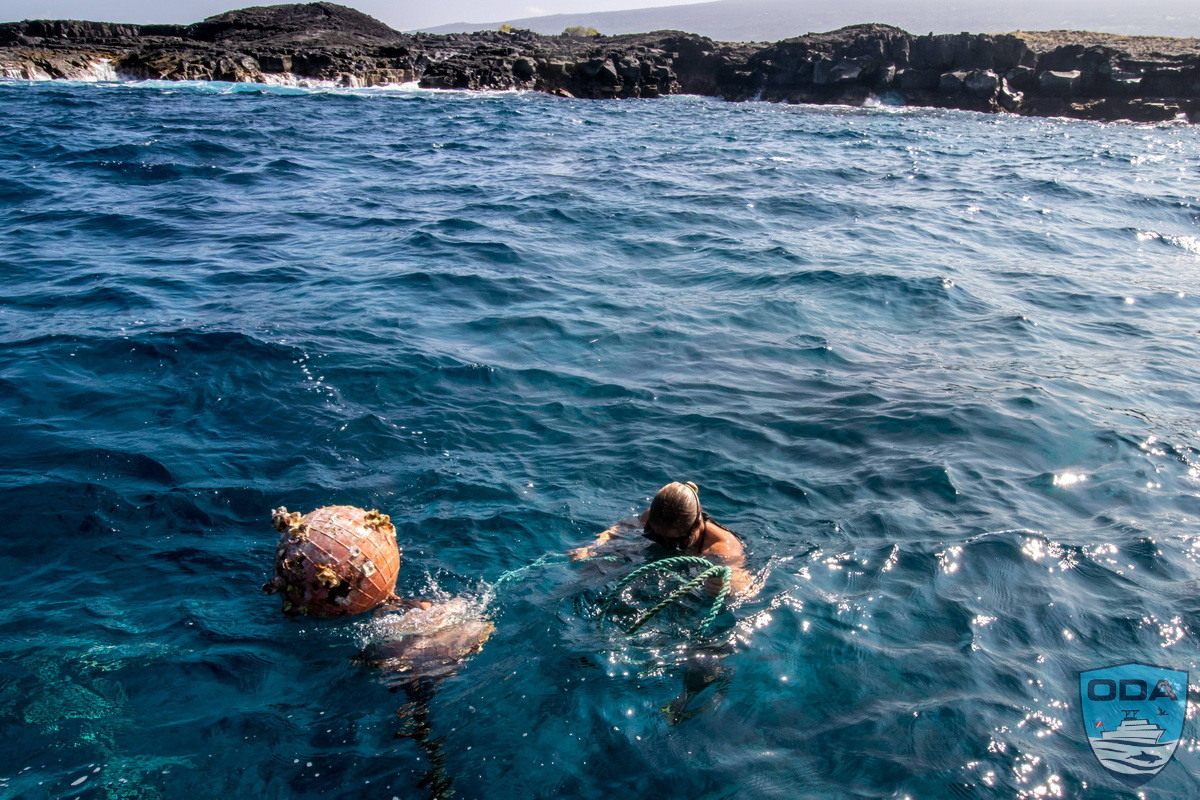
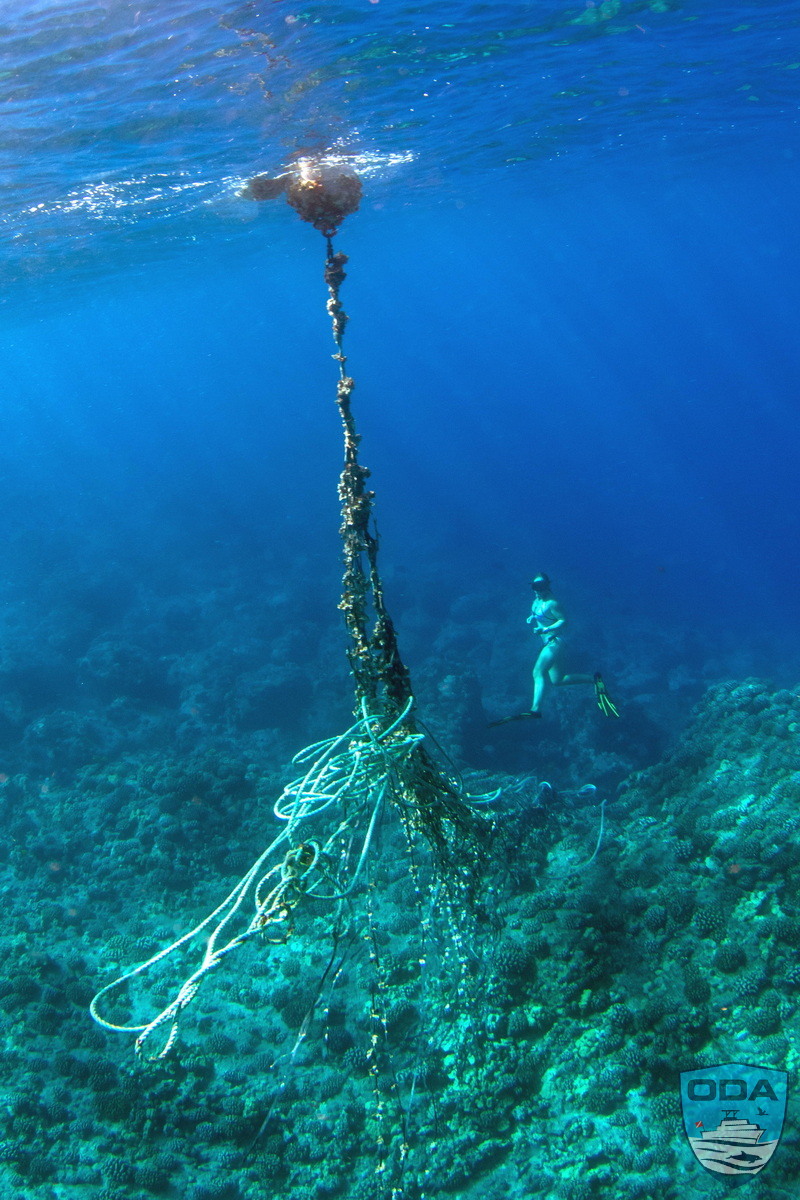 We loaded the boat with a point already in mind. Dylan at See Through Sea reported a buoy with line had washed ashore and tangled at Kaiwi Point and suspected it might be an illegal Fish Aggregation Device (FAD). FADs are buoys that are placed offshore to attract fish. Because the open ocean is devoid of obvious features, anything floating at the surface serves as a nucleation (formation) point for life to gather. Fishers use these nucleation points to target their efforts. The state of Hawai’i maintains a network of deepwater FADs that are marked on nautical charts, lit at night, and engineered to last 5 years before breaking off and floating away. The downlines for these can be over a mile long. Some fishers deploy their own private FADs.
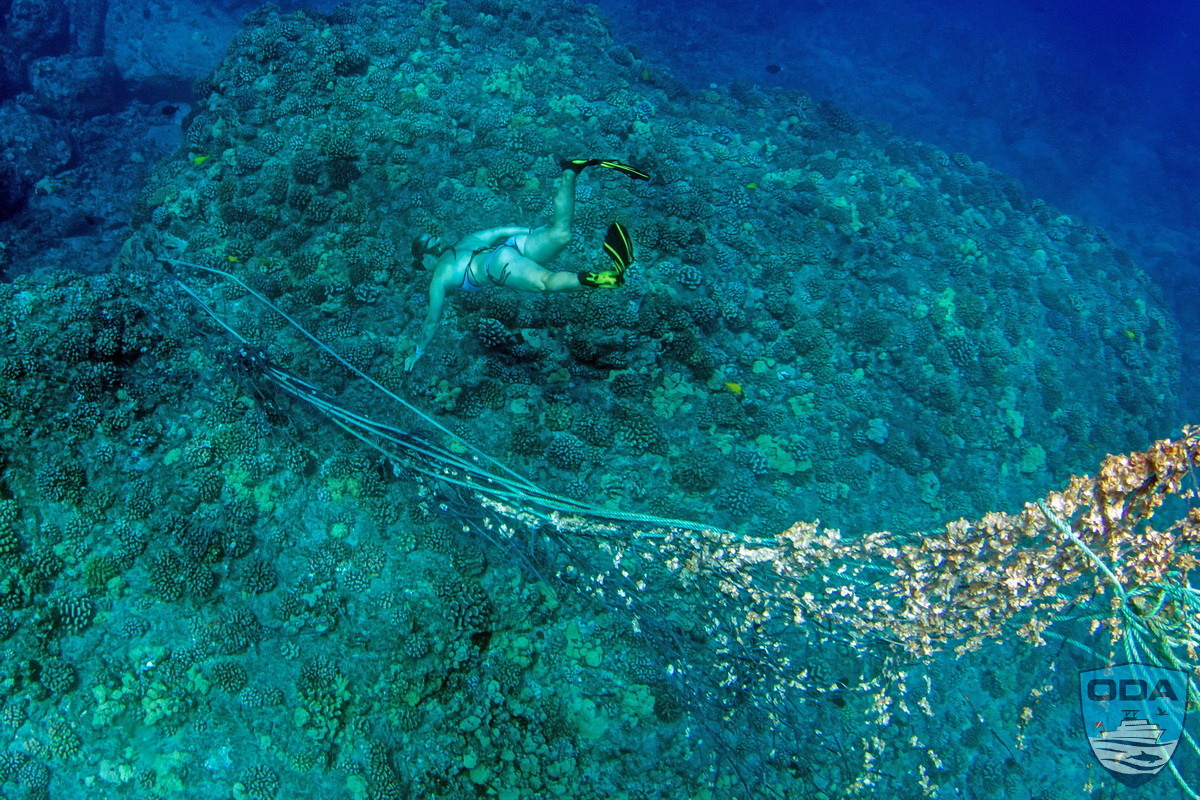
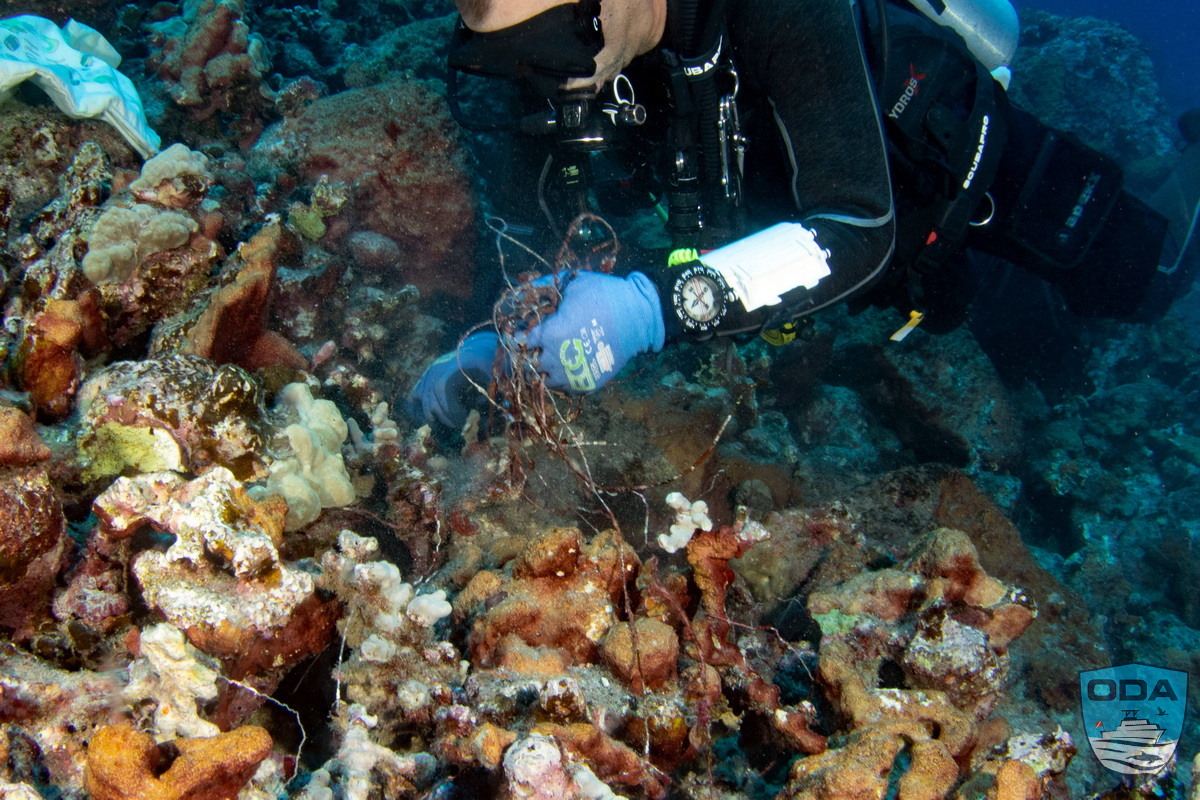
In place, these are unmarked hazards to navigation. They aren’t constructed with any engineering, and when they break free, they become entanglement hazards for marine wildlife and inevitably come ashore to damage delicate benthic habitat. Saturday’s team saw what kind of a mess these things can do when they hit a reef.
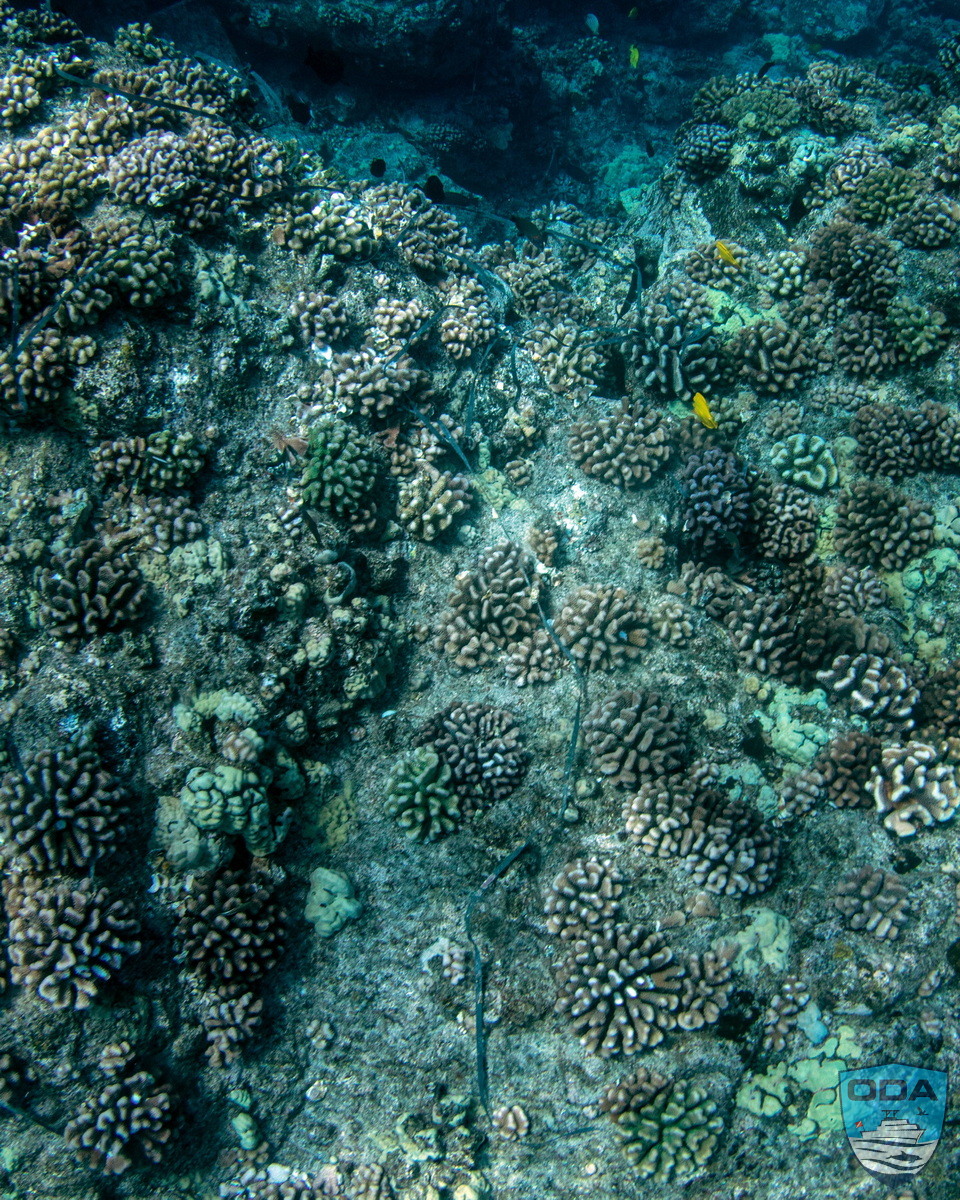
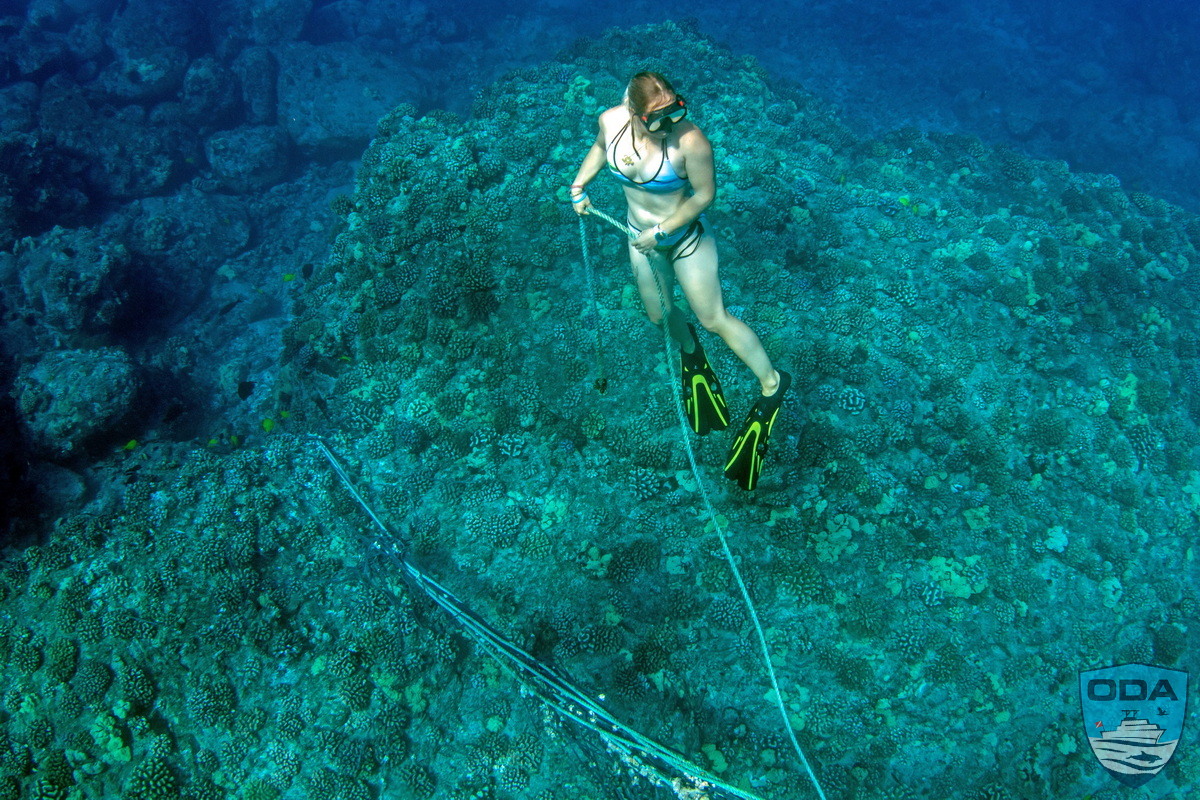
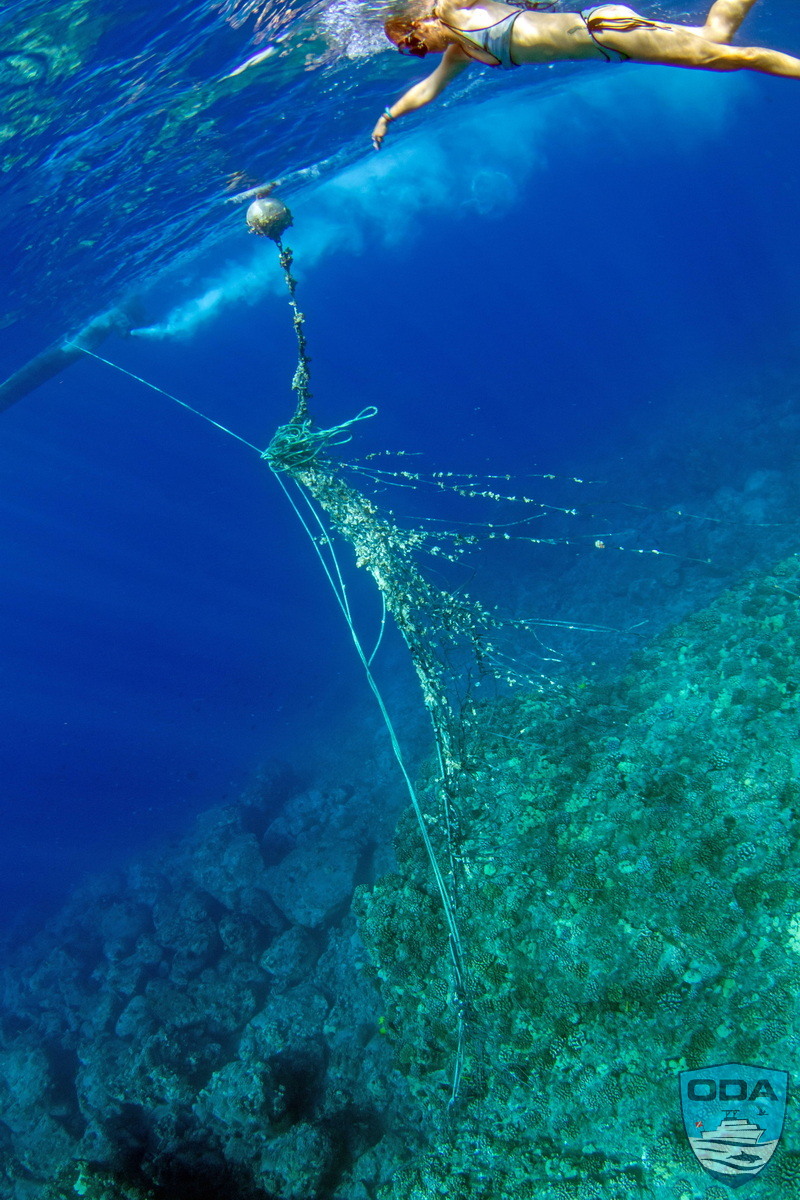
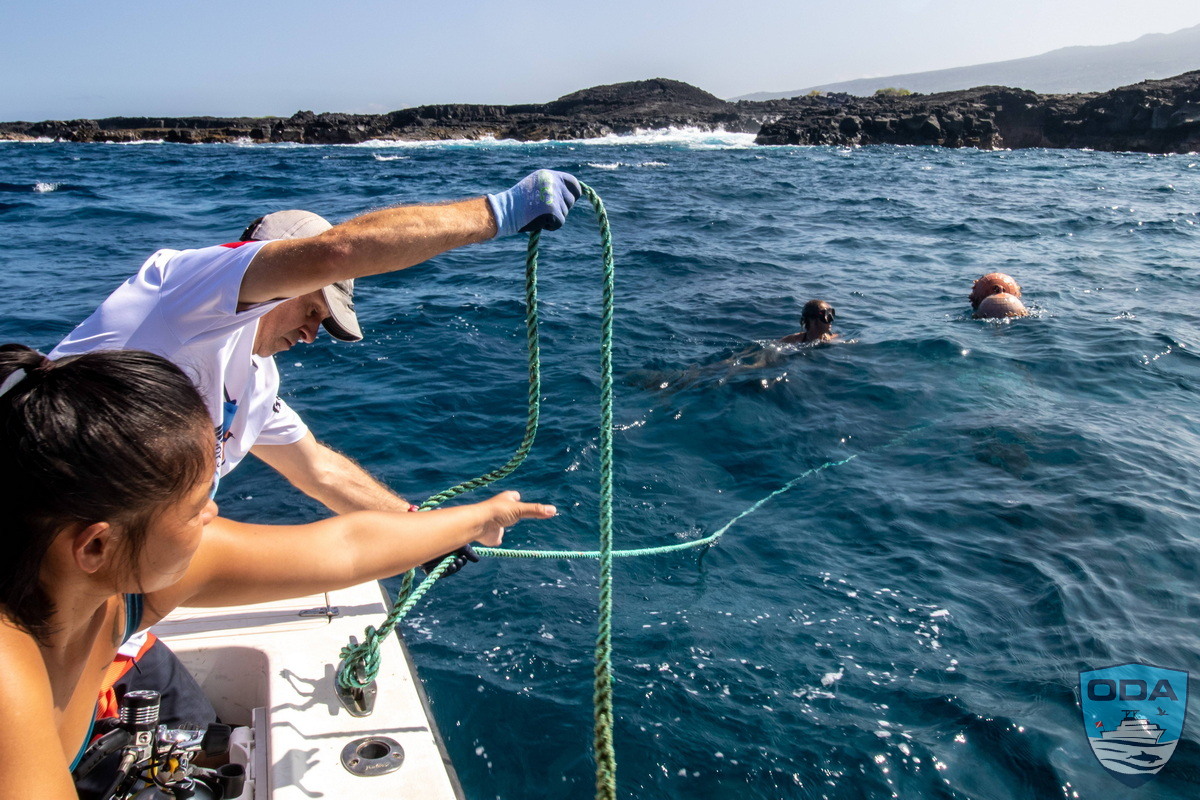
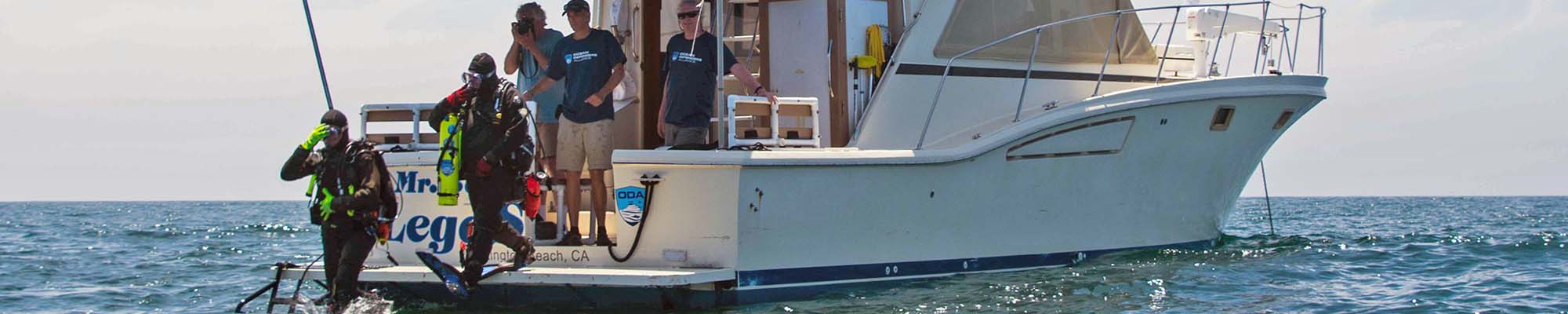
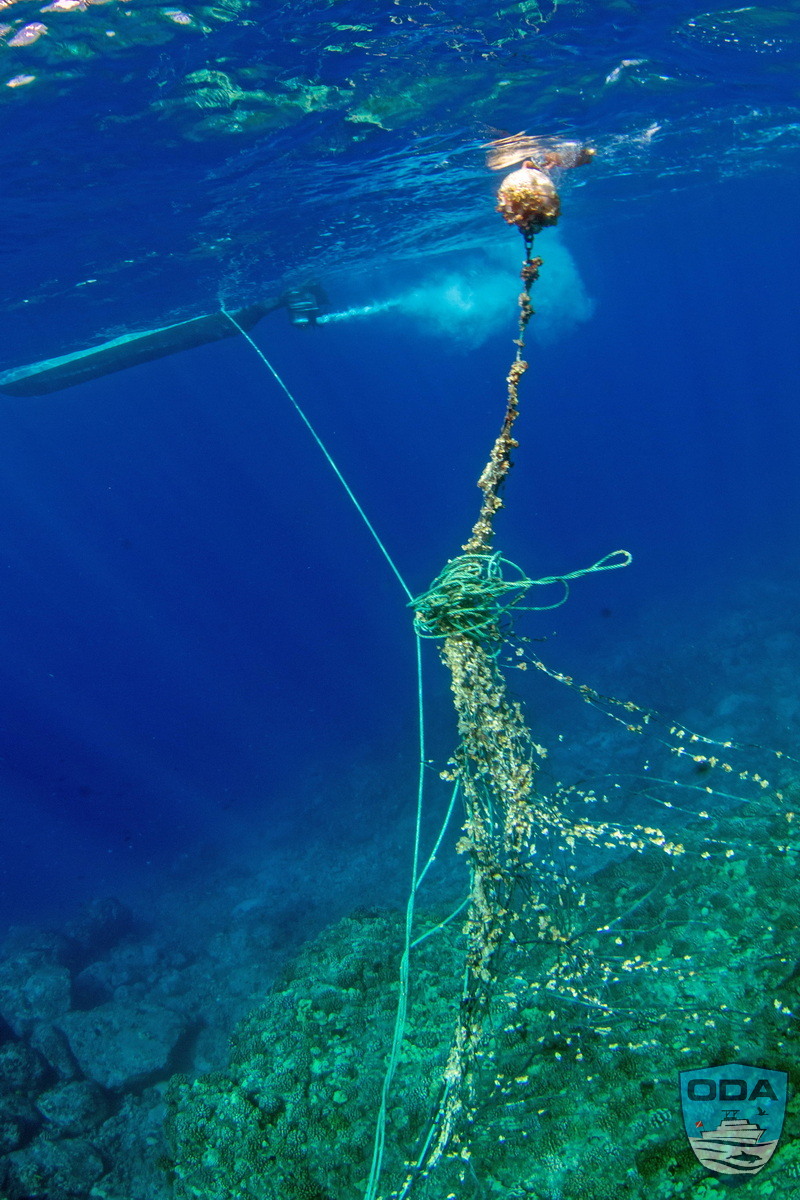 Saturday’s team was a small elite force aboard the new ODA vessel Makau. We quickly located the buoy and set to work. Removing these bigger objects requires a lot of planning on the fly. Sarah and Bo got in on snorkel to assess. Based on the squeals we heard coming from their snorkels, we could tell it was big. Sarah described a mess of black plastic strapping used to increase the in-water area of the object that had become tangled and was smothering a beautiful slice of cauliflower coral habitat. She made a dive or two down to untangle a few critical components and came up with a line and a plan. The buoy was in maybe 20’ of water, which in Kona puts it perilously close to the rocks.
From the helm, I steered from the shore side and put the boat in neutral to coast past Sarah. Able deckhand Adrian secured the line to a stern cleat and tended the slack while I used the outside motor to idle forward and away from the shore.
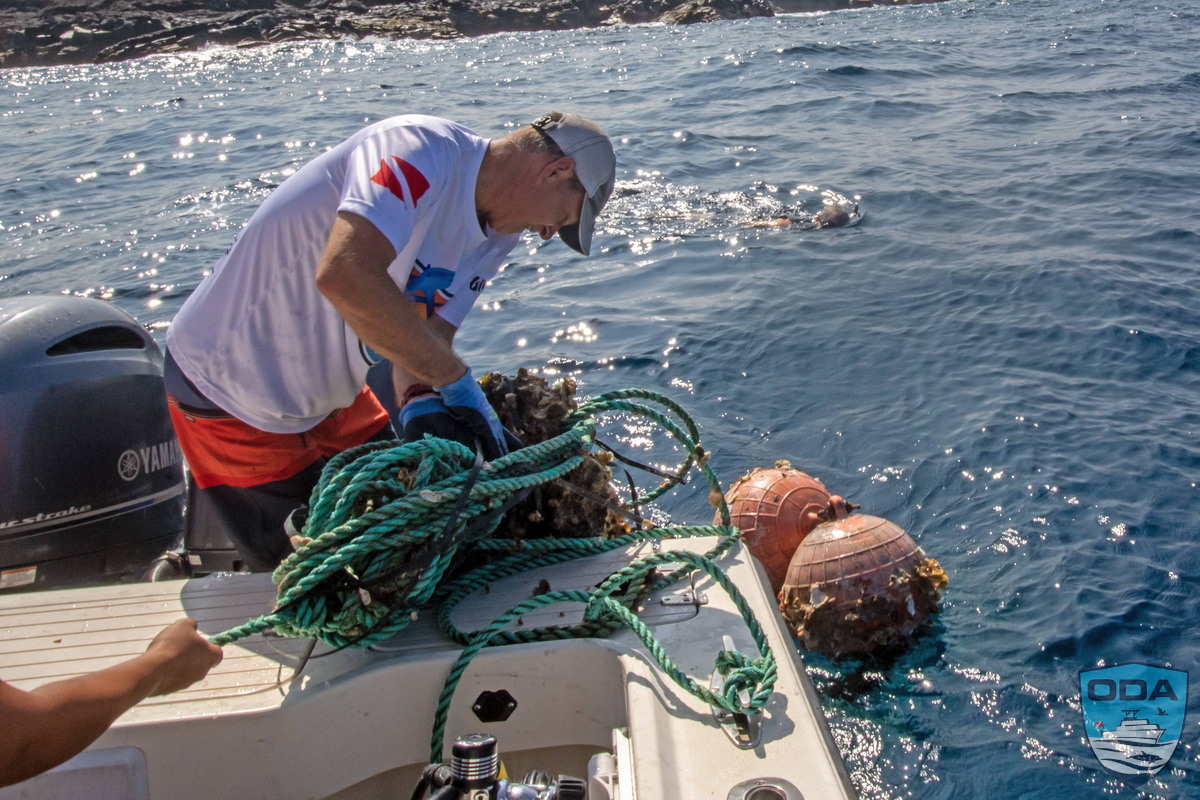
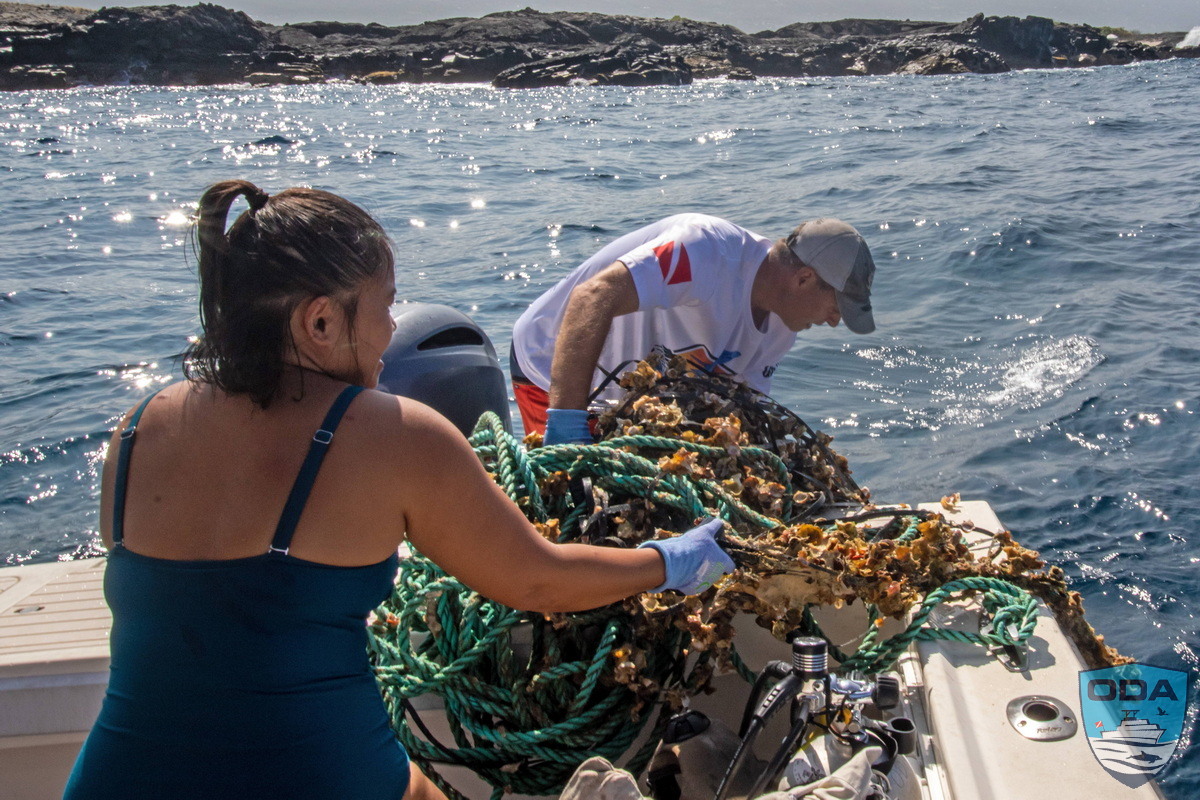
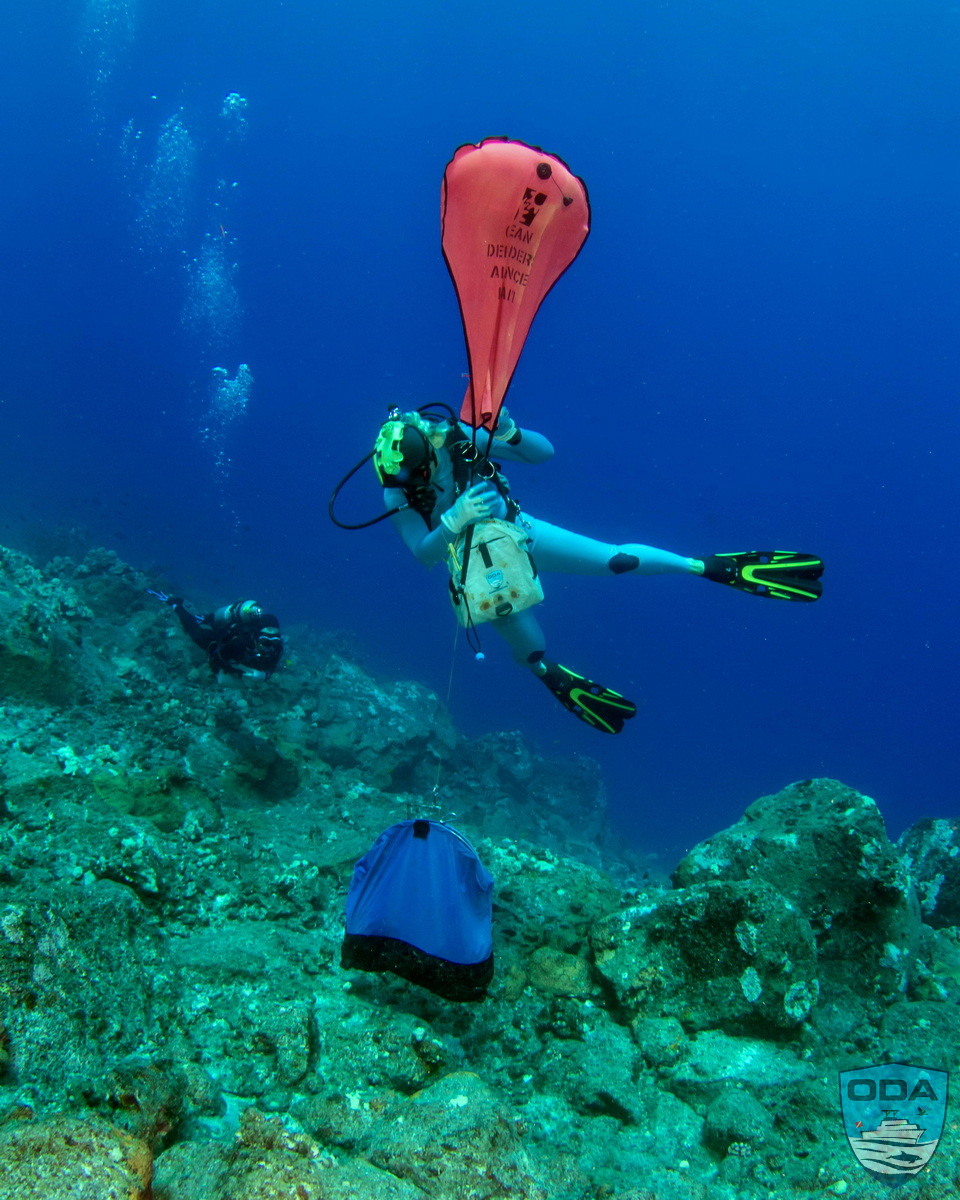
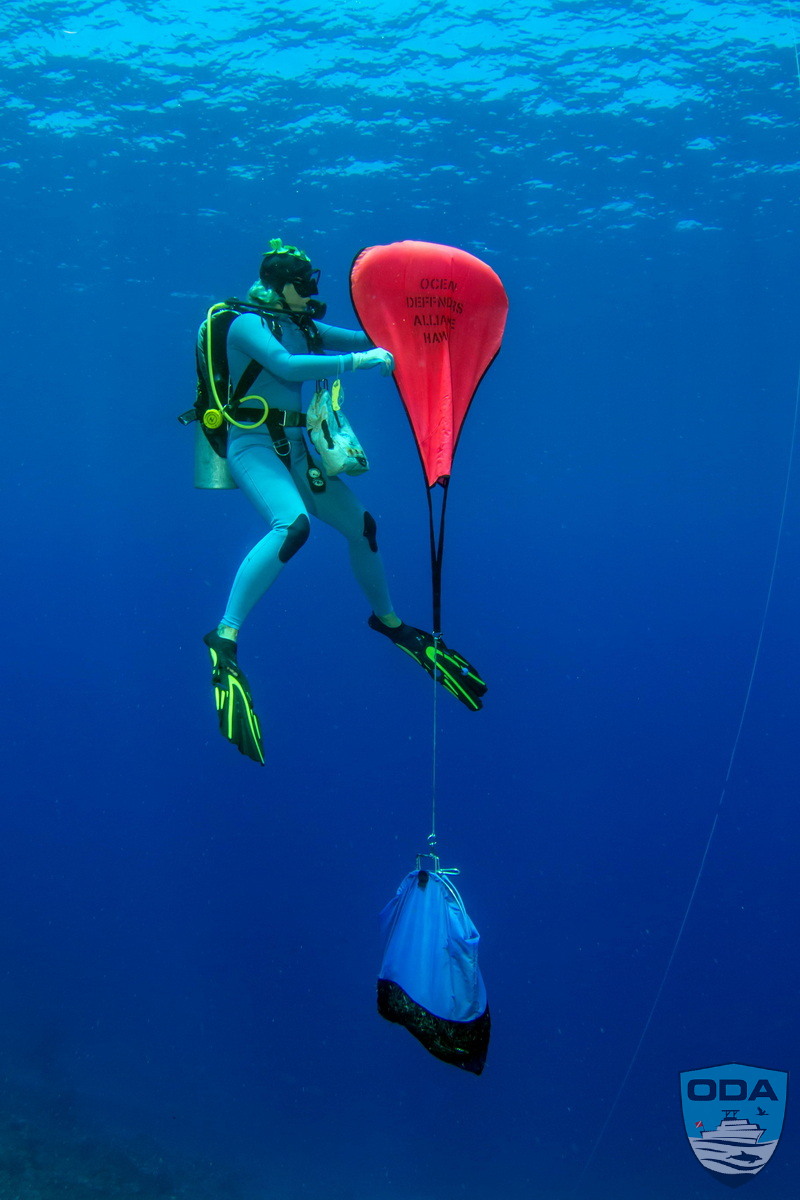
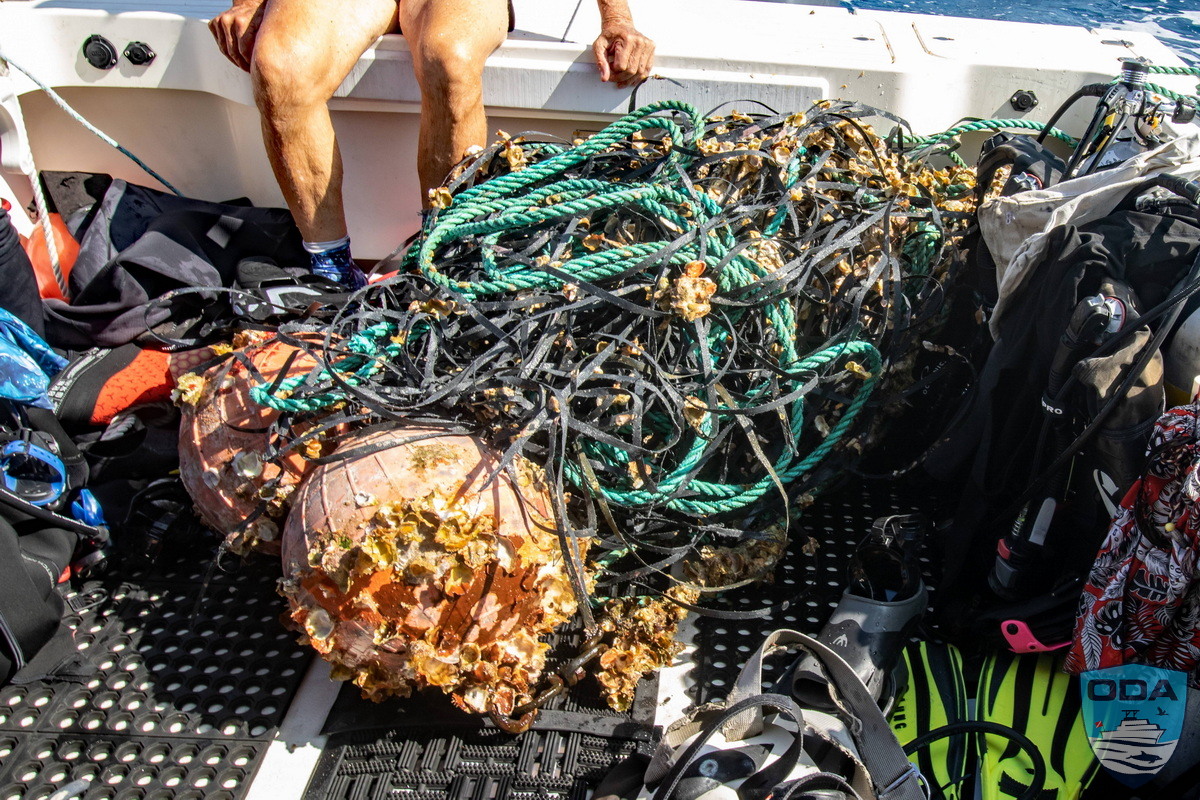
Sarah looked for and freed snags as they happened. Once clear of the rocks, the team hauled in the FAD that had become covered in razor-sharp oysters. The pile of tangled line, buoys, plastic strapping, and sharp biofouling took up a large section of the deck, and on any other day, we would be packing up to go home. However, this was just the first step towards today’s mission.
Onto Cleanup Site #2
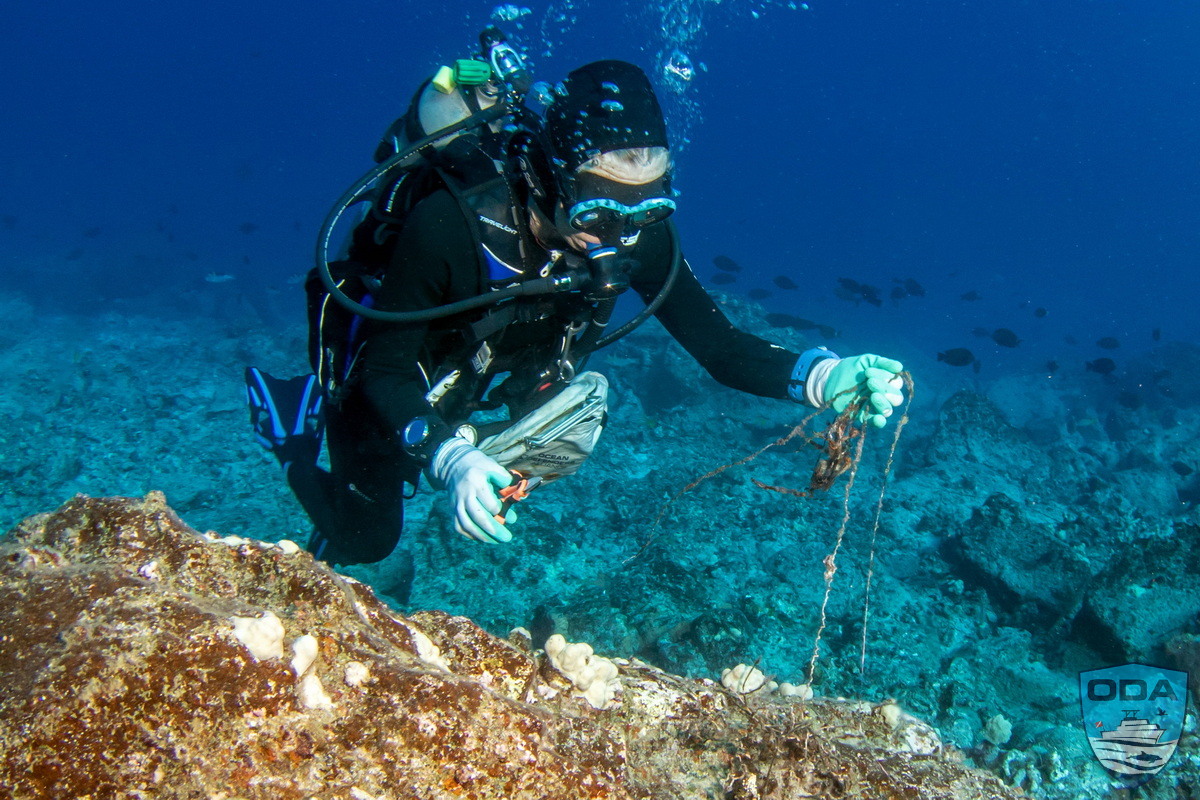
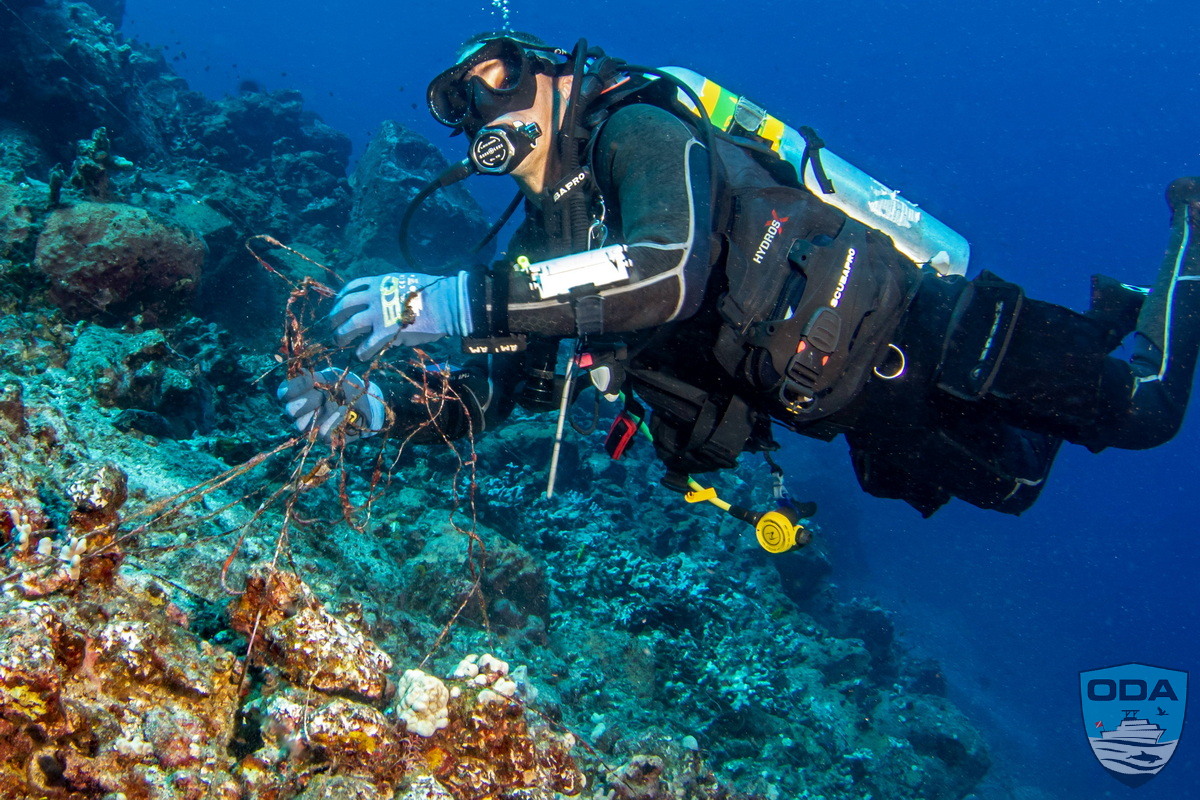
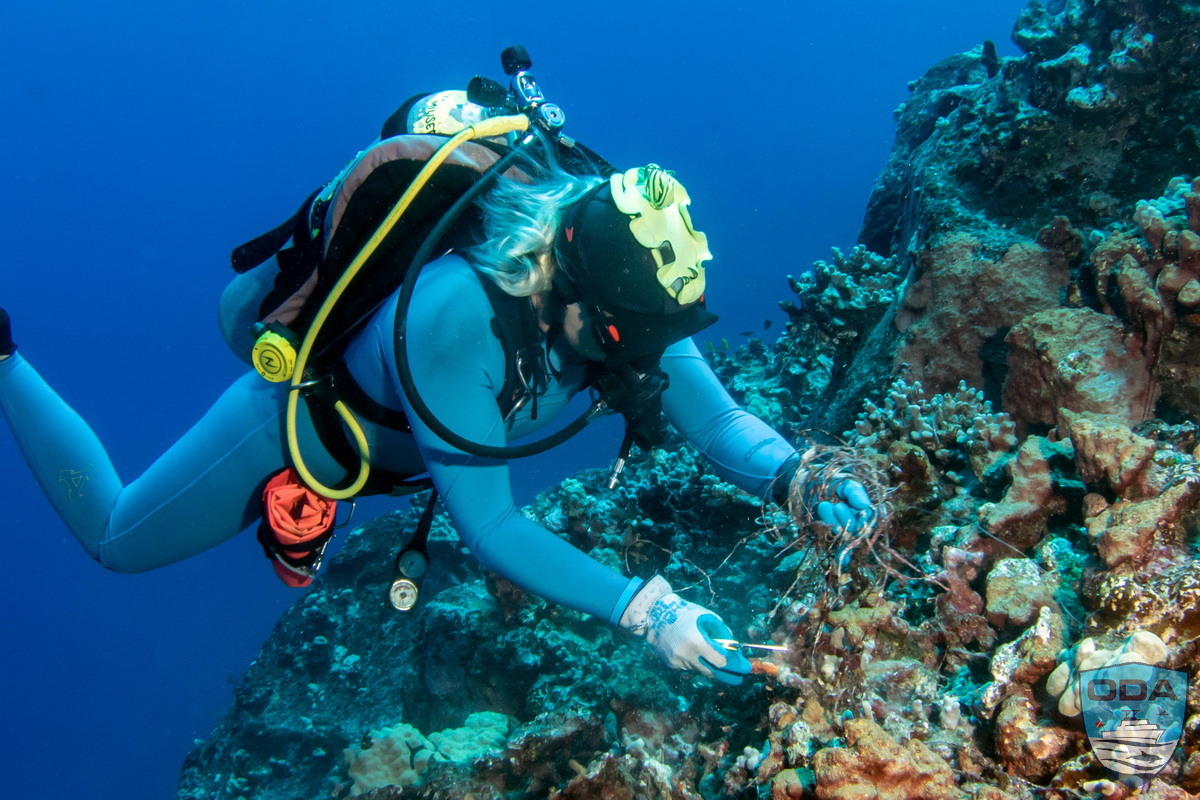
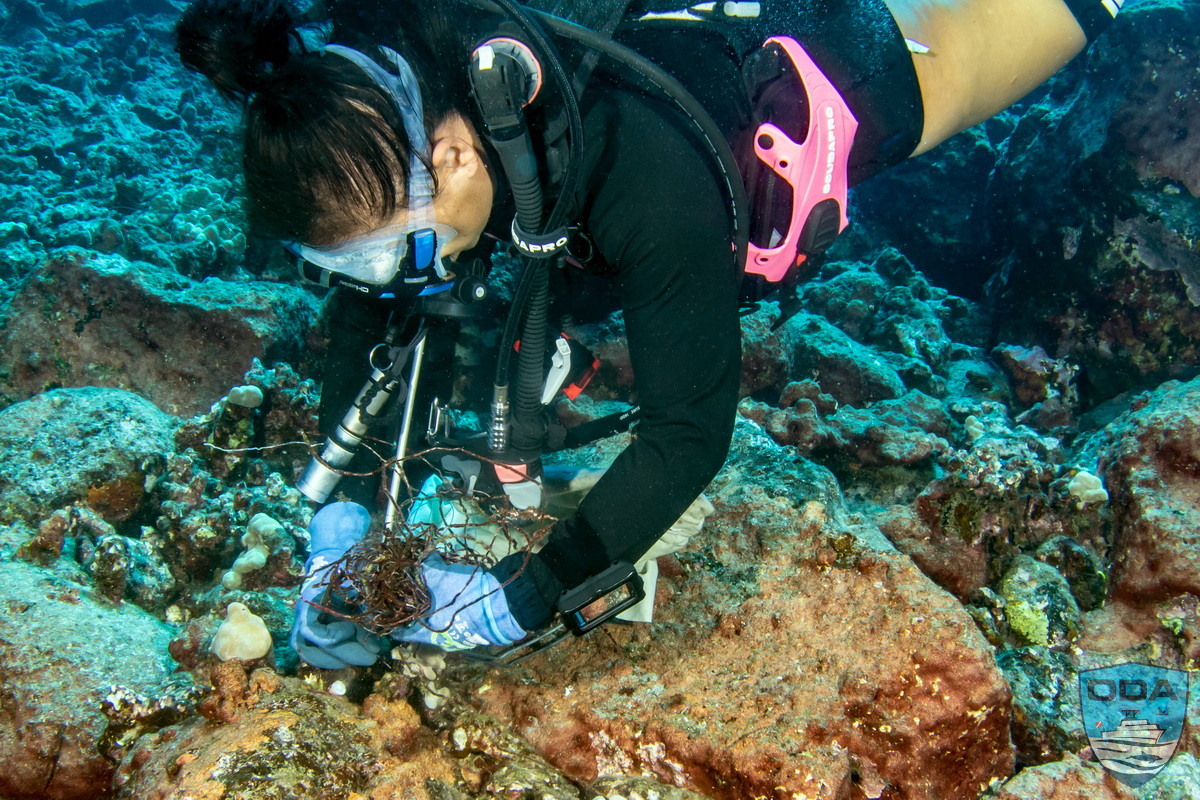
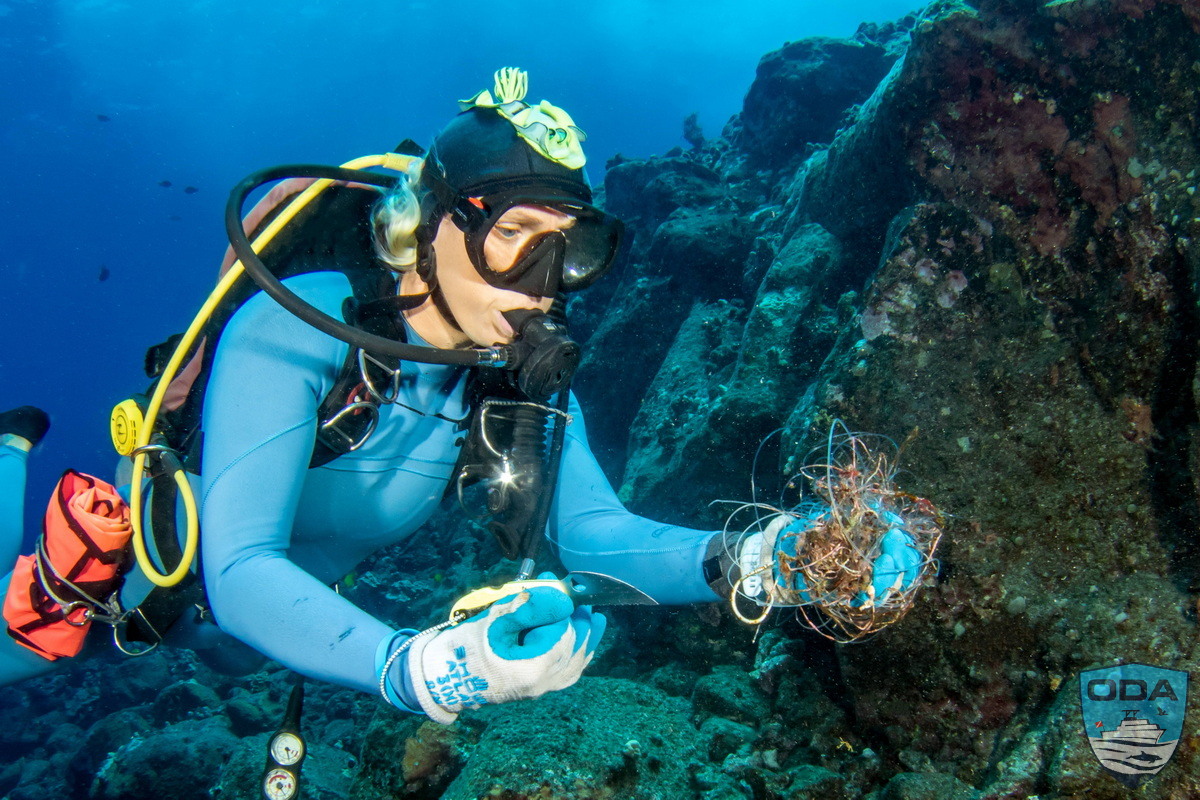
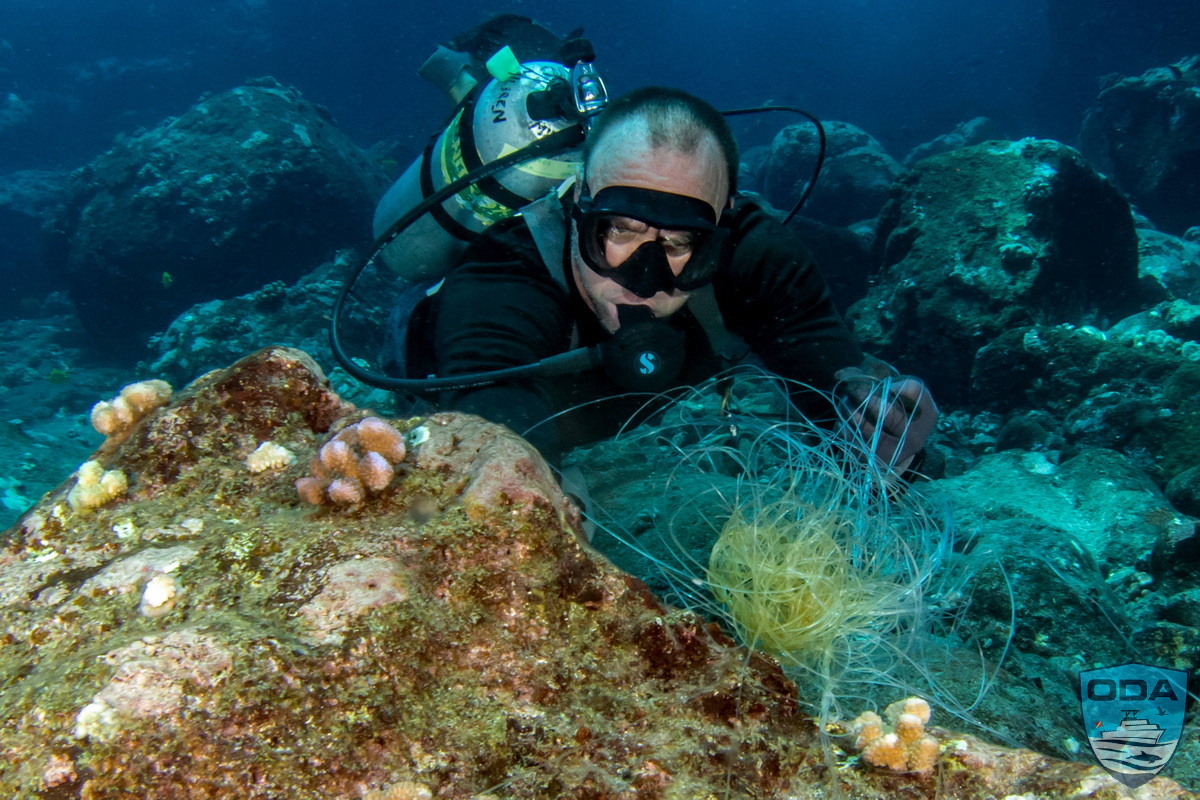
I pointed the bow south and headed for one of our most inundated spots: Deep Step Surprise. This section of reef is named “surprise” because there is something new around every corner. If you swim past a rock, you might find a tinker’s butterflyfish or a bandit angelfish. The surprise off one particular cliff face is a feature that has been described as a “waterfall of fishing line.” This is where ODA has focused its efforts.
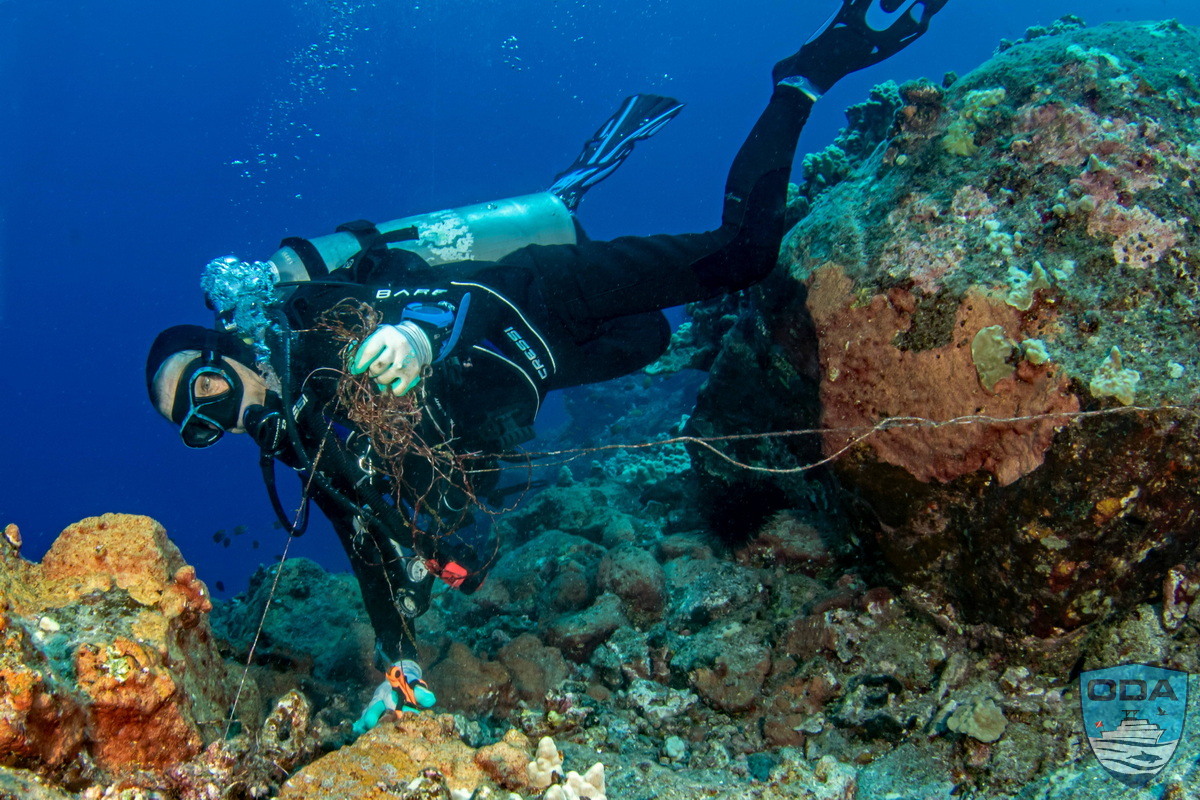
It is always hit-or-miss as to whether we’ll be able to dive it, because above the reef is a prominent outcropping that’s popular among slide-bait fishers. If fishers are there, we need to find somewhere else to go. The first time I dived at Deep Step, I found a chair that had washed into the water and put it to use as a big spool. I grabbed a fistful of line and started wrapping the chair in it. When I was done, I had the biggest haul of monofilament I had ever grabbed. I wasn’t sure if we’d ever be able to bring this site back to any sort of natural state. This was 3 years ago.
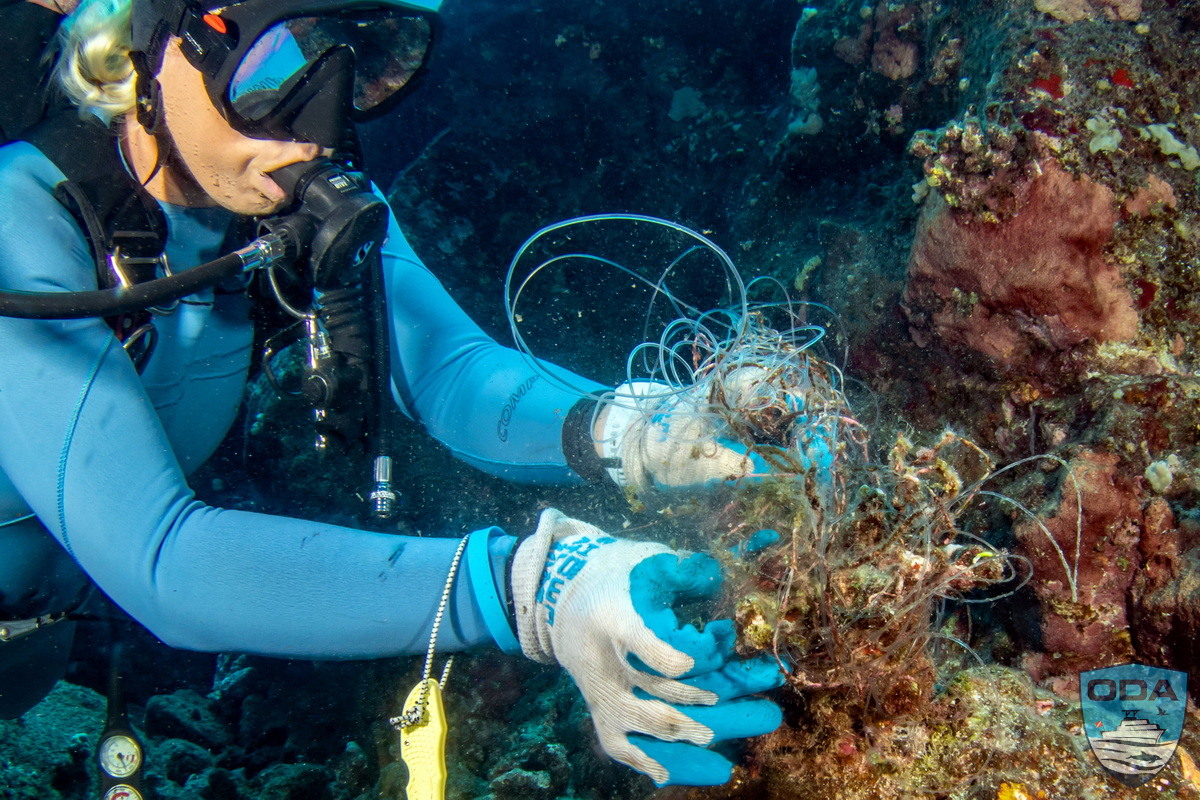
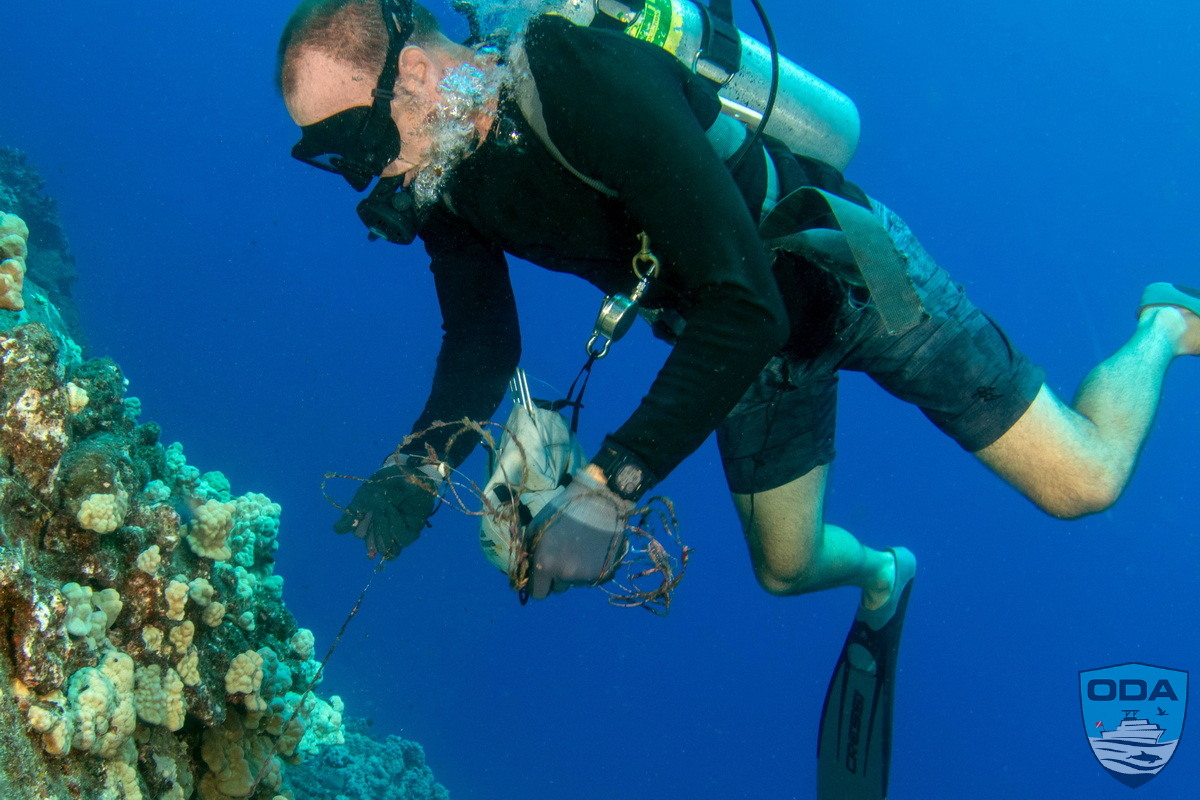
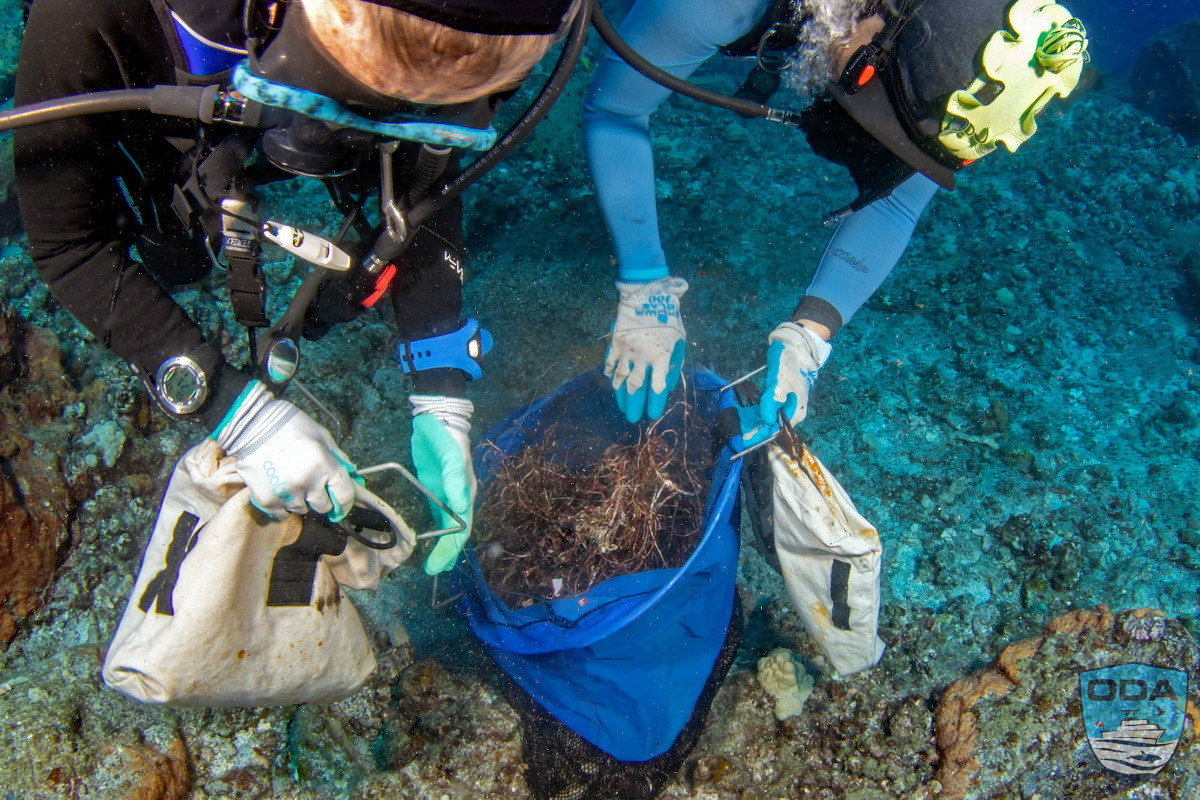
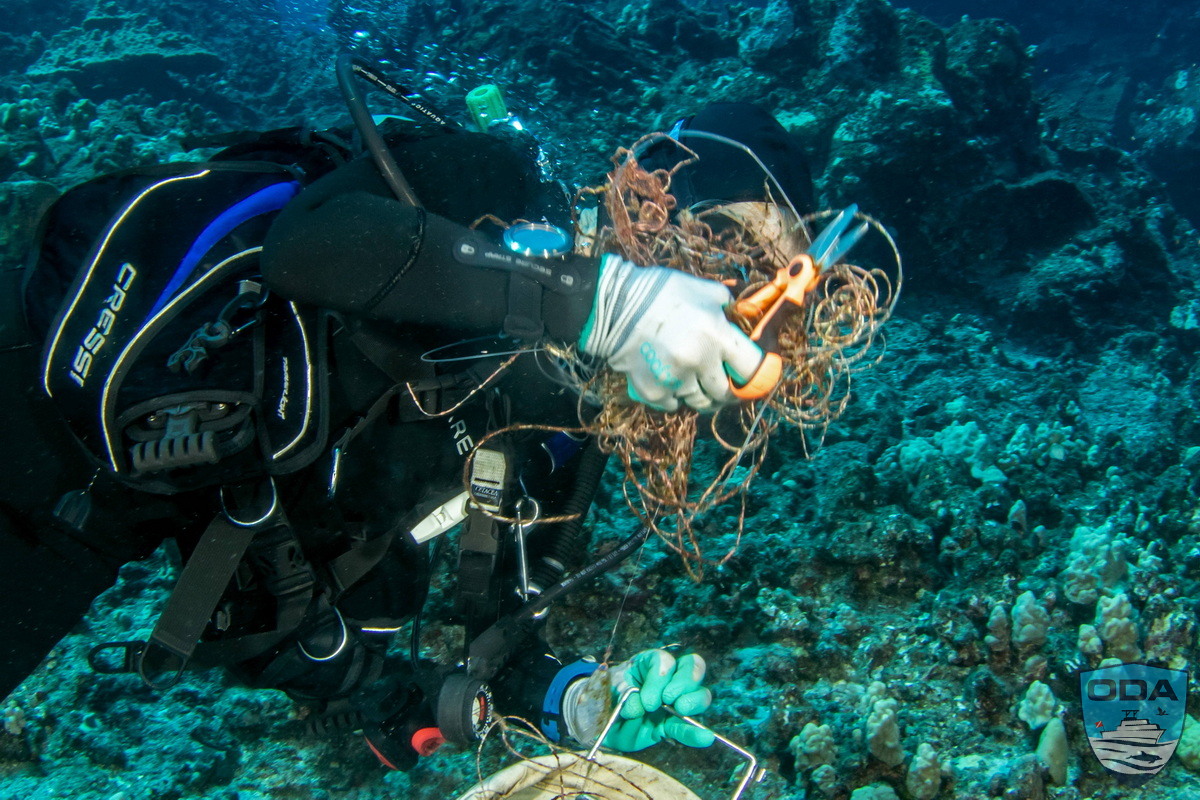
At face value, the reef looked great! The cascading monofilament was largely gone. The first few lengths of line in the shallows had clearly been left behind within the past few months. The wildlife seemed to notice the improvements as well, as Adrain found a dragon moray, Jamie saw some bandit angelfish, and Sarah uncovered a baby frogfish! But then I looked a little deeper. The next thing I found was a spool labeled “Berkley Trilene,” a brand of monofilament, so I swore to reload it with the line it once held. ODA has cleared away a lot of the blanket of monofilament; what was left was old stuff (and continuing new stuff). Much of it precariously strung the rubble together, so I started working on the last of the loose line. It took less than 500 psi in my tank to fill the 1000-yard spool. I quickly found a length of plastic..er…something and started spooling around it as well. By the end, I had picked up as much monofilament as I had on my first trip down. The deeper I went, the deeper the mess went, and soon I was backed against a low scuba cylinder and a rapidly decreasing no-decompression limit. It was time to go. The site is getting much, much better and yet there is still so much to do!
Forty percent of the world’s population relies on seafood for at least 20% of their daily protein intake. This demand supports a massive industry with both global and local facets. With the amount of fishing gear we pick up at Ocean Defender’s Alliance, it is easy to forget that very few of us intend to hurt nature. From purse seiners to longliners and those based from shore, fishers will invariably defend their methods as sustainable. They aren’t being disingenuous. Like using a cell phone or driving a car, they likely don’t recognize the impacts their activities are having on the natural world. We have to tell them how we want our seafood harvested by voting with our dollars. Consciously choosing sustainable seafood supports industries that are doing things well while not giving money to the bad actors. Between the seafood choices that we make and spending our days off picking up messes in the ocean, we’re making a big difference every day.
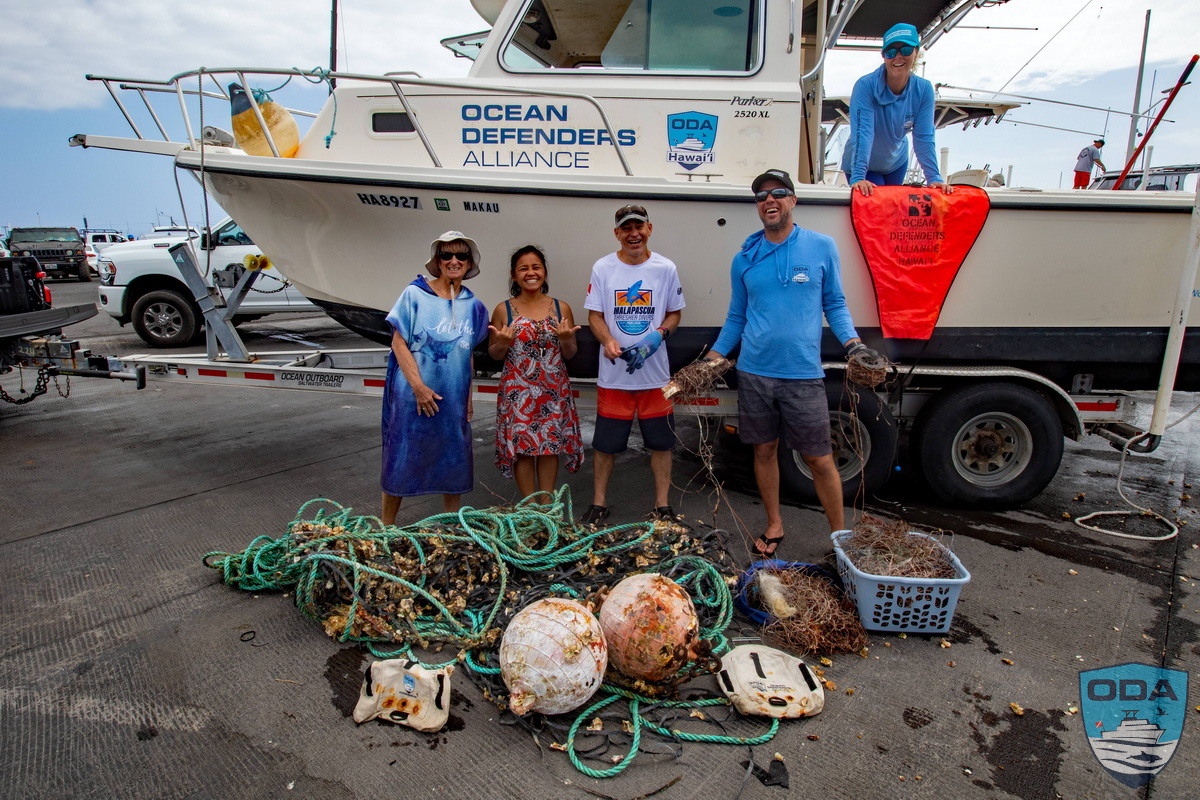 Ocean Defenders Crew with Their "Catch of the Day"!
We removed about 8,000 feet of fishing line, 40 pounds of lead, 30 nasty looking hooks and the FAD, which probably weighed 250 pounds.
Thank you to all the donors who made the ocean safer this day, and to cleanup crew Adrian, Bo, Jamie, Neng, and Sarah.
I’m proud to call myself an Ocean Defender. Keep up the good work, team!
If you want to be part of removing hazardous ghost gear from the ocean, please contribute to clean oceans today!
Donate to Keep the Crew at Sea!